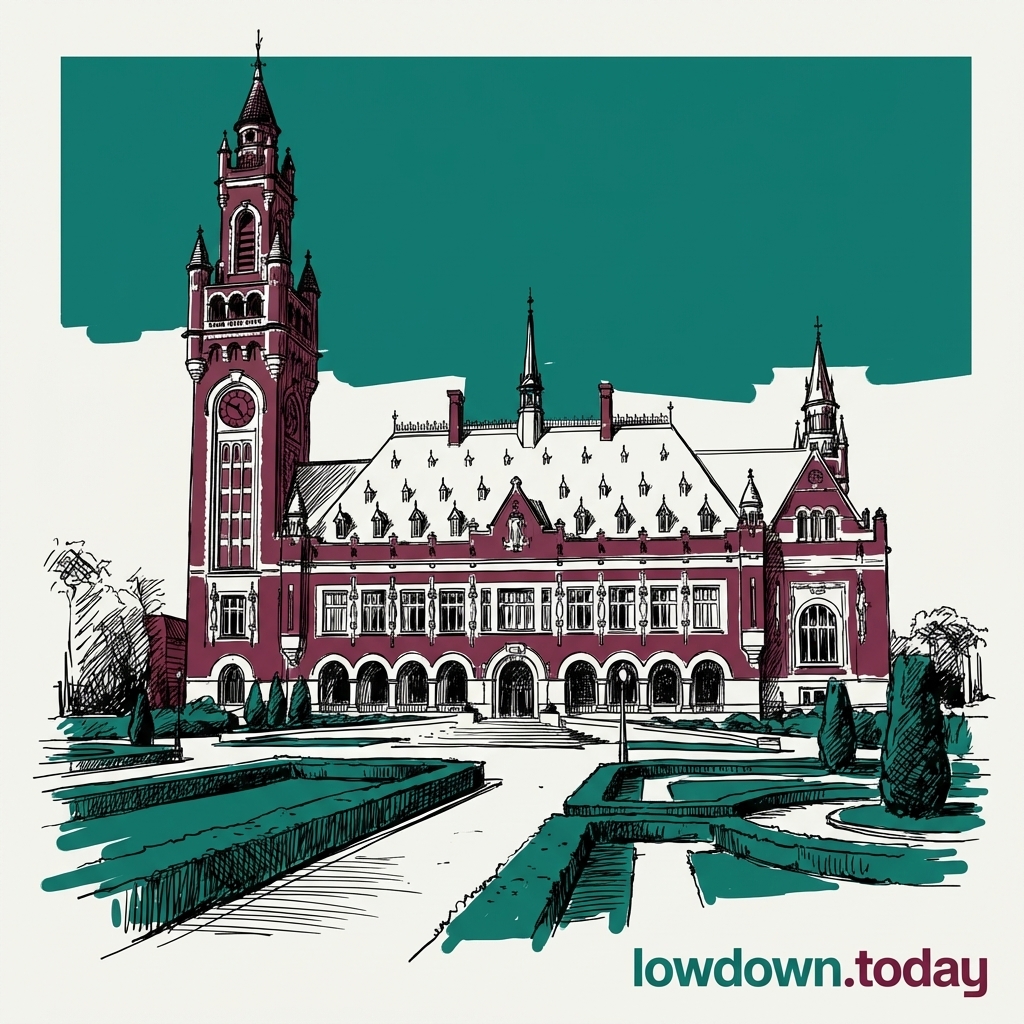
International Court of Justice
Principal judicial organ of the United Nations, seated at The Hague, adjudicating disputes between member states and issuing binding rulings in international law.
Last refreshed: 28 July 2026
Can the world's highest court judge a war its most powerful parties refuse to enter?
Timeline for International Court of Justice
Mentioned in: India brings the last dead sailor home
Iran Conflict 2026Mentioned in: Iran draw 2-2; banned flags fill stands
2026 FIFA World CupMentioned in: US strikes reach Tehran on day two, ordered by phone
Iran Conflict 2026Mentioned in: Iran's strait authority opens to silence
Iran Conflict 2026Background
The International Court of Justice is the principal judicial organ of the United Nations, seated at the Peace Palace in The Hague. It settles legal disputes between states and issues advisory opinions on questions referred by UN bodies. Its jurisdiction is consensual: states cannot be brought before the Court without accepting its authority. South Africa filed genocide proceedings against Israel in January 2024, one of several ICJ cases arising from the conflict.
During the 2026 Iran-Israel war, the ICJ has faced its structural limits with unusual clarity. When the Security Council convened its emergency session on the opening strikes, the United States vetoed any resolution. South Africa, which led the genocide case against Israel, fell conspicuously silent as the conflict widened, widely attributed to pressure from Washington.
Legal submissions citing the ICJ have accompanied reports of hospital strikes in Iran and civilian casualties in Lebanon, but no state has triggered binding measures. the Court's authority depends on participation by the states whose Conduct it must judge; the most powerful actors in this conflict have explicitly declined that participation.
What is the International Court of Justice?
Is Israel at the ICJ?
Can the ICJ stop the Iran-Israel war?
Why did South Africa go quiet at the ICJ?
How does the ICJ relate to the UN Security Council?


