South Korea
East Asian nation, 2002 World Cup semi-finalists, Group A co-leaders after opening win over Czechia.
Last refreshed: 11 July 2026 · Appears in 8 active topics
Can South Korea match their 2002 semi-final run from Group A in 2026?
Timeline for South Korea
Mentioned in: ASML booms, Europe's fab gap holds
European Tech SovereigntyMentioned in: €659m for four fabs, none at the edge
European Tech SovereigntyMentioned in: OFAC pulls Iran's oil waiver early
Iran Conflict 2026Mentioned in: Belgium end USA's home World Cup
2026 FIFA World CupMentioned in: Morocco knock Canada out of home Cup
2026 FIFA World CupBackground
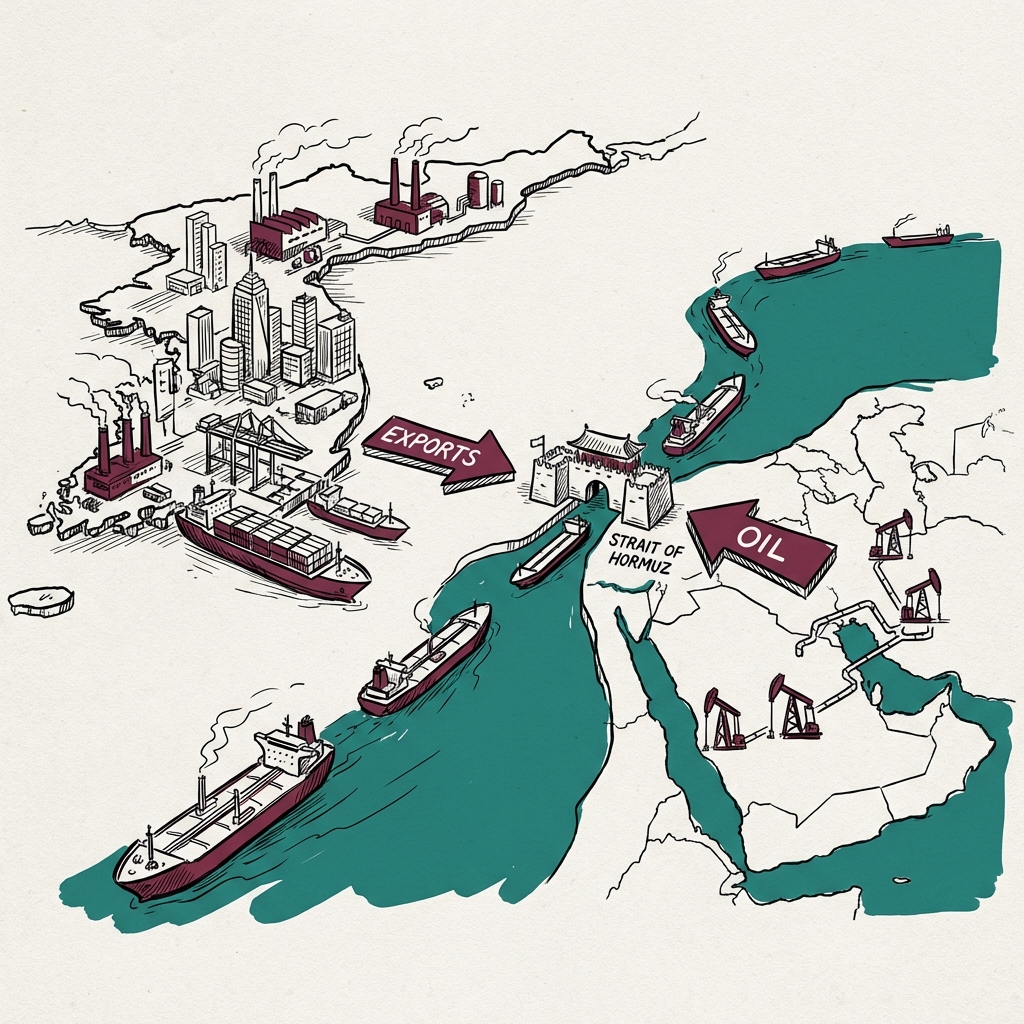
South Korea is a high-income, export-oriented economy and the world's 12th largest by GDP. Its industrial base, anchored by semiconductors, petrochemicals, shipbuilding, and steel, is extraordinarily energy-intensive. South Korea imports roughly 70% of its crude oil from the Middle East, with the vast majority transiting the Strait of Hormuz. Any sustained closure or choking of Hormuz carries direct, severe consequences for South Korean refining capacity, industrial output, and consumer energy costs.
The 2026 Iran-Israel war placed Hormuz under implicit threat for the first time since the tanker wars of the 1980s. South Korea, alongside Taiwan and Japan, moved quickly to assess reserve cover and diversify spot purchases, but the global spot market tightened sharply as all major Asian importers competed simultaneously. The Philippines became the first US ally to cut a bilateral Hormuz passage deal with Tehran, signalling a possible template that Seoul would watch closely, particularly as Brent Crude hit $80 in early April 2026. By mid-May, 26 governments had joined the Multinational Military Mission for the Strait of Hormuz, a Coalition Seoul observed without joining, consistent with its preference for energy-security pragmatism over military alignment.
South Korea faces a structural dilemma: as a US treaty ally and major buyer of US weapons and LNG, it cannot openly defy Washington's collective posture on Iran. Yet its industrial economy cannot absorb prolonged Gulf oil disruption without significant political and economic damage. The tension between alliance obligations and energy security will define Seoul's diplomacy for the duration of the conflict.
South Korea are one of East Asia's most significant footballing nations. Their 2002 joint-hosting with Japan produced a semi-final run that remains the best result by any Asian team at a World Cup. The national team competes in the AFC and qualified for the 2026 tournament through Asia's expanded 8.5-berth allocation. At the 2026 FIFA World Cup, South Korea were placed in Group A alongside Mexico, Czechia, and South Africa. They opened on 11 June at Estadio Akron in Guadalajara, coming from behind to beat Czechia 2-1: Hwang In-beom equalised on 67 minutes and then crossed for substitute Oh Hyeon-gyu to head the winner on 80. Korea outshot Czechia 15-8. However, South Korea were eliminated in the group stage after losing 1-0 to South Africa, with Thapelo Maseko scoring the only goal on 63 minutes. South Africa's progression to the Round of 32 (a historic first for Bafana Bafana) came at Korea's expense. South Korea's Lowdown presence is primarily geopolitical and economic (energy security, Iran conflict, semiconductor supply chains, drone defence), not sporting; the football campaign is one thread in a much wider story.
South Korea made its F-1-D 'workation' Visa a permanent scheme on 30 June 2026, ending the pilot that ran since January 2024. Maximum stay rises from two to three years, and applicants aged 18-34 who settle outside Seoul, Incheon and Gyeonggi Province now qualify at roughly the country's 2025 per-Capita GNI (about $36,963), a lower bar than the pilot's flat two-times-GNI rule. Justice Minister Jung Sung-ho framed the change around foreigners 'voluntarily putting down roots' rather than a pure talent-attraction play.
The income discount applies only outside the capital region, steering remote workers deliberately toward provinces losing population to Seoul. No clean OECD parallel exists for an income-threshold Visa succeeding at reversing capital-region concentration: Japan's post-2014 relocation-subsidy programme ran a decade without denting Tokyo's net population gain, and the Baltic states' rural-resettlement grants have produced only localised, unpublished results.
Reference
Why does South Korea depend on the Strait of Hormuz for oil?
Who is in South Korea's 2026 World Cup group?
How did South Korea beat Czechia at the 2026 World Cup?
Did South Korea join the Multinational Military Mission for the Strait of Hormuz?
Will South Korea cut a bilateral deal with Iran to secure Hormuz passage?
Why did South Korea lower the income bar for its workation visa?
Did South Korea make its digital nomad visa permanent?
How is South Korea affected by the Iran-Israel war?




