Round of 32
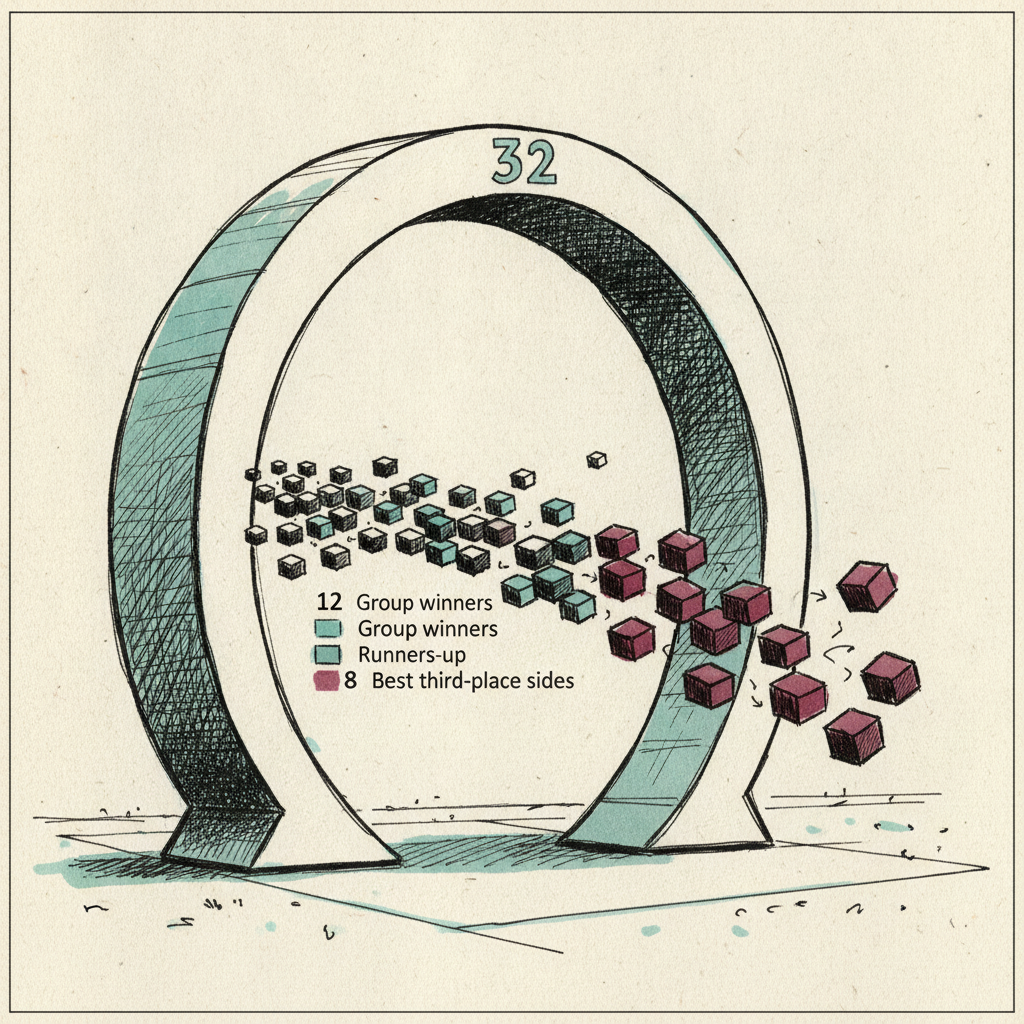
A new knockout stage in the 2026 FIFA World Cup, introduced by the expanded 48-team format, in which 32 Teams (12 group winners, 12 runners-up, and 8 best third-place sides) compete.
Last refreshed: 24 June 2026 · Appears in 1 active topic
Which eight third-placed teams qualified for the 2026 World Cup Round of 32?
Timeline for Round of 32
Mentioned in: Hezbollah kills senior IDF tank officer
Iran Conflict 2026Background
The Round of 32 is a new knockout round introduced at the 2026 FIFA World Cup to accommodate the expanded 48-team format, the largest in World Cup history. It sits between the group stage and the Round of 16, and is contested by 12 group winners, 12 group runners-up, and the 8 best-placed third-placed Teams from the 16 groups. The 16 worst-performing third-placed sides are eliminated at the group stage.
The mechanism for selecting which eight third-placed Teams advance closely mirrors the precedent set by UEFA Euro 2016, when 24 Teams competed and the best four third-placed sides qualified for the Round of 16. At that tournament, Northern Ireland was among the third-placed Teams that progressed, demonstrating how a team finishing third in its group can still reach the knockout rounds via a points-and-goal-difference tiebreak across all groups. The 2026 World Cup applies equivalent logic across a larger pool.
The Round of 32 has altered tournament mathematics significantly: nations that previously faced elimination after three group games now have a fourth match, raising questions about fixture scheduling, player fatigue, and the commercial viability of additional broadcast inventory.
What is the Round of 32 in the 2026 World Cup?
How do third-placed teams qualify for the Round of 32?
Why did FIFA add a Round of 32 to the World Cup?
When does the Round of 32 take place at the 2026 World Cup?
Which tournament previously used a best third-placed format like the 2026 World Cup?



Written with AI from Lowdown's published reporting. Not individually reviewed by an editor. Updated 24 June 2026. Editorial standards.