
Skip to content
Briefings are running a touch slower this week while we rebuild the foundations.See roadmap
Russia-Ukraine War 2026
1APR

Day 1498: Ukraine halves Russia's Baltic oil exports

4 min read
16:30UTC

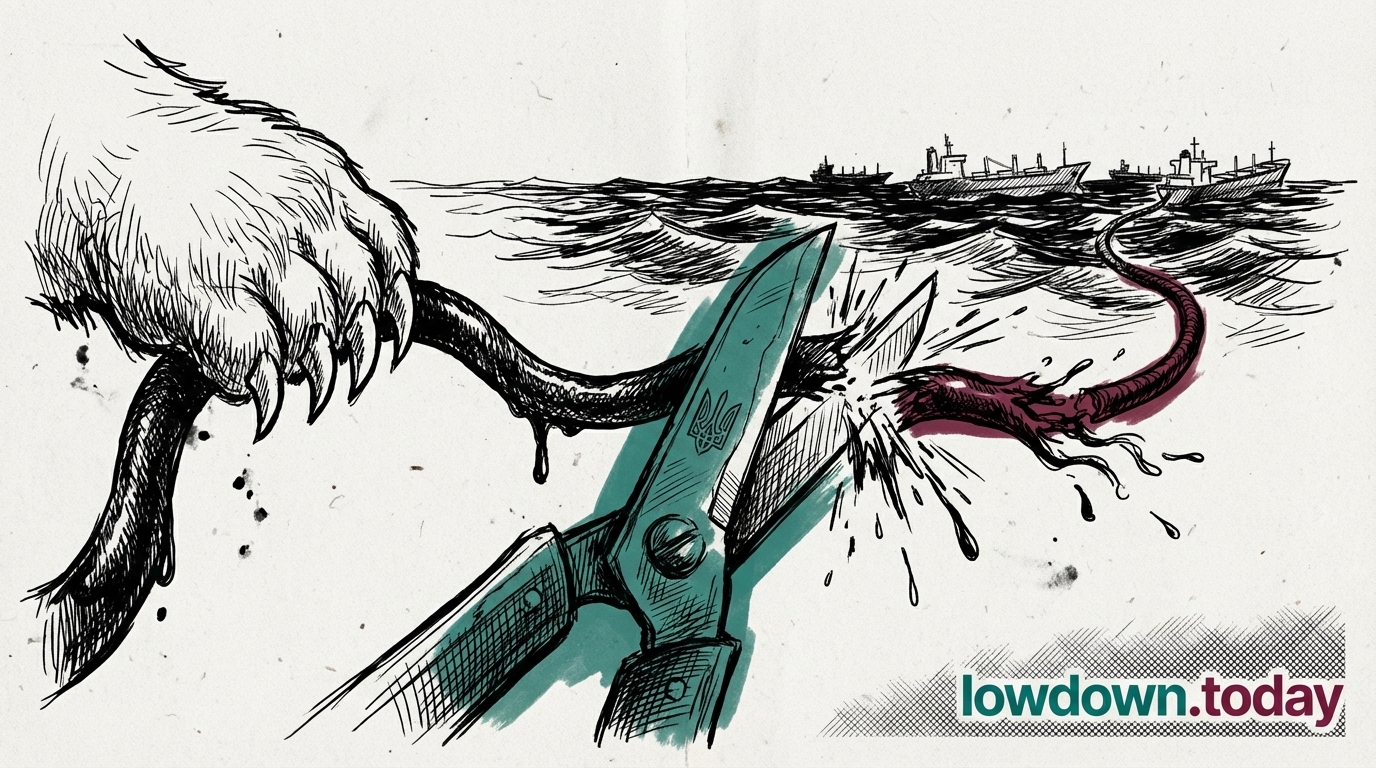
Ukrainian strikes shut down Russia's two largest Baltic export terminals at least four times in ten days, collapsing seaborne crude exports by 43% and costing Moscow roughly $1 billion in a single week. President Zelenskyy framed the campaign as 'Ukraine's own sanctions,' a direct substitute for the US Treasury waivers that released 124 million barrels of Russian oil on 12 March.

Key takeaway

Ukraine is building an autonomous war-fighting model replacing weakening Western support with domestic production and Gulf revenue.

This briefing mapped
Loading map…
Military
Economic
Diplomatic
Domestic
Regulatory

Four drone strikes on Baltic terminals collapsed Russia's seaborne crude shipments by 43%, costing Moscow roughly $1 billion in seven days.

Sources profile:This story draws on centre-left-leaning sources from United States and Qatar
United StatesQatar

Ukrainian drones struck Ust-Luga and Primorsk Baltic oil terminals at least four times between 22 and 31 March, collapsing weekly Russian seaborne crude exports from 4.07 million bpd to 2.32 million bpd — a 43% single-week drop and the steepest in modern Russian export history.

Ukraine demonstrated it can enforce sanctions by destroying export infrastructure when international enforcement weakens. 

Ukraine's interception rate reached 89.9% in March as domestically produced drones costing under $2,000 each displaced $13.5 million Patriot rounds for most Shahed kills.

Sources profile:This story draws on neutral-leaning sources

Ukraine's air defence interception rate reached 89.9% in March 2026, the highest monthly figure of the war, with interceptor drones accounting for over 30% of all air defence kills and more than 70% of Shahed downings. A single interceptor drone costs under $2,000 versus $13.5 million for a PAC-3 MSE round.

The cost asymmetry between attack drones and interceptors has reversed, potentially breaking Ukraine's dependency on US missile production. 

Sources:C4ISRNET

Moscow imposed a four-month gasoline export ban after Baltic port damage forced the Kirishi refinery offline and threatened four more facilities processing 55 million tonnes annually.

Sources profile:This story draws on mixed-leaning sources from Netherlands
Netherlands

Russia imposed a gasoline export ban effective 1 April through 31 July 2026 after Ust-Luga halted all fuel oil and gasoline intake on 25 March and the Kirishi refinery ceased operations, with three further refineries in Yaroslavl, Moscow, and Ryazan facing cascade shutdowns.

The ban confirms the Baltic strikes have cascaded from export infrastructure into Russia's domestic fuel supply chain. 

Daily ground engagements dropped by a quarter within ten days of the offensive's opening fury, and ISW assessed Russia is unlikely to breach the fortified line shielding Kramatorsk.

Sources profile:This story draws on neutral-leaning sources

ISW assessed on 31 March that Russian forces are 'unlikely to seize the Fortress Belt in 2026' after daily engagements fell from a peak of 163 on the Pokrovsk axis to 120 by 30 March, with Russian 3rd Combined Arms Army elements near Kryva Luka and Zakitne making no progress since 22 March.

ISW's assessment that Russia cannot seize the Fortress Belt in 2026 is its most definitive territorial forecast of the war. 

Ukrainian cruise missiles struck the Promsintez plant 1,000 km from the front line while attack drones ignited fires across the YANOS refinery in Yaroslavl.

Sources profile:This story draws on centre-leaning sources from Ukraine
Ukraine
LeftRight

Ukraine is exchanging three years of battle-tested counter-drone expertise for Gulf security agreements, POW releases, and a diplomatic constituency beyond Europe.

Sources profile:This story draws on centre-leaning sources from France
France
LeftRight

Zelenskyy completed a three-state Gulf tour between 27 and 28 March, signing 10-year security agreements with Saudi Arabia and Qatar and securing cooperation terms with the UAE. Over 200 Ukrainian counter-drone specialists are deployed across four Gulf states, with 30 more assigned to Jordan and Kuwait. Six countries submitted formal cooperation requests.

The Gulf agreements transform Ukraine from an aid recipient into an arms exporter with commercial ties that give six states a material stake in its survival. 

Sources:Euronews

Moscow declared Luhansk 'liberated' while telling Washington it would seize all of Donbas within two months, a timeline battlefield data contradicts.

Sources profile:This story draws on centre-left-leaning sources from Qatar and Ukraine
QatarUkraine

Russia announced 'completion of the liberation of the Luhansk People's Republic' on 1 April 2026, despite more than 99% of Luhansk Oblast having been under Russian control since the 2022 annexation. Russia also communicated via US intermediaries that it intends to seize all of Donbas within two months.

The two-month ultimatum, delivered through US intermediaries, functions as diplomatic pressure calibrated to political, not operational, rhythms. 

Peskov dismissed Zelenskyy's proposal for a ceasefire on energy infrastructure attacks, claiming Russian forces are advancing on all fronts.

Sources profile:This story draws on centre-left-leaning sources from Netherlands
Netherlands

Kremlin spokesman Dmitry Peskov rejected Zelenskyy's Easter ceasefire proposal on 31 March, saying 'We don't see any clearly articulated initiative,' while claiming Russian forces are 'advancing across the entire front line.'

Russia's rejection of even a limited ceasefire removes diplomatic off-ramps ahead of the 11 April sanctions waiver deadline. 

Sources:Moscow Times

Independent polls show Tisza dominating ahead of the 12 April vote, but government-affiliated pollsters show the opposite, producing the widest divergence of the election cycle.

Sources profile:This story draws on mixed-leaning sources from United States
United States

Rising oil prices could not prevent Russia's National Wealth Fund from haemorrhaging reserves as the business climate index turned negative for the first time in three years.

Sources profile:This story draws on centre-left-leaning sources from Netherlands
Netherlands

Russia's National Wealth Fund shed 400 billion roubles ($4.8 billion) in January and February 2026. Russia's business climate index turned negative in March for the first time since October 2022. Fixed capital investment fell 2.3% in real terms during 2025. Russia dropped planned 10% non-military spending cuts after the Iran war oil price surge.

The fiscal data shows that record defence spending is eroding Russia's financial buffers faster than wartime oil revenues can replenish them. 

Sources:Moscow Times

Every EU foreign minister except Hungary's gathered at the site where over 400 civilian bodies were found after Russia's 2022 retreat.

Sources profile:This story draws on mixed-leaning sources from United States
United States

All EU foreign ministers except Hungary's visited Bucha on 31 March for the fourth anniversary of the discovery of over 400 civilian bodies after Russia's retreat in April 2022. Kaja Kallas and Radoslaw Sikorski led the delegation.

The visit signals sustained European solidarity four years after the massacre, with Hungary's absence reinforcing the political isolation ahead of its 12 April election. 

A State Duma delegation under EU sanctions met four Republican members of Congress in the first such visit in years, authorised by the State Department.

Sources profile:This story draws on mixed-leaning sources from United States
United States

Brussels shelved its permanent Russian oil import ban proposal with no replacement date, but confirmed the 25 April LNG ban for short-term contracts.

Sources profile:This story draws on centre-leaning sources from France
France
LeftRight

The EU Commission postponed its proposal for a permanent Russian oil import ban with no new date, while confirming the 25 April LNG ban for short-term contracts proceeds as scheduled, amid Iran-war price volatility and the Druzhba pipeline standoff.

The postponement reveals how Iran-war volatility and the Druzhba pipeline standoff have fractured EU consensus on energy sanctions. 

Sources:Euronews
Closing comments

Escalation risk is bifurcated. On the energy infrastructure axis, both sides are attacking at near-maximum intensity: Ukraine striking Baltic ports, Russia launching record drone barrages. On the ground, the spring offensive's deceleration reduces the risk of a sudden territorial breakthrough. The diplomatic track is active but unproductive. Phase assessment: developing, not breaking.

Different Perspectives
Ukraine
Ukraine
Zelenskyy framed the Baltic port strikes as 'Ukraine's own sanctions,' a direct substitute for the US Treasury waivers that released 124 million barrels of Russian oil. The Gulf tour and drone export deals have opened a diplomatic and revenue track outside Western aid architecture.
Russia
Russia
Moscow rejected the Easter ceasefire, claimed full Luhansk control, and relayed a two-month Donbas ultimatum through US intermediaries while imposing a gasoline export ban through July. Peskov insisted Russian forces are advancing on all fronts despite ISW data showing the spring offensive decelerating.
United States
United States
The Pentagon notified Congress of a $750 million PURL fund diversion to restock American inventories depleted by the Iran war, while the State Department authorised a sanctioned Russian Duma delegation's visit to Capitol Hill. US envoys Witkoff and Kushner held a 1 April call with Zelenskyy as Russia's two-month Donbas ultimatum was disclosed.
European Union
European Union
The Commission froze Hungary's €16.2 billion SAFE access as punishment for its Ukraine loan blockade, while EU foreign ministers visited Bucha in a 26-of-27 demonstration of solidarity. Brussels deferred its permanent Russian oil ban with no new date under Iran-war price pressure.
Hungary
Hungary
Orban's government halted reverse gas exports to Ukraine, boycotted the Bucha anniversary visit, and remained the sole EU member excluded from the SAFE programme. The 12 April election, with Tisza leading by up to 19 points in independent polls, will determine whether this blocking position survives.
Gulf States
Gulf States
Saudi Arabia and Qatar signed 10-year security agreements with Ukraine, receiving over 200 counter-drone specialists who apply battlefield expertise against the same Iranian-made drones Russia fires at Ukrainian cities. Qatar is the primary channel for Ukrainian POW releases and the return of deported children.

