Skip to content
Briefings are running a touch slower this week while we rebuild the foundations.See roadmap
Russia-Ukraine War 2026
1APR

Russia bans gasoline exports to July

2 min read
16:30UTC

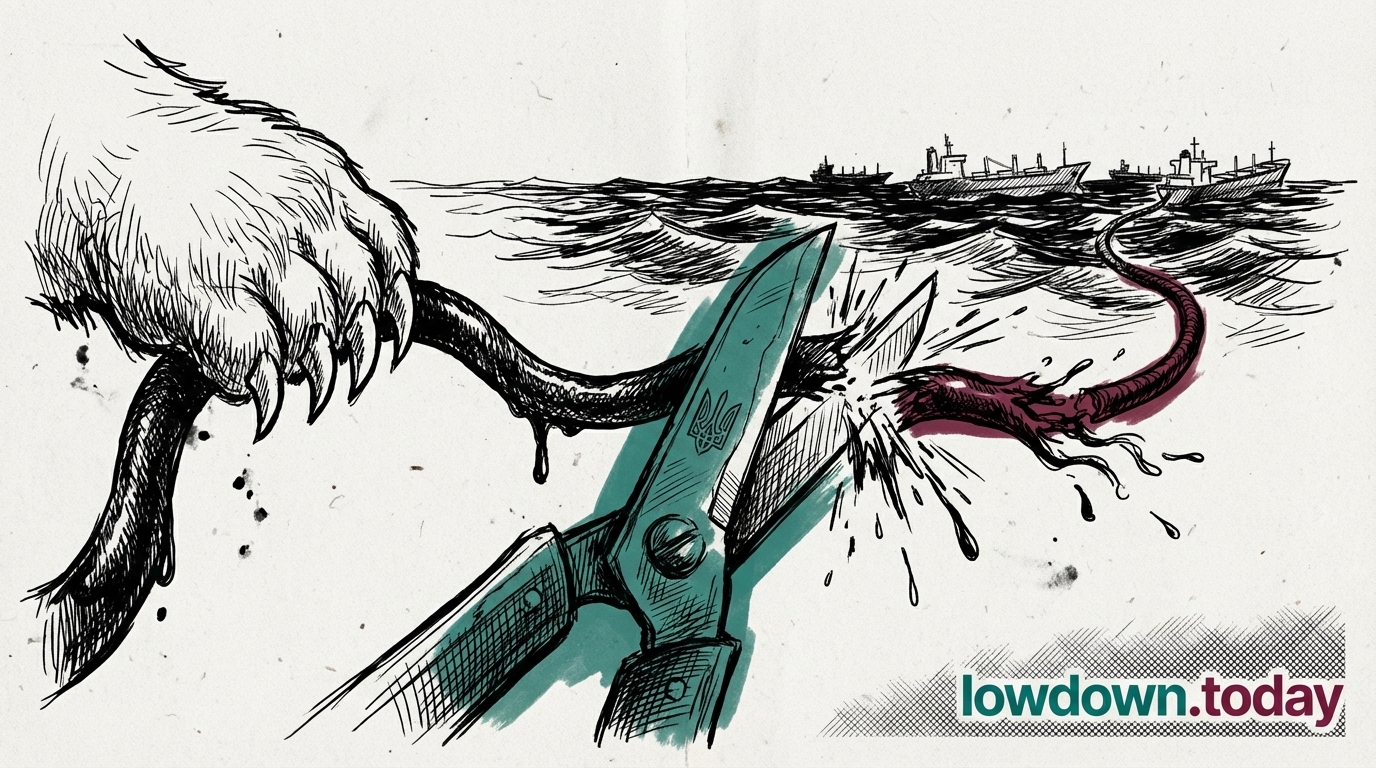
Moscow imposed a four-month gasoline export ban after Baltic port damage forced the Kirishi refinery offline and threatened four more facilities processing 55 million tonnes annually.

ConflictDeveloping
Key takeaway

Russia's gasoline export ban through July confirms Baltic port damage has crippled its refining supply chain.

Russia banned all gasoline exports from 1 April through 31 July 2026 after Ust-Luga halted fuel oil and gasoline intake on 25 March. The Kirishi refinery (KINEF), responsible for 6.6% of Russia's total oil refining, ceased operations 1. Three more refineries, in Yaroslavl (YANOS), Moscow, and Ryazan, face the same problem: fuel oil comprises 18 to 35% of their output, has negligible domestic demand, and now has nowhere to export.

A refinery specialist told Reuters that stockpiles would fill "within days," forcing cuts "to minimum levels and then potentially shut units." The four facilities process a combined 55 million tonnes of crude annually. The ban was framed publicly as a response to Iran-war price volatility. The actual trigger is that the export infrastructure carrying refined products out of northwest Russia no longer functions.

The earlier Ukrainian strikes on the Labinsk oil depot and the Afipsky refinery targeted storage and processing. The Baltic campaign strikes at the chokepoint where refined product meets ocean shipping. Russia now faces the spring and summer driving season with its largest export-facing refineries offline or throttled.

Deep Analysis

In plain English

Oil refineries turn crude oil into usable products: petrol, diesel, and fuel oil. Russian refineries near the Baltic ports produce large amounts of fuel oil, which they export since Russia doesn't burn much of it domestically. With the Baltic ports shut, the refineries have nowhere to send the fuel oil. Storage tanks fill up within days, forcing the refinery to slow or stop entirely. The Kirishi refinery, which handles 6.6% of all Russian oil refining, has already gone offline. Russia banned all petrol exports for four months. This is partly to protect domestic supply, but it also signals that the Baltic ports will not be fixed quickly, and that the damage to refining operations is serious.

Deep Analysis
Root Causes

The immediate cause is the physical blockage of fuel oil export pathways. Fuel oil, which comprises 18-35% of the output at the affected refineries, has no significant domestic market in Russia and must be exported. With Ust-Luga halted, the product accumulates in tanks until refineries must slow or stop production.

The structural cause is Russia's refinery geography. Soviet-era refining capacity was built in northwest Russia to serve European export markets. Post-2022 rerouting moved crude buyers to Asia, but the refinery locations and export infrastructure were not changed. Ukraine's strikes exploit this geographic mismatch.

What could happen next?
  • Consequence

    Russia's domestic fuel price stability depends on maintaining refinery output. If the four threatened facilities reduce to minimum operations, Russia faces summer fuel shortages in regions far from alternative supply.

  • Risk

    If the refinery cascade shutdown reaches the Moscow and Ryazan facilities, Russia faces politically sensitive domestic fuel shortages close to the capital.

First Reported In

Update #9 · Ukraine halves Russia's Baltic oil exports

Moscow Times / Reuters· 1 Apr 2026
Read original
Different Perspectives
NATO eastern flank (B9 + Nordics)
The B9+Nordic Bucharest joint statement on 13 May reaffirmed Ukraine's sovereignty within internationally recognised borders and backed NATO eastern flank reinforcement; the summit accepted Zelenskyy's bilateral drone deal proposal as a structural alternative to the stalled US export approval pathway, treating it as a European defence architecture question rather than aid delivery.
IAEA / Rafael Grossi
Grossi is still negotiating a sixth ZNPP repair ceasefire with no agreement after 50 days of 750 kV line disconnection; the 3 May ERCL drone strike that destroyed environmental monitoring equipment represents a qualitative escalation in infrastructure degradation that the IAEA has documented but cannot compel either party to halt.
Péter Magyar / Hungary
Magyar's incoming foreign minister pledged on 12 May that Hungary will stop abusing EU veto rights; the pledge is a statement of intent rather than a binding legal commitment, and Magyar's MEPs voted against the €90 billion loan as recently as April, while a planned referendum on Ukraine's EU accession preserves a downstream blocking lever.
EU Council and European Commission
The Magyar cabinet formation on 12 May removes the Hungary veto that had blocked the €9.1 billion first tranche since February; the Commission is now coordinating the three-document disbursement package for an early-June vote. The structural blocker is gone; the disbursement question is now scheduling, not politics.
Donald Trump / White House
Trump announced a 9-11 May three-day ceasefire with a 1,000-for-1,000 prisoner exchange attached, then called peace 'getting very close' on 11-13 May while Russia's 800-drone barrage was under way; his public framing adopted Russian diplomatic language without securing any Russian operational concession or verifying the exchange was agreed.
Vladimir Putin / Kremlin
Putin told reporters on 9 May the war is 'coming to an end' while Peskov confirmed on 13 May that territorial demands are unchanged and Russia requires full Ukrainian withdrawal from all four annexed regions; the verbal accommodation costs Moscow nothing and conditions any summit on a pre-finalised treaty Kyiv cannot accept.
