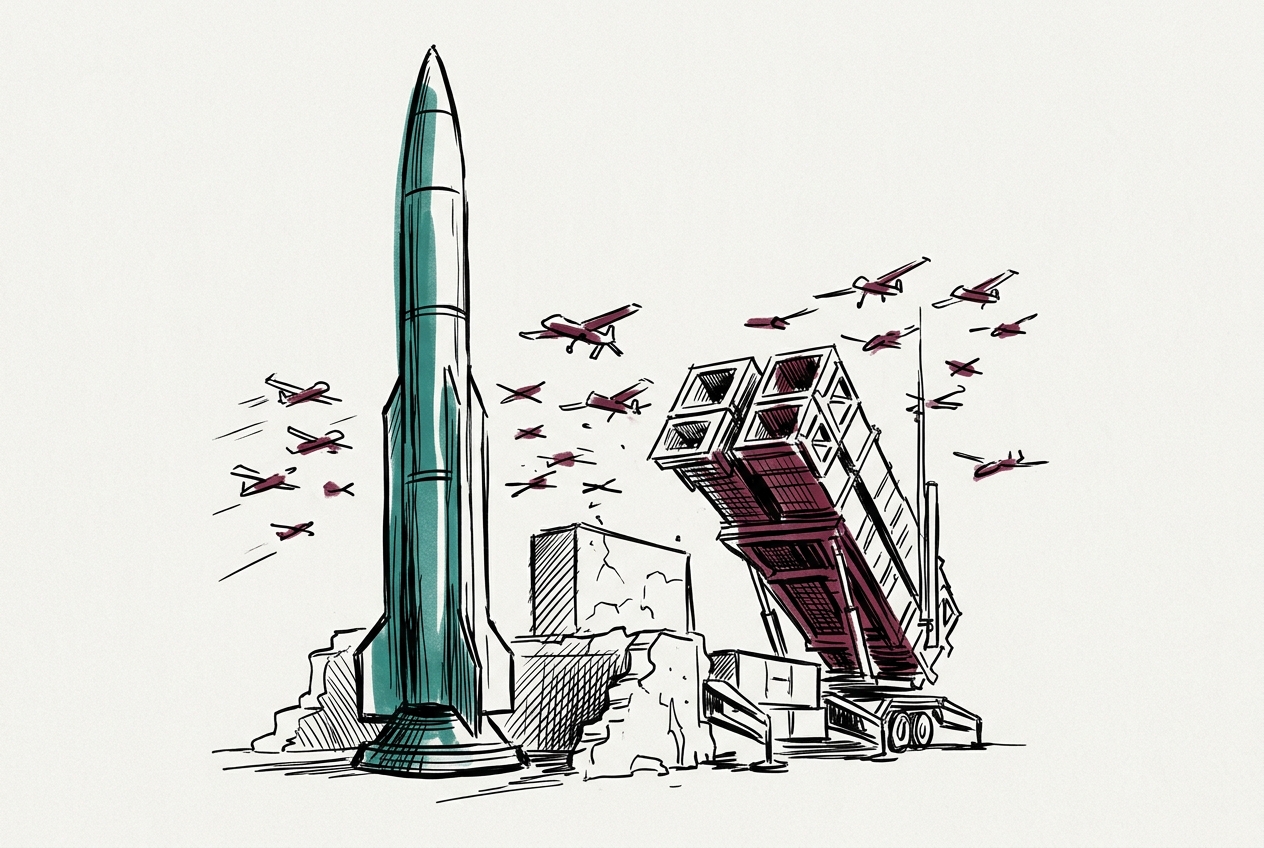
PAC-3 MSE
Hit-to-kill interceptor for the Patriot system; strained across two simultaneous wars and a US export freeze.
On 6 July, PAC-3 MSE supply remained unable to cover Ukraine’s ballistic-missile defence: no ballistic or hypersonic missiles were intercepted across five mass strikes that week.
Last refreshed: 22 September 2026 · Appears in 3 active topics
Why can't allies send Ukraine the Patriot interceptors it actually needs?
Timeline for PAC-3 MSE
Ballistic intercept rate falls to zero
Russia-Ukraine War 2026Mentioned in: Hegseth watches five laser weapons fire
Drones: Industry & DefenceFailed to intercept 19 of 34 Iskander-M missiles due to rationed stock
Russia-Ukraine War 2026: Iskander gap exposes the Patriot shortageIntercepted the IRGC barrage at Bahrain despite magazine sitting at 87 per cent depletion
Iran Conflict 2026: Iran hits US bases in three countriesSaudi Arabia left off the Patriot list
Iran Conflict 2026Background
PAC-3 MSE is a hit-to-kill interceptor used by the Patriot air-defence system against ballistic-missile threats. On 15 April, Ukraine’s need for this class of interceptor was distinct from Germany’s GEM-T purchase, because GEM-T could engage aircraft, drones and cruise missiles but not ballistic missiles.
The interceptor’s importance comes from its limited role, not its use against every aerial threat. On 14 and 15 June, Ukraine intercepted 15 of 34 Russian Iskander-M ballistic missiles, exposing the consequence of rationed ballistic-missile defence.
PAC-3 MSE also sits within a wider Patriot supply chain serving US and allied forces. On 9 June, reporting on Gulf demand identified the Camden, Arkansas factory as producing roughly 620 rounds a year, making production capacity a lasting constraint on its availability.
PAC-3 MSE supply remains constrained
On 9 April, the US Army awarded Lockheed Martin a $4.76bn PAC-3 MSE production contract running to June 2030. The event record said 94% of the run was already committed to Foreign Military Sales, leaving little scope for Ukraine while its need was measured in dozens of interceptors each month.
That constraint showed in Ukraine on 6 July. Across five mass strikes during The Week of 6 to 12 July, air defences intercepted no ballistic or hypersonic missiles, although drone interception remained between 92% and 100%. PAC-3 MSE is the Patriot interceptor needed against ballistic warheads, and Lockheed could not promise delivery dates.
Reference
What is the difference between PAC-3 MSE and GEM-T Patriot missiles?
Can Lockheed Martin fix the PAC-3 shortage quickly?
Why is Ukraine no longer intercepting Russian ballistic missiles?
Why is there a shortage of PAC-3 MSE missiles?
How depleted are Gulf states' Patriot interceptor stocks?
Why did Japan export Patriot missiles to the United States?


