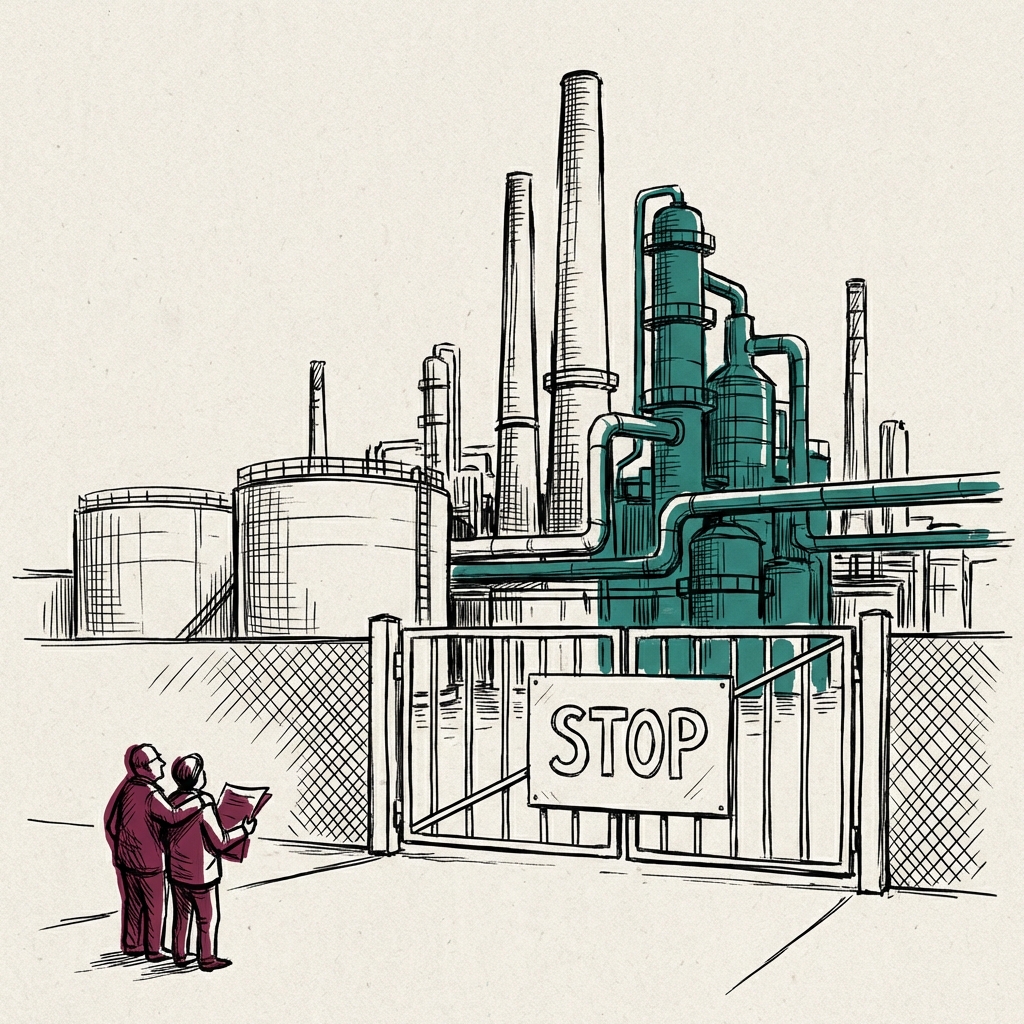
Kirishi refinery
KINEF refinery near St Petersburg processing 6.6% of Russian output; forced offline.
Last refreshed: 1 April 2026 · Appears in 1 active topic
With KINEF offline and exports halved, is Ukraine's drone campaign cracking Russia's fuel economy?
Timeline for Kirishi refinery
Mentioned in: Syzran Hit, Quarter of Refining Halted
Russia-Ukraine War 2026Mentioned in: ISW Logs Third Straight Net-Loss Week for Russia
Russia-Ukraine War 2026Mentioned in: Russia bans gasoline exports to July
Russia-Ukraine War 2026Background
The Kirishi refinery — formally KINEF (Kirishisky NefteOrgSintez) — is one of Russia's largest oil processing facilities, situated on the Volkhov river southeast of St Petersburg in Leningrad Oblast. Handling approximately 6.6% of Russian national refining capacity, Kirishi ceased operations in March 2026 as part of a Cascade of refinery shutdowns triggered by Ukrainian drone strikes on Baltic export infrastructure. Russia imposed a gasoline export ban effective 1 April through 31 July 2026 in direct response to the closures, with Ust-Luga having already halted all fuel oil and gasoline intake on 25 March.
KIRIHSI dates to Soviet planning as a strategic inland refinery positioned to supply Leningrad (St Petersburg) and the Baltic region. Its product slate includes motor gasoline, diesel, fuel oil, and petrochemical feedstocks. The refinery feeds into the Ust-Luga and Primorsk Baltic export terminals that Ukrainian drones targeted four times between 22 and 31 March, collapsing weekly Russian seaborne crude exports from 4.07 million bpd to 2.32 million bpd — a 43% single-week drop.
The forced offline of Kirishi is significant beyond the immediate revenue loss. Russia's domestic fuel supply depends on uninterrupted refinery throughput; the gasoline export ban indicates Moscow is prioritising domestic supply over hard currency earnings. Three further refineries in Yaroslavl, Moscow, and Ryazan face potential Cascade shutdowns if the Baltic terminal infrastructure remains offline.
What is the Kirishi refinery and why is it important to Russia?
Why did Russia impose a gasoline export ban in April 2026?
How much of Russia's refining capacity does Kirishi represent?
What happened to Russian oil exports in March 2026?
Where is the Kirishi refinery?
