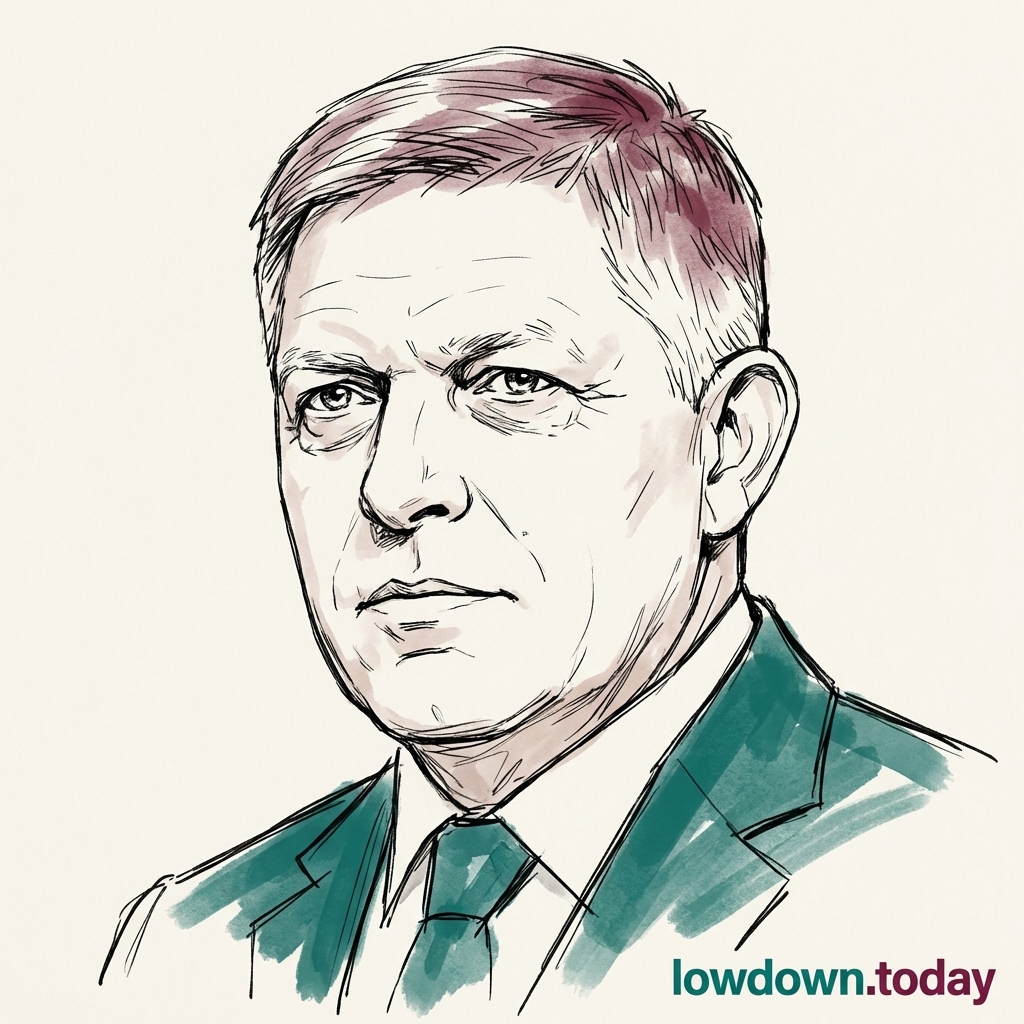
Robert Fico
Slovak PM; sole remaining CJEU Challenger to the EU gas ban; weaponised Druzhba oil dependency against Ukraine.
Last refreshed: 28 July 2026 · Appears in 2 active topics
Can one EU leader use energy dependency to shield Russia from inside the bloc?
Timeline for Robert Fico
Led Slovakia's CJEU annulment challenge as sole remaining live challenger after Hungary's withdrawal
European Energy Markets: Slovakia loses CJEU stay on banPrepared a CJEU suspension application arguing the ban required unanimity not a qualified-majority vote
European Energy Markets: Hungary's challenge is now a one-player gameMentioned in: Tisza takes 137 seats; Orbán concedes
Russia-Ukraine War 2026Mentioned in: Tisza leads Fidesz by 25 in final poll
Russia-Ukraine War 2026Mentioned in: Tisza leads Fidesz by 19 points
Russia-Ukraine War 2026Background
Robert Fico has served as Slovakia's Prime Minister three times (2006-2010, 2012-2018, and since October 2023). He leads SMER-SD, a party that has drifted from centre-left social democracy toward nationalist, pro-Moscow populism. He survived an assassination attempt in May 2024, when he was shot five times in Handlová. He visited Vladimir Putin in Moscow in January 2025, the first EU head of government to do so since the 2022 invasion.
Fico declared a national oil supply emergency after the Druzhba pipeline shut down, threatening to withdraw Slovakia's support for Ukraine's EU accession and halting emergency electricity transfers to Kyiv. That posture placed him alongside Hungary's Viktor Orbán in a two-state bloc diluting EU consensus on sanctions and rearmament. After Péter Magyar's Tisza government took office in Budapest on 9 May 2026, the Hungarian CJEU annulment challenge to Regulation (EU) 2026/261 -- the EU pipeline-gas import ban binding on 17 June -- was effectively abandoned. Fico is now the sole live litigant: Slovakia is preparing a suspension application to the Court of Justice arguing the ban required unanimity rather than a qualified-majority vote.
Fico's use of energy dependency as political leverage has made him the most openly disruptive voice within the European Union on Ukraine policy. His solo CJEU challenge to the gas ban is both a legal manoeuvre and a domestic signal: it positions Slovakia as a sovereign hold-out on energy policy even as Hungary's new government aligns with Brussels. Whether the suspension application succeeds or fails before 17 June, the underlying commercial exposure -- Slovak industry's Reliance on Russian pipeline gas -- will define Fico's room for manoeuvre with both the Commission and Moscow for the remainder of his term.
Who is Robert Fico?
Why is Fico blocking EU support for Ukraine?
Was Robert Fico shot?
Did Fico visit Putin in Moscow?
Why is Slovakia challenging the EU gas import ban in the CJEU?
What did Robert Fico do during the Druzhba pipeline shutdown?


Written with AI from Lowdown's published reporting. Not individually reviewed by an editor. Updated 28 July 2026. Editorial standards.