Skip to content
Briefings are running a touch slower this week while we rebuild the foundations.See roadmap
Russia-Ukraine War 2026
1APR

EU ministers mark Bucha anniversary

1 min read
16:30UTC

Every EU foreign minister except Hungary's gathered at the site where over 400 civilian bodies were found after Russia's 2022 retreat.

ConflictDeveloping
Key takeaway

All EU foreign ministers except Hungary's visited Bucha, reinforcing Budapest's political isolation.

EU High Representative Kaja Kallas and foreign ministers from every EU member state except Hungary visited Bucha on 31 March 1. The city was the site where over 400 civilian bodies were found after Russia's retreat in April 2022, many with evidence of summary execution. The EU had sanctioned nine individuals for the massacre earlier in March, including Col Gen Chayko .

Polish Foreign Minister Radoslaw Sikorski was direct: "Anybody who claims Vladimir Putin is not a war criminal should come and see for themselves." Hungary's absence carried its own message. Budapest continues to block the €90 billion EU loan for Ukraine and is the sole EU member excluded from the SAFE rearmament programme. The visit functions as a demonstration of European consensus that pointedly excludes the one government that has obstructed it.

Deep Analysis

In plain English

Bucha is a town near Kyiv where Russian forces occupied for 33 days in early 2022. When they withdrew, Ukrainian and international investigators found over 400 civilian bodies, many showing signs of execution. On the fourth anniversary of those discoveries, foreign ministers from every EU country except Hungary visited Bucha. Poland's foreign minister said anyone who claims Putin is not a war criminal should come and see for themselves. Hungary's absence was noticed. Budapest is the only EU government currently blocking collective EU support for Ukraine. The visit, with 26 out of 27 foreign ministers present, was partly a demonstration of the isolation that position creates.

What could happen next?
  • Meaning

    Hungary's absence from the Bucha visit, days before the 12 April election, reinforces the political stakes of that election for European solidarity on Ukraine.

First Reported In

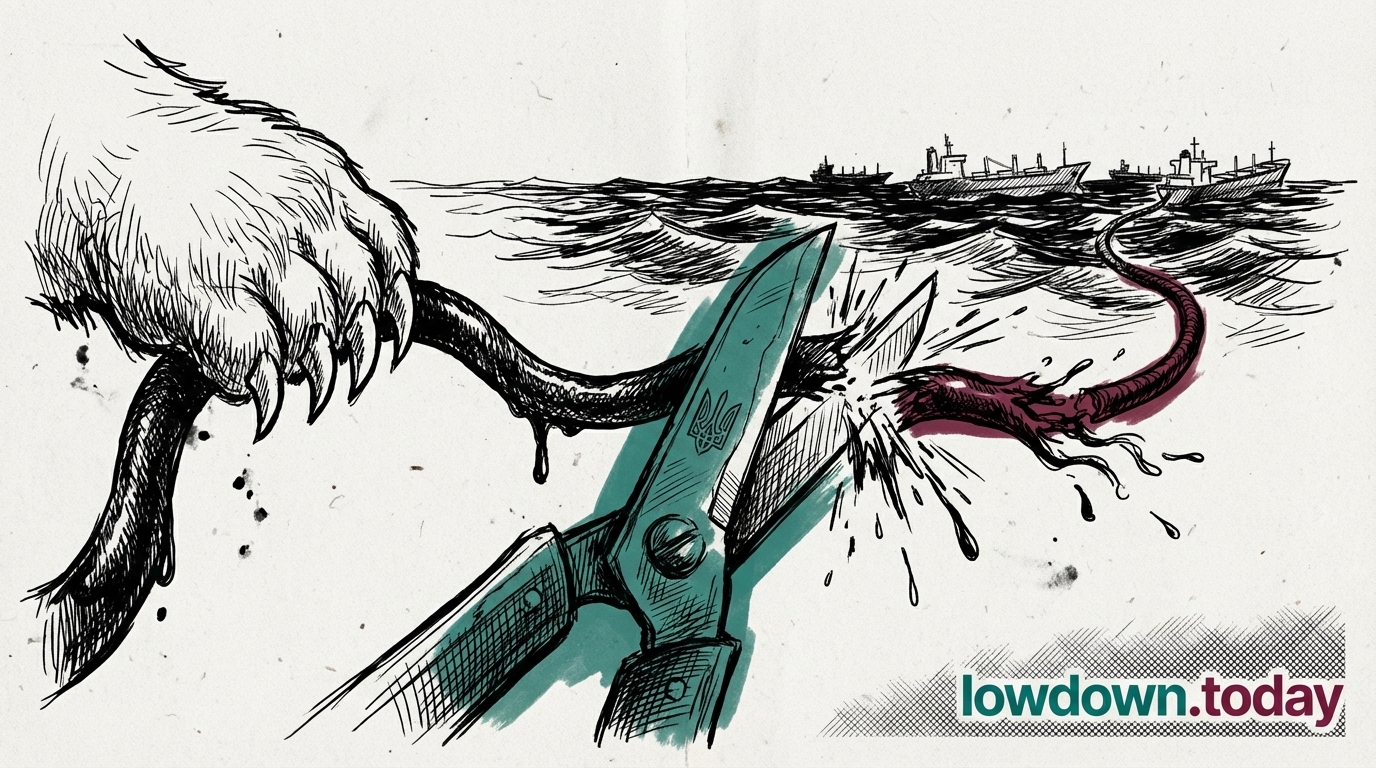
Update #9 · Ukraine halves Russia's Baltic oil exports

Washington Times / AP· 1 Apr 2026
Read original
Different Perspectives
NATO eastern flank (B9 + Nordics)
The B9+Nordic Bucharest joint statement on 13 May reaffirmed Ukraine's sovereignty within internationally recognised borders and backed NATO eastern flank reinforcement; the summit accepted Zelenskyy's bilateral drone deal proposal as a structural alternative to the stalled US export approval pathway, treating it as a European defence architecture question rather than aid delivery.
IAEA / Rafael Grossi
Grossi is still negotiating a sixth ZNPP repair ceasefire with no agreement after 50 days of 750 kV line disconnection; the 3 May ERCL drone strike that destroyed environmental monitoring equipment represents a qualitative escalation in infrastructure degradation that the IAEA has documented but cannot compel either party to halt.
Péter Magyar / Hungary
Magyar's incoming foreign minister pledged on 12 May that Hungary will stop abusing EU veto rights; the pledge is a statement of intent rather than a binding legal commitment, and Magyar's MEPs voted against the €90 billion loan as recently as April, while a planned referendum on Ukraine's EU accession preserves a downstream blocking lever.
EU Council and European Commission
The Magyar cabinet formation on 12 May removes the Hungary veto that had blocked the €9.1 billion first tranche since February; the Commission is now coordinating the three-document disbursement package for an early-June vote. The structural blocker is gone; the disbursement question is now scheduling, not politics.
Donald Trump / White House
Trump announced a 9-11 May three-day ceasefire with a 1,000-for-1,000 prisoner exchange attached, then called peace 'getting very close' on 11-13 May while Russia's 800-drone barrage was under way; his public framing adopted Russian diplomatic language without securing any Russian operational concession or verifying the exchange was agreed.
Vladimir Putin / Kremlin
Putin told reporters on 9 May the war is 'coming to an end' while Peskov confirmed on 13 May that territorial demands are unchanged and Russia requires full Ukrainian withdrawal from all four annexed regions; the verbal accommodation costs Moscow nothing and conditions any summit on a pre-finalised treaty Kyiv cannot accept.
