
Skip to content
Briefings are running a touch slower this week while we rebuild the foundations.See roadmap
Iran Conflict 2026
10APR

Day 42: Islamabad talks open already cracked

4 min read
08:05UTC

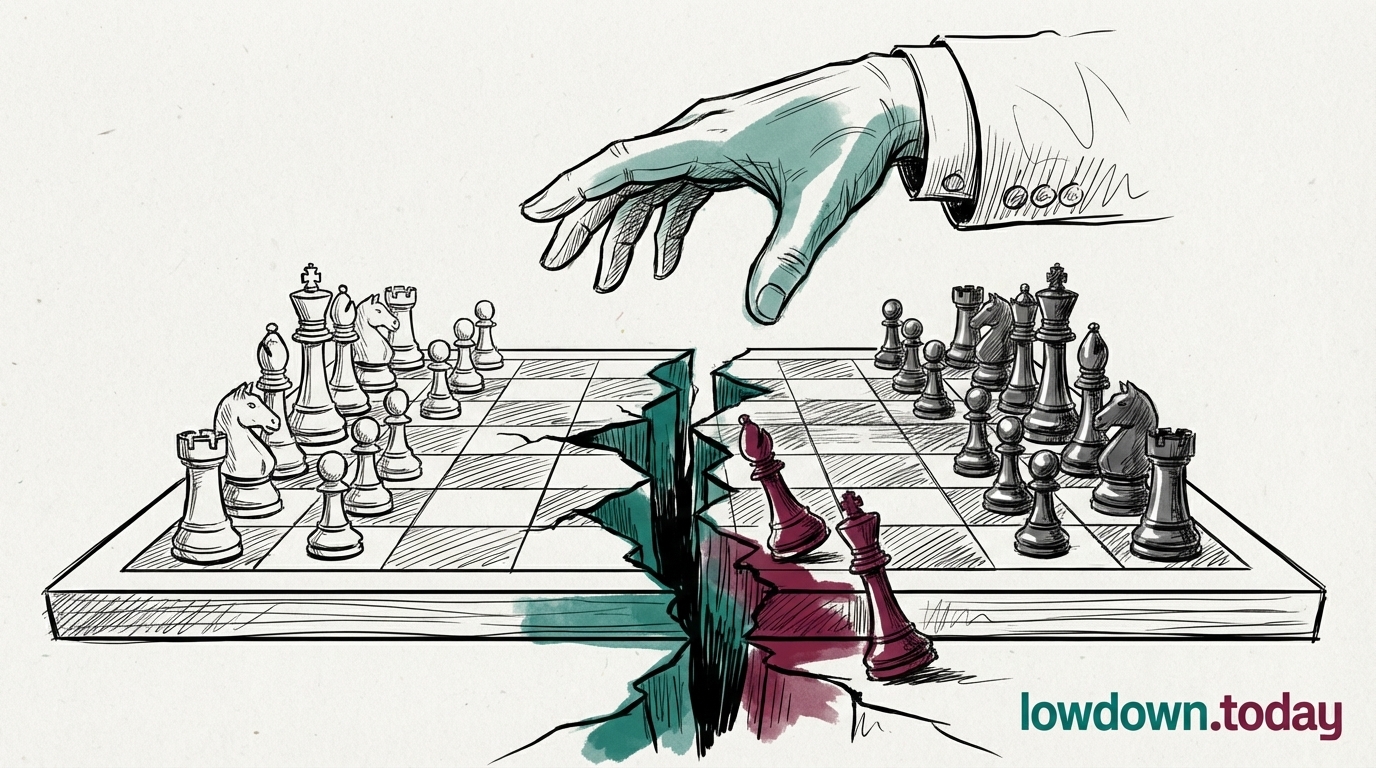
Formal US-Iran negotiations begin Saturday at the Serena Hotel in Islamabad, but Pakistan's mediator neutrality is blown, the US delegation includes two envoys whose removal was a ceasefire precondition, and both sides have published irreconcilable positions on uranium enrichment.

Key takeaway

Every structural element of the ceasefire is weaker than the announcement implied.

This briefing mapped
Loading map…
Diplomatic
Military
Economic
Humanitarian
Domestic
Regulatory

JD Vance, US Vice President

Sources profile:This story draws on centre-left-leaning sources from United States and Qatar
United StatesQatar

JD Vance led a 30-member US delegation including Steve Witkoff and Jared Kushner to Islamabad ahead of Saturday formal talks at the Serena Hotel — the highest-level direct US-Iran engagement since 1979.

Vice-presidential participation at direct US-Iran talks is unprecedented in 47 years; the composition of both delegations signals the talks are as much about domestic politics as substance. 

Sources:Bloomberg·Al Jazeera
1 Bloomberg2 Al Jazeera3 Jerusalem Post4 Euronews5 Al-Monitor6 Axios7 UN News8 Al Jazeera9 Iran International10 Al Jazeera11 Bloomberg12 Hengaw13 Iran HRM14 CNBC15 The Hill
Briefing analysis

Saturday's Islamabad session will be the highest-level direct US-Iran diplomatic engagement since the 1979 hostage crisis severed formal relations. The JCPOA negotiations (2013-2015) were conducted through intermediaries and multilateral channels, with the US and Iran never meeting bilaterally at principal level. The Muscat and Geneva pre-war contacts in early 2026 were at envoy level (Witkoff) rather than vice-presidential. Vance's presence elevates the engagement to a seniority that has no precedent in 47 years of US-Iran relations, which makes the structural friction around the delegation's composition and the venue's compromised neutrality all the more consequential.

Khawaja Asif, Pakistan Defence Min.

Sources profile:This story draws on centre-leaning sources from Israel
Israel
LeftRight

Pakistan Defence Minister Khawaja Asif posted on X calling Israel 'evil and a curse for humanity' and described it as a 'cancerous state'; the post was deleted but screenshots circulated, prompting Netanyahu's office to declare Pakistan cannot serve as a neutral arbiter.

If the venue loses credibility, there is no obvious replacement: Qatar refused mediation in March and no other capital has standing with both parties. 

Sources:Jerusalem Post
1 Bloomberg2 Al Jazeera3 Jerusalem Post4 Euronews5 Al-Monitor6 Axios7 UN News8 Al Jazeera9 Iran International10 Al Jazeera11 Bloomberg12 Hengaw13 Iran HRM14 CNBC15 The Hill

Donald Trump and Mohammad Eslami

Sources profile:This story draws on centre-leaning sources from France
France
LeftRight

Trump posted 'There will be no enrichment of Uranium' on Truth Social while Iran's Atomic Energy Organisation head Eslami responded that enrichment restriction demands 'will be buried'; Iran's accepted 10-point plan explicitly includes enrichment rights.

Both sides published mutually exclusive red lines on enrichment before Saturday's talks, leaving no face-saving formula visible. 

Sources:Euronews
1 Bloomberg2 Al Jazeera3 Jerusalem Post4 Euronews5 Al-Monitor6 Axios7 UN News8 Al Jazeera9 Iran International10 Al Jazeera11 Bloomberg12 Hengaw13 Iran HRM14 CNBC15 The Hill
Sources profile:This story draws on centre-left-leaning sources from United States and Israel
United StatesIsrael

Hezbollah fired a missile toward Tel Aviv on Friday triggering air raid sirens in Tel Aviv, Haifa, and Ashdod for the first time since the ceasefire — the missile was intercepted; approximately 70 rockets have been fired from Lebanon since the truce, and the IDF has continued daily strikes.

Lebanon's operational decoupling from the Iran ceasefire is confirmed: 70 rockets since the truce and continuing IDF strikes mean a parallel escalation track exists outside the Islamabad framework. 

Sources:Axios·UN News·Times of Israel
1 Bloomberg2 Al Jazeera3 Jerusalem Post4 Euronews5 Al-Monitor6 Axios7 UN News8 Al Jazeera9 Iran International10 Al Jazeera11 Bloomberg12 Hengaw13 Iran HRM14 CNBC15 The Hill

IRGC / Lloyd's List Intelligence

Sources profile:This story draws on mixed-leaning sources from United Kingdom, Qatar and 2 more
United KingdomQatarUnited StatesIran

On ceasefire Day 3, only seven ships transited the strait of Hormuz — none were oil tankers — while 325 oil tankers and 600-plus vessels remained stranded inside the Persian Gulf; Iran continued inspecting vessels, banning ships linked to Israel, and demanding tolls reportedly payable in cryptocurrency.

The ceasefire has reduced Hormuz transits rather than raised them; Iran's de facto customs authority over the strait is consolidating daily. 

Sources:Iran International·Al Jazeera·Bloomberg·Hengaw
1 Bloomberg2 Al Jazeera3 Jerusalem Post4 Euronews5 Al-Monitor6 Axios7 UN News8 Al Jazeera9 Iran International10 Al Jazeera11 Bloomberg12 Hengaw13 Iran HRM14 CNBC15 The Hill
Sources profile:This story draws on centre-left-leaning sources from United States
United States

The UN Security Council voted 11 to 2 for a resolution calling for Hormuz reopening; Russia and China vetoed, with China's veto protecting a toll architecture its own tankers already use to transit while Japanese and South Korean ships remain stranded.

The veto removes the multilateral route and confirms China's economic interest in the toll regime outweighs its stated support for free navigation. 

Sources:Bloomberg
1 Bloomberg2 Al Jazeera3 Jerusalem Post4 Euronews5 Al-Monitor6 Axios7 UN News8 Al Jazeera9 Iran International10 Al Jazeera11 Bloomberg12 Hengaw13 Iran HRM14 CNBC15 The Hill
Sources profile:This story draws on centre-left-leaning sources from Qatar
Qatar

UNIFIL reported six peacekeepers injured and one detained by the IDF after a logistics convoy was blocked; the WHO pleaded for reversal of Israeli evacuation orders covering the Jnah area of Beirut where two hospitals at capacity hold approximately 450 patients with no alternative facilities.

IDF action against UNIFIL peacekeepers and civilian hospital pressure mark Lebanon's humanitarian infrastructure breaking down independently of ceasefire negotiations

Sources:Al Jazeera·NetBlocks
1 Bloomberg2 Al Jazeera3 Jerusalem Post4 Euronews5 Al-Monitor6 Axios7 UN News8 Al Jazeera9 Iran International10 Al Jazeera11 Bloomberg12 Hengaw13 Iran HRM14 CNBC15 The Hill

Hengaw human rights organisation

Sources profile:This story draws on neutral-leaning sources

Hengaw published its 10th casualty report covering 40 days of war: 7,650 killed including 1,030 civilians and 189 minors, with military targets struck in 196 cities across 27 of Iran's 31 provinces and more than 2,700 wartime arrests documented.

A 13.5% civilian casualty ratio across 196 cities provides the clearest documented picture yet of the war's domestic impact on Iran

Sources:Iran HRM
1 Bloomberg2 Al Jazeera3 Jerusalem Post4 Euronews5 Al-Monitor6 Axios7 UN News8 Al Jazeera9 Iran International10 Al Jazeera11 Bloomberg12 Hengaw13 Iran HRM14 CNBC15 The Hill
Sources profile:This story draws on mixed-leaning sources from United States
United States

Iran HRM confirmed 13 political executions in 18 days from 19 March to 6 April including Ali Fahim, a 23-year-old protest detainee executed at Ghezel Hesar Prison without family notice; at least 14 secret executions at Ghezel Hesar and Qom Central Prison are documented; the internet blackout reached 1,008 hours — the longest nationwide shutdown in recorded history.

The execution pace matches the 2022-2023 Mahsa Amini protests pattern; the internet blackout ensures no domestic coverage. 

Sources:CNBC·Baker McKenzie
1 Bloomberg2 Al Jazeera3 Jerusalem Post4 Euronews5 Al-Monitor6 Axios7 UN News8 Al Jazeera9 Iran International10 Al Jazeera11 Bloomberg12 Hengaw13 Iran HRM14 CNBC15 The Hill

Tehran crowds filled Enqelab-e-Eslami Square burning US and Israeli flags and carrying posters of Mojtaba Khamenei; Iranian state television described the ceasefire as a 'historic and crushing defeat' of the United States, with the victory narrative broadcast to a population that cannot independently verify the ceasefire terms.

Domestic framing of the ceasefire as victory hardens Iran's negotiating position: any Islamabad enrichment concession will be framed by opponents as surrendering a 'historic' win. 

1 Bloomberg2 Al Jazeera3 Jerusalem Post4 Euronews5 Al-Monitor6 Axios7 UN News8 Al Jazeera9 Iran International10 Al Jazeera11 Bloomberg12 Hengaw13 Iran HRM14 CNBC15 The Hill
Sources profile:This story draws on centre-left-leaning sources from United States
United States

OFAC General License U expires on 19 April with no Treasury renewal signal issued; its lapse would recriminalise all Iranian oil deliveries in transit three days before the 22 April ceasefire end, creating a legal cliff for the 325 stranded tankers.

Whether OFAC renews GL-U is the first concrete economic test of the ceasefire's viability; non-renewal would recriminalise Iranian oil in transit. 

Sources:Washington Post
1 Bloomberg2 Al Jazeera3 Jerusalem Post4 Euronews5 Al-Monitor6 Axios7 UN News8 Al Jazeera9 Iran International10 Al Jazeera11 Bloomberg12 Hengaw13 Iran HRM14 CNBC15 The Hill

Pentagon / US Congress

Sources profile:This story draws on centre-left-leaning sources from United States
United States

The Pentagon supplemental budget request was cut from $200 billion to an expected $80-100 billion, and the GOP does not have votes to pass it; no congressional vote has been scheduled and no congressional authorisation for the war exists.

The domestic political price of the war is rising faster than its military cost; a congressional deal-approval demand could give hardliners a veto over any Islamabad agreement. 

Sources:The Hill·CBS News
1 Bloomberg2 Al Jazeera3 Jerusalem Post4 Euronews5 Al-Monitor6 Axios7 UN News8 Al Jazeera9 Iran International10 Al Jazeera11 Bloomberg12 Hengaw13 Iran HRM14 CNBC15 The Hill
Closing comments

Lebanon carries the highest immediate escalation risk. Hezbollah retains demonstrated Tel Aviv-range missile capability; Israeli interceptor stocks are near exhaustion with Arrow-3 at roughly 81% depleted and a 2-3 year restock timeline. A Hezbollah strike that penetrates defences could trigger an escalation cycle that ends the Iran ceasefire regardless of what Vance agrees in Islamabad.

Different Perspectives
United States
United States
Vance arrived for the highest-level US-Iran contact since 1979, then reinstated two envoys Tehran had previously demanded be removed. Trump posted a zero-enrichment demand the same day. The administration is projecting engagement and maximum pressure simultaneously, leaving no room for either side to claim a workable basis.
Iran
Iran
Tehran sent both its Foreign Minister and Parliament Speaker to Islamabad, the latter having called talks 'unreasonable' 48 hours before. Eslami simultaneously buried enrichment restrictions publicly. Iran is inside the tent and blocking the door at the same time.
Israel
Israel
Netanyahu stated there is no ceasefire in Lebanon, directed the IDF to continue daily strikes, and called for State Department talks on disarming Hezbollah. Israel is using the Iran ceasefire window to press its Lebanon objectives rather than pause them.
Pakistan
Pakistan
Pakistan's Defence Minister posted that Israel is 'evil and a curse for humanity', then deleted it. Netanyahu's office declared Pakistan unfit to mediate. Islamabad is still the venue, but a neutrality claim that was already thin has now been formally contested by one of the parties.
Lebanon / Hezbollah
Lebanon / Hezbollah
Hezbollah fired a missile at Tel Aviv on ceasefire Day 3, triggering air raid sirens in three Israeli cities. With 70 rockets launched since the truce began and the IDF continuing daily strikes, Hezbollah is operating as if no ceasefire applies to Lebanon — because officially, none does.
China
China
China vetoed the UNSC Hormuz reopening resolution while its own tankers paid tolls and transited. Japanese and South Korean refiners face spot LNG prices up 40% since Hormuz closed. Beijing has formally voted to preserve the competitive tilt the blockade creates.
