Skip to content
Briefings are running a touch slower this week while we rebuild the foundations.See roadmap
Iran Conflict 2026
10APR

Vance Arrives for First Iran Talks

2 min read
08:05UTC

JD Vance, US Vice President

ConflictDeveloping
Key takeaway

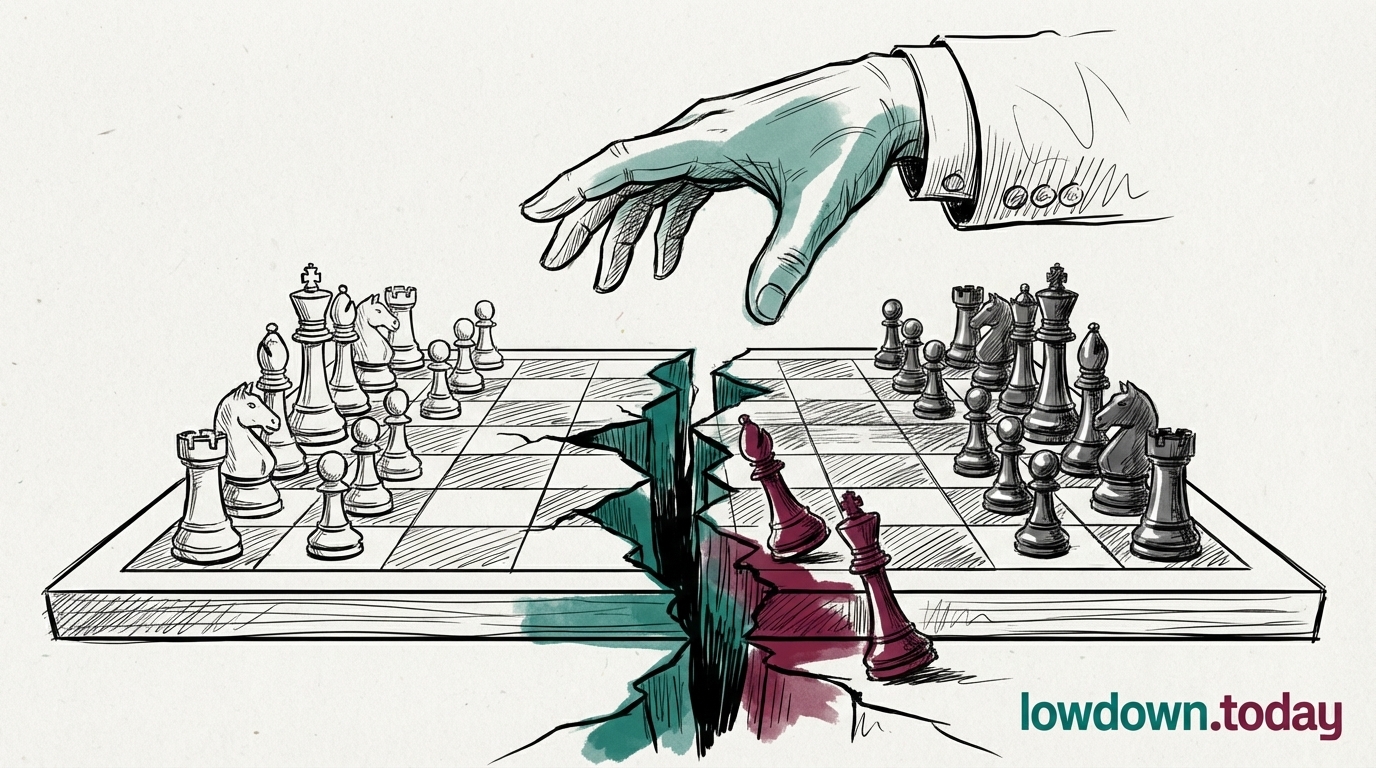
Both delegations are structurally compromised before the first session begins.

JD Vance arrived in Islamabad on Friday leading a 30-member US delegation to the Serena Hotel for Saturday's opening session, the first principal-level bilateral contact between the United States and Iran since 1979. The JCPOA (Joint Comprehensive Plan of Action) was negotiated through multilateral channels with no direct meetings at this level. Saturday's format, if it holds, is structurally new.

Steve Witkoff and Jared Kushner are back in the room. Their removal was the concession that unlocked the ceasefire , yet the White House reinstated both, a signal that either the terms will not favour Tehran or that domestic US optics outweigh Iranian red lines. Abbas Araghchi, Iran's Foreign Minister, confirmed attendance but said he arrives "with complete distrust."

The Iranian delegation now includes Mohammad Bagher Ghalibaf, WHO rejected the ceasefire framework on 9 April , creating a de facto Majlis (parliamentary) veto inside the negotiating room. With no shared legal text, no verification mechanism, and a compromised venue, Saturday must produce something written to have lasting effect. Rhetorical agreement without text is indistinguishable from the current state of affairs.

Deep Analysis

In plain English

The US vice president flew to Pakistan to meet Iranian officials face to face — something that has not happened at this level in nearly 50 years. But two of the Americans in the room were previously kicked out of earlier talks at Iran's insistence, and one of the Iranian officials publicly rejected the ceasefire just two days ago. The meeting is the most senior US-Iran contact since 1979, happening under the worst structural conditions of any such meeting in that period.

Deep Analysis
Root Causes

Iran's requirement that Witkoff and Kushner be excluded from talks stemmed from their association with the Abraham Accords and Gulf normalisation deals that Tehran reads as explicitly anti-Iranian regional architecture. Reinstating them signals the White House does not consider Iranian domestic political sensitivities a binding constraint.

The 47-year gap in direct US-Iran engagement reflects structural enmity rooted in the 1979 hostage crisis, the US support for Iraq in the 1980-1988 war, and Iran's categorisation as a state sponsor of terrorism. Neither side has the institutional machinery or diplomatic staff fluent enough in the other's political culture to conduct fast-moving bilateral talks reliably.

Escalation

High risk of talks producing no shared text, compressing all remaining diplomacy into 11 days before the 22 April ceasefire expiry.

What could happen next?
  • Risk

    A failed Saturday session leaves only 11 days to the 22 April ceasefire expiry with no legal framework and no fallback process.

    Immediate · Assessed
  • Consequence

    Witkoff and Kushner's reinsertion has already been read by Tehran as proof the White House is not bound by its own prior concessions — eroding the credibility of any new US commitment made in Islamabad.

    Short term · Assessed
  • Precedent

    If principal-level talks proceed without a shared agenda or mediating text, they establish a pattern where seniority substitutes for process — and where failure can be mutually blamed on the other side.

    Medium term · Assessed
First Reported In

Update #64 · Islamabad talks open already cracked

Bloomberg· 10 Apr 2026
Read original
Different Perspectives
Lloyd's of London
Lloyd's of London
The Joint War Committee left Hormuz war-risk premiums at $10-14 million per voyage on 25 May, declining to move on Brent's 5% fall. The JWC's protocol requires a UN Security Council resolution or bilateral government certification letter before de-listing, and neither has arrived: a verbal understanding does not satisfy the formal condition the reinsurance market's treaty terms require.
Gulf Arab producers
Gulf Arab producers
Saudi Arabia and UAE depend on Hormuz for their own crude exports; Aramco CEO Nasser has warned no oil market recovery arrives until 2027 if the blockade continues past mid-June. Monday's $98.96 Brent settlement shortens nothing for Gulf producers without a signed instrument and a Pentagon mine-clearance timeline that runs up to six months post-ceasefire.
Qatar
Qatar
Qatar holds $12bn of frozen Iranian assets at the centre of the sequencing dispute but cannot release them without explicit US Treasury authorisation, given the original freeze was a US instrument. As the asset-holding state, Qatar's leverage is real but passive: it is the escrow holder, not the decision-maker, and any resolution requires US Treasury sign-off that Trump has withheld.
Pakistan
Pakistan
With both Prime Minister Sharif and army chief Munir simultaneously in Beijing on 25 May, Pakistan has for the first time consolidated its civilian and military mediation tracks under China's roof. Munir's direct Tehran-to-Beijing flight signals that the security and financial threads of the sequencing problem are now being worked in parallel rather than sequentially.
China
China
Beijing hosted Pakistan's principal mediators and Iran's China envoy Ghalibaf simultaneously on 25 May while its banking regulator capped new state-bank lending to five sanctioned refiners. China is simultaneously the most credible third-party underwriter of the $12bn sequencing and the state whose institutions face live OFAC secondary-sanctions exposure if the deadlock persists through GL V's expiry.
United States
United States
Trump posted on 24 May that the blockade holds until a deal is certified and signed, ruling out the informal MOU structure both sides had been building. The 'certified, and signed' condition is the first operational bar Trump has attached in 87 days, but it arrived without an executive instrument, maintaining the gap between posted ultimatum and signed US policy.