Tel Aviv
Israel's economic capital on the Mediterranean; primary civilian target in the Iran-Israel war.
On 25 March 2026, an Iranian strike damaged a Tel Aviv residential building after an 11-hour pause in attacks.
Last refreshed: 1 October 2026 · Appears in 1 active topic
How have Iranian missile strikes changed daily life and military strategy in Tel Aviv?
Timeline for Tel Aviv
Mentioned in: Two 9.8 Check Point flaws hit firewalls
Cybersecurity: Threats and DefencesMentioned in: Ondas buys fuze maker GATE for US$205m
Drones: Industry & DefenceMentioned in: Israeli drone kills four in Nabatieh
Iran Conflict 2026Mentioned in: Hezbollah kills senior IDF tank officer
Iran Conflict 2026Mentioned in: Lebanon is where the deal cracks first
Iran Conflict 2026Background
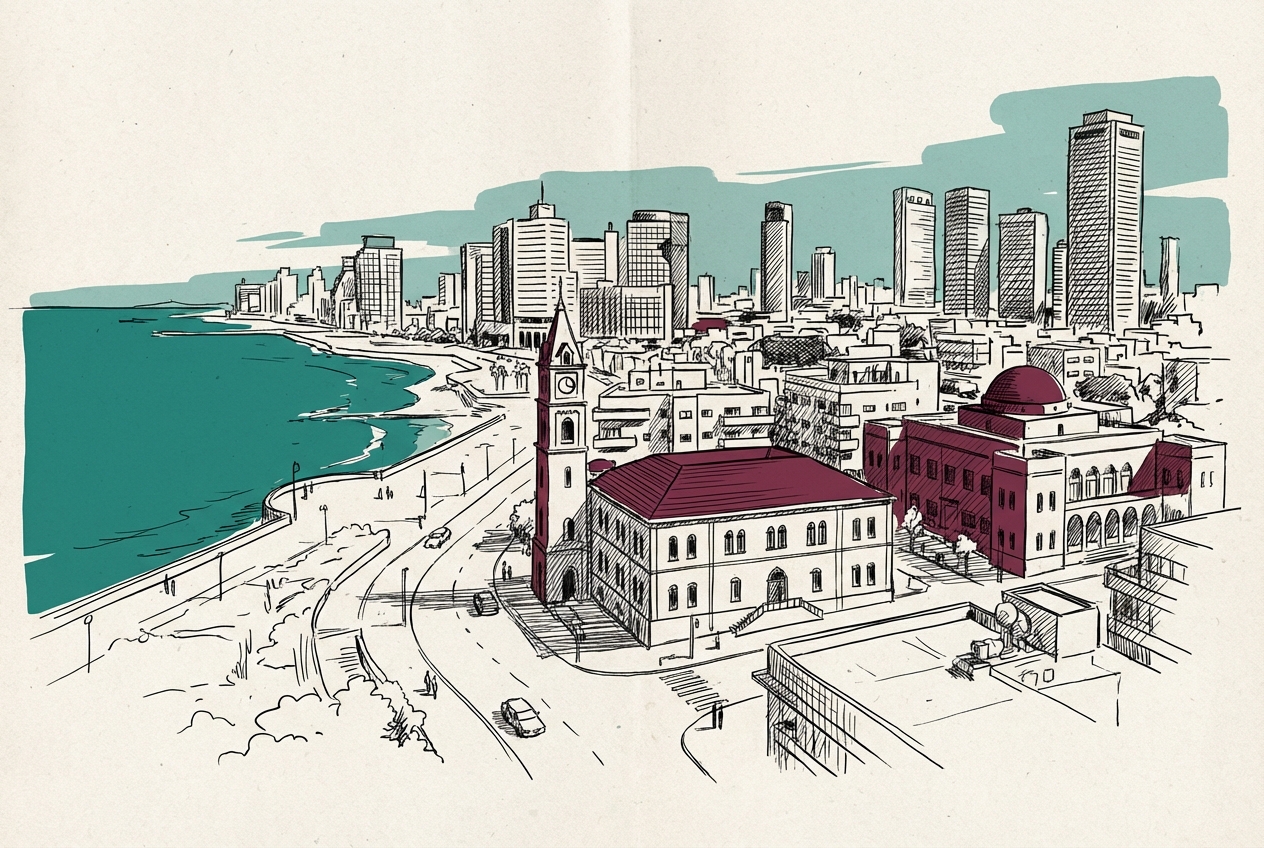
Tel Aviv is a city on Israel's Mediterranean coast and the core of the Gush Dan metropolitan area. It is Israel's main commercial and technology centre, while Jerusalem hosts the country's political institutions. Its workplaces, transport links and civilian infrastructure give disruption in the city national consequences.
Founded in 1909, Tel Aviv developed as a port-adjacent urban centre in Israel's central coastal plain. It also hosts most foreign embassies in Israel. The damage to Savidor Central station on 17 March 2026 illustrated the importance of its transport network beyond the city itself.
The March 2026 missile attacks showed why Tel Aviv remains a strategically significant civilian centre. Strikes on homes and the wider metropolitan area made the city's economic concentration and dense daily movement part of the conflict's practical stakes.
Tel Aviv absorbs missile strikes
On 15 March 2026, cluster bomblets fell across the Tel Aviv area during at least seven Iranian missile volleys. Two days later, damage to Savidor Central station suspended rail services, disrupting a major transport link for the city.
The attacks made Tel Aviv a direct civilian front in the war rather than only Israel's commercial centre. On 25 March, a missile strike damaged a residential building and rescuers pulled a 94-year-old woman from the site. For residents and employers, repeated strikes put homes, rail travel and ordinary movement under pressure even as Iranian launch rates fell from their opening pace.
Tel Aviv bears the missile campaign
Has Tel Aviv been hit by Iranian missiles?
Why does Iran target Tel Aviv specifically?
Reference
Where is Tel Aviv and what is its role in Israel?
What is the difference between Tel Aviv and Jerusalem?
What is Tel Aviv?
Is Tel Aviv safe during the Iran-Israel war?
How effective has Israel's air defence been in protecting Tel Aviv?
What is Operation True Promise 4?
Why is Tel Aviv the target of Iranian missile attacks rather than Jerusalem?



