
Skip to content
Briefings are running a touch slower this week while we rebuild the foundations.See roadmap
Iran Conflict 2026
24MAR

Day 25: Trump delays strikes; oil crashes to $99

9 min read
05:37UTC

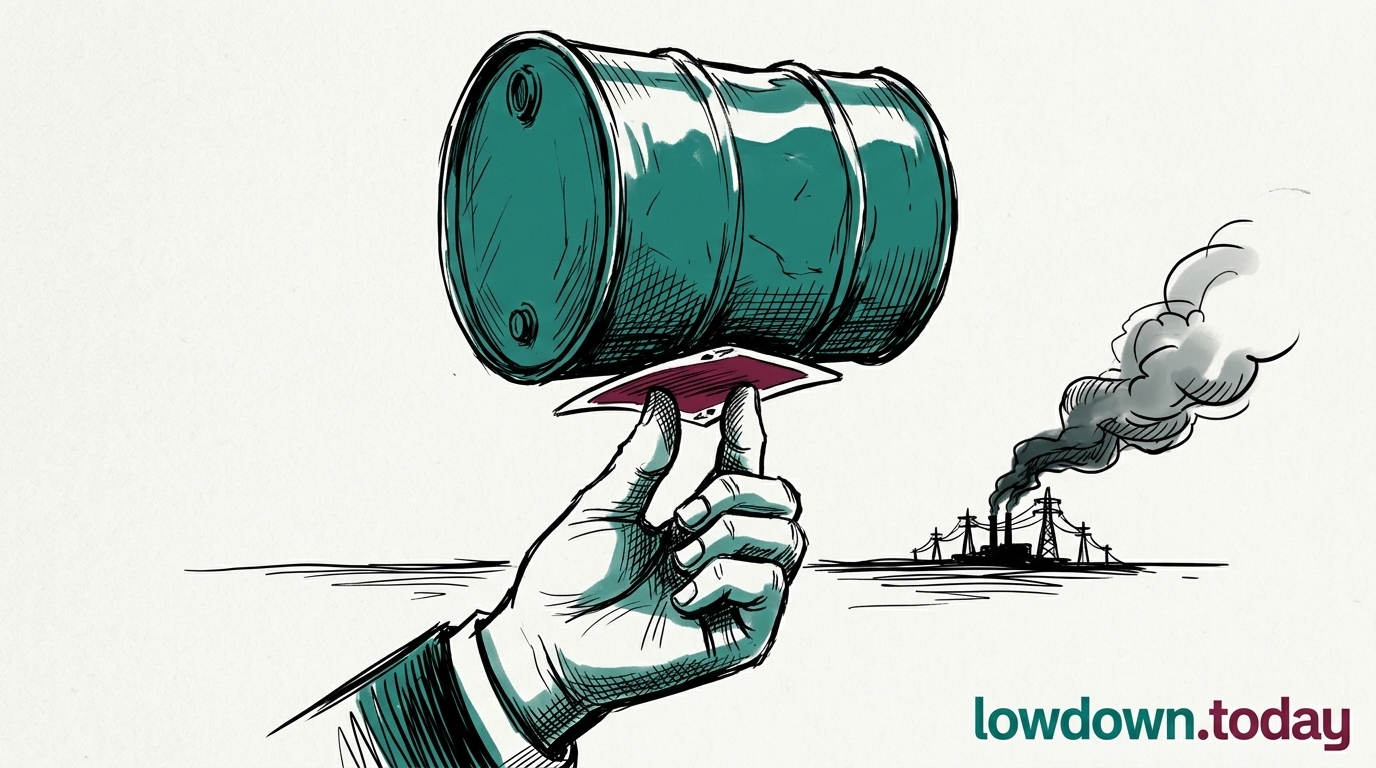
Trump postponed his 48-hour power plant strike deadline by five days, claiming 'productive talks' with Iran — which denied any negotiations had taken place. Brent crude crashed 14% intraday to $99.94, its first close below $100 since 11 March, while Israel launched strikes on Tehran that Al Jazeera's correspondent called 'unprecedented' and Iran's Defence Council threatened to mine the entire Persian Gulf.

Key takeaway

The 5-day postponement pauses one escalation vector — power plant strikes — while five others (Israeli strike tempo, CENTCOM targeting, Lebanon demolitions, Hormuz mining threats, and IRGC command collapse) accelerate independently of any diplomatic track.

This briefing mapped
Loading map…
Diplomatic
Economic
Military
Humanitarian
Legal
Domestic

Three days after threatening to 'hit and obliterate' Iranian power plants, Trump claims a 15-point agreement that Iran says does not exist.

Sources profile:This story draws on centre-left-leaning sources from United States, Israel and 1 more
United StatesIsraelUnited Arab Emirates
LeftRight

Trump posted on Truth Social that he instructed 'the Department of War to postpone any and all military strikes against Iranian power plants and Energy infrastructure for a five day period,' reversing his 48-hour ultimatum issued three days earlier. He cited 'very good and productive conversations' and claimed a 15-point deal with 'major points of agreement' including Iran's commitment to 'never have a nuclear weapon.' Netanyahu stated Trump told him he 'believes there is a chance to leverage the tremendous achievements of the IDF and the U.S. military in order to realise the war's objectives in an agreement.'

Trump's reversal of his own 48-hour ultimatum replaces imminent escalation with a five-day window, but the claimed agreement has no Iranian signatory, no published text, and no mediator confirmation — leaving the war's trajectory suspended between a social media post and a 28 March deadline. 

Briefing analysis

Iran's Defence Council explicitly cited the 1980-88 war with Iraq as 'established military practice' for its threat to mine all Persian Gulf access routes. During the Tanker War phase (1984-88), Iran laid mines across Gulf shipping lanes, damaging the USS Samuel B. Roberts in April 1988 and prompting Operation Praying Mantis — the largest US naval engagement since the Second World War, which destroyed half of Iran's operational navy in a single day.

The 2026 threat differs in two respects. Iran now pairs mining with a toll system that generates revenue and creates stakeholders — nations paying for transit — who benefit from the current arrangement rather than opposing it. And the IRGC's fast-attack surface capability has already been largely destroyed by CENTCOM (140 vessels sunk), making mines Iran's most viable asymmetric maritime weapon precisely because they do not require a functioning fleet to deploy.

Tehran says there are no negotiations — but a senior official confirms American terms arrived through mediators and are under review.

Sources profile:This story draws on centre-left-leaning sources from United States and Qatar
United StatesQatar

Iran categorically denied any negotiations with the United States. Parliamentary speaker Ghalibaf posted that 'no negotiations have been held with the US,' calling Trump's claims an effort to 'manipulate markets and escape the quagmire.' FM spokesman Baghaei acknowledged 'messages had been conveyed through several friendly countries' but denied direct talks. A senior FM official separately told CBS News: 'we received points from the U.S. through mediators and they are being reviewed.'

Iran's layered response — categorical public denial alongside quiet acknowledgement of indirect communication — reveals the diplomatic architecture through which any off-ramp must pass, constrained by an IRGC that runs both the Hormuz toll system and the daily missile volleys and has no institutional interest in a settlement that dismantles its wartime authority. 

Brent crude dropped $12.25 in a single session — the war's largest daily fall — on Trump's claim of productive negotiations with Iran. The supply disruption that drove prices to $126 four days earlier has not changed.

Sources profile:This story draws on centre-left-leaning sources from United States
United States

Brent Crude fell $12.25 — 10.9% — to settle at $99.94 per barrel, its first close below $100 since 11 March and a 14% intraday swing. This was the largest single-day oil drop since the war began. WTI lost 10.3% to $88.13. European gas futures fell 9%. The crash was triggered by Trump's talks announcement. UBS economist Paul Donovan attributed the volatility to 'different and at times contradictory assessments of the war' from senior US officials. Even after the crash, prices remain roughly 50% above the pre-war level of $67.41.

Energy markets are now a direct transmission mechanism for US presidential statements about the war, with billions of dollars in value moving on a single social media post. The crash briefly took Brent below $100 for the first time since 11 March, but the physical supply disruption — 8 million barrels per day offline, 3,000 vessels stranded, Hormuz under IRGC control — remains identical to the conditions that produced the $126 peak. 

Al Jazeera's correspondent described Sunday's Israeli bombardment of the Iranian capital as the largest of the war, with simultaneous attacks across Isfahan, Karaj, Ahvaz, and Bandar Abbas.

Sources profile:This story draws on centre-left-leaning sources from Qatar
Qatar

Israel launched strikes on Tehran on Sunday that Al Jazeera's correspondent described as 'unprecedented in size and volume.' Explosions hit eastern Tehran near the Shahid Babaei Expressway. Simultaneous attacks struck Isfahan, Karaj, and Ahvaz. A hospital was hit in Ahvaz. One person was killed at a radio station in Bandar Abbas.

The most intensive single day of Israeli strikes on Tehran came hours before Trump claimed diplomatic progress. CENTCOM's updated total of 9,000 targets in 25 days and the destruction of a hospital in Ahvaz show the air campaign accelerating into its fourth week, not pausing for diplomacy. 

Sources:Al Jazeera

US envoys Witkoff and Kushner reportedly reached Iran's parliamentary speaker through Pakistani intermediaries — but Ghalibaf's authority to bind the forces prosecuting the war is an open question.

Sources profile:This story draws on mixed-leaning sources from United States
United States
LeftRight

Axios identified Ghalibaf as the Iranian interlocutor. US Special Envoys Steve Witkoff and Jared Kushner reportedly spoke with Ghalibaf on Sunday evening. CNN reported the US shared the 15-point list of expectations via Pakistan. Whether Iran agreed to any terms remains unclear. Mediators are working to arrange a meeting in Islamabad between Ghalibaf and the US delegation.

The channel's structure — Pakistan as go-between, a parliamentary speaker as counterpart — reveals both the possibility of negotiations and their limits. Ghalibaf holds no command authority over the IRGC or Iran's military operations, meaning any framework he discusses cannot bind the forces fighting the war unless The Supreme Leader's office and the Guards endorse it. 

Iran's Defence Council reached back to the 1980s Tanker War — when a single mine nearly sank a US frigate — and warned that any strike on Iranian coasts will trigger mine-laying across all Gulf access routes.

Sources profile:This story draws on centre-left-leaning sources from United States and United Kingdom
United StatesUnited Kingdom

Iran's Defence Council issued a formal statement on Sunday: any attack on Iranian coasts or islands will 'lead to the mining of all access routes in the Persian Gulf.' The Council cited Iran's mining of these waters during the 1980-88 war with Iraq as 'established military practice.'

Mining the Persian Gulf would shift the conflict from a contest of missile stockpiles — where US attrition has clear advantage — to a contest of clearance capacity, where Iran holds the asymmetry. A single confirmed mine would freeze commercial insurance markets and close The Gulf to unescorted traffic for weeks to months, regardless of US air and naval superiority. 

Sources:Time·IranWire

Israel's defence minister explicitly invoked the 'Beit Hanoun and Rafah models' for southern Lebanon, ordering accelerated house demolitions and declaring hundreds of thousands of residents will never return to their homes.

Sources profile:This story draws on centre-left-leaning sources from United States
United States

Israeli Defence Minister Katz ordered 'accelerated demolition of Lebanese houses in the border villages' following the 'Beit Hanoun and Rafah models in Gaza.' He stated that 'hundreds of thousands of Shiite residents of southern Lebanon will not return to their homes south of the Litani area.' Displacement orders issued on 12 March pushed residents north of the Zahrani River — 15 km north of the Litani, 40 km from the border.

An Israeli defence minister has publicly stated that the systematic demolition methods applied in Gaza — physical destruction of residential areas to prevent population return — will now be applied to southern Lebanon. The displacement zone extends 15 kilometres beyond the Litani River buffer established by UN Security Council Resolution 1701

An independent Iranian human rights group documents at least 1,407 civilian deaths — calling it 'an absolute minimum' — while Iran's own health ministry arrives at a near-identical count of child fatalities.

Sources profile:This story draws on neutral-leaning sources from Iran
Iran

HRANA, an independent human rights organisation, documented at least 1,407 civilian deaths including 214 children across Iran, calling this 'an absolute, absolute minimum.' Iran's health ministry reported approximately 210 children killed and more than 1,500 under-18s injured.

Establishes the first cross-verified civilian casualty baseline from two independent sources, with child death figures converging between HRANA (214) and Iran's health ministry (~210) despite different methodologies. The rate — more than eight children per day for 25 days — will shape legal and political assessments of the air campaign. 

Sources:HRANA

Human Rights Watch named three potential war crimes in Israel's southern Lebanon campaign and warned weapons-supplying governments they risk legal responsibility — days after Defence Minister Katz publicly invoked operational models already under ICC investigation.

Sources profile:This story draws on centre-left-leaning sources from United States
United States

Human Rights Watch identified three potential war crimes in Israeli operations in southern Lebanon: forced displacement, wanton destruction, and targeting of civilians. HRW warned that countries supplying weapons to Israel risk complicity.

HRW's formal identification of three war crimes — forced displacement, wanton destruction, and targeting of civilians — paired with Katz's documented invocation of the 'Beit Hanoun and Rafah models,' creates a legal record that arms-supplying governments continued transfers with knowledge of stated intent. 

The Iranian Red Crescent reports over 81,000 damaged civilian building units — hospitals, schools, emergency facilities — with nine hospitals entirely non-operational after 25 days of strikes.

Sources profile:This story draws on centre-left-leaning sources from United Kingdom
United Kingdom

The Iranian Red Crescent reported over 81,000 civilian building units damaged across Iran — hospitals, schools, academic institutions, and emergency facilities. Nine hospitals are non-operational. Three hundred health and emergency facilities have sustained damage.

Quantifies infrastructure destruction whose consequences will outlast the conflict: nine non-operational hospitals and 300 damaged health facilities degrade care for a population of 88 million already absorbing daily air strikes. The ratio of civilian structures damaged to military targets struck raises targeting questions neither side has answered. 

The IRGC has converted the world's most important oil chokepoint from a naval blockade into a revenue operation, charging up to $2 million per vessel — payable in cash, cryptocurrency, or barter.

Sources profile:This story draws on mixed-leaning sources from United Kingdom and Qatar
United KingdomQatar

The IRGC's toll system on the strait of Hormuz is NOW reportedly operational, according to Lloyd's List Intelligence and Al Jazeera. Ships transit a 5-mile channel between Larak and Qeshm islands inside Iranian territorial waters. IRGC personnel hail vessels on VHF radio to verify transponder data before granting passage. Tolls reach $2 million per vessel, negotiated individually, payable in cash, cryptocurrency, or barter. Approximately 90 vessels transited with IRGC clearance in the first two weeks of March.

Iran has abandoned its unsustainable total blockade in favour of selective, monetised control of the strait of Hormuz. The toll system self-finances the IRGC forces enforcing the chokepoint and splits global shipping into nations that pay Tehran for passage and nations whose cargo does not move. 

Iran's Aerospace Force chief faces revolt from subordinates who call launch operations 'near-suicidal,' as the corps loses four senior figures and 300 field commanders in a single week.

Sources profile:This story draws on centre-right-leaning sources from United Kingdom
United Kingdom

Iran International reported, citing unnamed IRGC sources, that IRGC Aerospace Force commander Majid Mousavi faces criticism from within the corps for 'being absent from the front' and 'leaving his forces without leadership.' Families of personnel have filed formal complaints. Subordinates allege mismanagement of missile-strike data and describe launch operations as 'near-suicidal.'

Reports of internal IRGC dissent, if accurate, indicate the corps's operational tempo is outpacing its leadership capacity. The loss of four senior officers and approximately 300 field commanders in one week is degrading command coherence even as the IRGC sustains daily missile waves — and the political architecture atop the corps depends on the military cohesion NOW eroding beneath it. 

Sixty-three operations in 24 hours — the highest single-day count of the conflict — came as Israel accelerated demolitions and forced displacement across the south.

Sources profile:This story draws on centre-leaning sources from India
India
LeftRight

Hezbollah responded to Israeli operations with a record 63 operations in 24 hours — rockets, drones, and artillery against Israeli forces in southern Lebanon.

The record operational tempo demonstrates Hezbollah retains substantial distributed firepower despite three weeks of Israeli infrastructure destruction in southern Lebanon, raising the question of whether the demolition and displacement strategy is degrading the group's military capacity or intensifying its response. 

The US military adds a thousand targets a week to its war tally and calls Iran's missile fire 'desperation' — but Tehran's forces reached Diego Garcia, penetrated Israeli air defences, and launched their 70th attack wave the day before.

Sources profile:This story draws on centre-left-leaning sources from United States
United States

CENTCOM updated its war totals: 9,000 targets struck in 25 days (up from 8,000 the previous week), 140 vessels destroyed (up from 130), and 9,000+ combat flights flown. Commander Adm. Brad Cooper said Iran NOW fires missiles 'one or two at a time' versus dozens at the war's start, which Cooper characterised as 'desperation.'

The operational pace — averaging 360 targets per day — has destroyed Iran's conventional navy and degraded its missile launch rate. But the IRGC's asymmetric maritime control of Hormuz continues despite the loss of 140 vessels, exposing a gap between the attrition campaign's statistics and its strategic objective of reopening the strait

Sources:CBS News

Wall Street posted its strongest session since early February — driven by diplomatic claims one party categorically denied.

Sources profile:This story draws on centre-left-leaning sources from United States
United States

The S&P 500 rose 1.1%, the Dow Jones Industrial Average gained 631 points, and the Russell 2000 climbed 2.7% — the strongest US equity session since early February. The rally followed Trump's announcement of talks with Iran and the oil price crash.

The equity surge shows how acutely global markets had priced in war risk, and how quickly that premium can unwind on a single unverified diplomatic signal. With Goldman Sachs pricing 25% US recession odds and Brent four days removed from $126, the rally rests on a five-day postponement that may produce nothing. 

Sources:NBC News

Basij intelligence deputy Esmail Ahmadi and IRGC intelligence commander Mehdi Rostami Shomastan are dead — the third and fourth senior Guards figures killed in seven days, gutting Iran's military intelligence chain.

Sources profile:This story draws on mixed-leaning sources from United Kingdom and Israel
United KingdomIsrael
LeftRight

Israel killed Basij intelligence deputy Esmail Ahmadi and IRGC intelligence commander Mehdi Rostami Shomastan in strikes during the past week. These are the third and fourth senior IRGC figures killed in a week, after spokesman Brig. Gen. Naeini and Intelligence Minister Khatib .

The systematic elimination of four senior IRGC figures in a single week — spanning intelligence, communications, and paramilitary oversight — degrades Iran's ability to process battlefield data, coordinate between branches, and maintain internal cohesion at the moment the corps is absorbing its heaviest losses since the 1980–88 war. 

Israel destroyed a swathe of Iran's paramilitary command layer in a single night — the officers who manage neighbourhood militias, enforce domestic order, and hold the IRGC's local grip across 31 provinces.

Sources profile:This story draws on centre-right-leaning sources from United Kingdom
United Kingdom

Approximately 300 Basij field commanders were killed in overnight Israeli strikes, according to reporting. This compounds the loss of four senior IRGC figures in a single week.

The mass killing of approximately 300 Basij field commanders in overnight strikes strips Iran's paramilitary structure of its ground-level command layer at a moment when the IRGC's senior leadership is also being systematically eliminated, compounding the deepest institutional crisis the corps has faced since its founding. 

Lebanon's death toll passes 1,000 with one in five citizens displaced, as UNICEF counts the daily cost to the country's youngest.

Sources profile:This story draws on mixed-leaning sources from India
India
LeftRight

Lebanon's death toll reached approximately 1,029 killed including 118 children and 40 medical workers, with more than one million displaced — one in five Lebanese. UNICEF's deputy executive director Chaiban reported 'one classroom of children' killed or wounded daily.

The humanitarian toll in Lebanon has crossed 1,000 dead with one million displaced in three weeks. The rate of child casualties — averaging more than five deaths per day — and the systematic destruction of road infrastructure point to operations aimed at permanently depopulating southern Lebanon, not temporarily securing it. 

The UK prime minister refuses a Commons vote on base access for US strikes, overriding his own attorney general's assessment that the operation breaks international law.

Sources profile:This story draws on left-leaning sources from United States
United States
LeftRight

UK Prime Minister Starmer formally rejected calls for a parliamentary vote on UK involvement in the war. He framed British base access as 'specific and limited defensive purposes' despite the attorney general's reported assessment — first disclosed by The Guardian and The Jewish Chronicle — that the operation does not accord with international law. Corbyn's bill requiring parliamentary approval attracted only 11 co-sponsors in the 650-seat Commons.

Britain is hosting US combat operations that its chief legal adviser considers unlawful, without a parliamentary vote, and against 58% public opposition. The refusal to hold a Commons vote breaks with the precedents set by Blair on Iraq in 2003 and Cameron on Syria in 2013. 

Heritage Foundation warns of stagflation before midterms as Greene declares war supporters have 'destroyed' MAGA and the $200 billion funding request finds no path through Congress.

Sources profile:This story draws on mixed-leaning sources from United States
United States
LeftRight

The MAGA coalition fractured further over the war. Rep. Marjorie Taylor Greene claimed war supporters have 'destroyed' MAGA. Conservative commentator Sohrab Ahmari, a 2024 Trump endorser, said Trump 'was never the one' to break with hawkish policy. The Heritage Foundation warned the war risks turning the 'economic boom into Stagflation' before Midterm elections. The $200 billion war funding request faces bipartisan opposition.

The Republican Coalition is splitting between interventionist hawks and populist fiscal conservatives over a war whose domestic economic costs — $3.88/gallon petrol, 25% recession probability — are converting a foreign-policy debate into a midterm liability. The $200 billion war supplemental has no visible path to passage in either chamber. 

Ten brand-new Polymarket accounts wagered on peace by month's end — minutes before Trump's announcement moved the odds. The timing may be coincidence.

Ten newly created wallets on prediction market Polymarket wagered $160,000 on a ceasefire by month's end, with potential payouts exceeding $1 million. The wallets had no prior transaction history. The coincidence of timing with Trump's talks announcement was noted, though it may have an innocent explanation.

The coordinated bets from previously inactive wallets, timed to a market-moving announcement, raise questions about information asymmetry in prediction markets during geopolitical crises. 

Sources:CoinDesk
Closing comments

Military escalation continues on every measurable axis despite the diplomatic signal. CENTCOM's target count rose 12.5% in one week (8,000 to 9,000). Israeli strikes on Tehran grew in what Al Jazeera described as 'size and volume.' Lebanon faces explicit adoption of Gaza-model demolitions in a second theatre. Iran's Defence Council introduced a new escalation vector — Gulf-wide mining — absent from prior updates. The loss of 300 Basij field commanders in a single night may reduce Iran's capacity for coordinated response, pushing toward more dispersed and less predictable operations. Adm. Cooper characterised Iran firing missiles 'one or two at a time' as 'desperation'; an alternative reading is that a force under sustained decapitation strikes fires fewer salvos because coordination capacity has degraded, not because willingness has. A force conserving depleted stockpiles while its command structure fragments is adapting, not capitulating — and adaptation under pressure often produces more dangerous behaviour, not less.

Emerging patterns

  • Cyclical US ultimatums followed by diplomatic off-ramps
  • Contradictory public framing between US and Iran on diplomatic contact
  • Oil prices highly responsive to diplomatic signals amid war uncertainty
  • Israeli strike packages increasing in geographic scope and intensity
  • Pakistan emerging as primary US-Iran intermediary channel
  • Iranian escalation ladder extending to full Gulf maritime denial
  • Israeli territorial denial through systematic infrastructure destruction in Lebanon
  • Independent documentation of Iranian civilian toll accelerating
  • International legal bodies documenting potential war crimes in real time
  • Iranian civilian infrastructure degradation broadening
Different Perspectives
Heritage Foundation
Heritage Foundation
Warned the war risks turning the 'economic boom into stagflation' before midterm elections — a traditionally hawkish conservative institution now framing the conflict as an economic and electoral liability for Republicans.
Rep. Marjorie Taylor Greene
Declared that war supporters have 'destroyed' MAGA — a direct challenge from within Trump's core populist base to the president's war policy.
Sohrab Ahmari
Sohrab Ahmari
A conservative commentator and 2024 Trump endorser stated Trump 'was never the one' to break with hawkish foreign policy — repudiating the anti-interventionist promise that defined Trump's appeal to the populist right.