Skip to content
Briefings are running a touch slower this week while we rebuild the foundations.See roadmap
Iran Conflict 2026
28FEB

Iran runs Hormuz as a favours system

4 min read
19:00UTC

Iraq cleared a 2-million-barrel VLCC and Pakistan secured passage for two Qatari LNG vessels through Iran in mid-May; Foreign Minister Abbas Araghchi told Mehr News the Strait is 'open to friendly nations, restrictions apply only to adversaries'.

ConflictAssessed
Key takeaway

Iraq and Pakistan got Hormuz transit through bilateral deals while Araghchi codified the friendly-nations doctrine on Mehr News.

Iraq negotiated bilateral Hormuz passage for a Very Large Crude Carrier of approximately 2 million barrels in mid-May and was in talks for additional tankers, while Pakistan secured transit for two Qatari LNG vessels through a Pakistan-Iran agreement, according to OilPrice.com reporting with Windward vessel-tracking corroboration 1. Neither Iraq nor Pakistan paid the Persian Gulf Strait Authority yuan tolls directly; Tehran accepted political engagement in lieu of yuan.

Returning from the BRICS foreign ministers meeting in New Delhi where his travel had been announced four days earlier , Iranian Foreign Minister Abbas Araghchi told Mehr News Agency: 'the strait of Hormuz is open to friendly nations, and restrictions apply only to adversaries' 2. The Mehr quotation is the doctrinal anchor; the Iraq and Pakistan operational deals are its implementation evidence. Araghchi's wording arrives alongside the 26-nation Western coalition paper, codifying Iran's counter-framework on the same chokepoint.

The bilateral track operationalises the Persian Gulf Strait Authority toll infrastructure established on 5 May and the $2m yuan per-ship toll Lloyd's List confirmed . Pakistan's status as the US-Iran MOU carrier gives Islamabad the diplomatic capital it spent on Qatari LNG passage, and China endorsed Pakistan's mediatory role on 13 May . The same Qatar that signed the 26-nation coalition paper received LNG through this bilateral track, an inconsistency Doha is paid to tolerate by both sides.

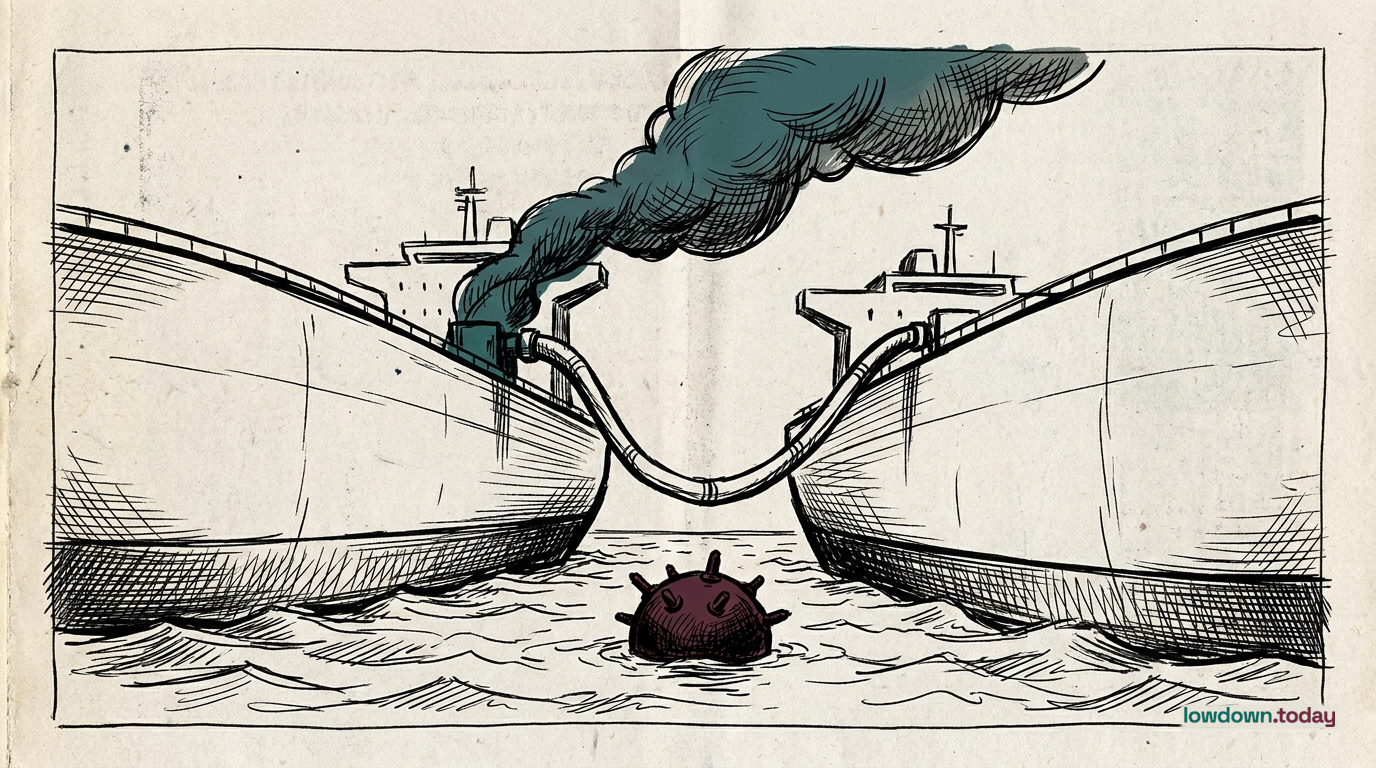
Counter-perspective: Western capitals will read the friendly-nations formulation as straightforward coercion of flag states; Tehran frames it as the legitimate exercise of littoral-state authority under UNCLOS Article 38(2), which permits coastal states to regulate transit passage in narrow conditions. The structural effect is identical either way: every flag state is now forced into a declared political position on Iran, making Hormuz a sorting mechanism rather than a freely-navigable strait .

Deep Analysis

In plain English

Iran is running the Strait of Hormuz like a club with a membership policy. Countries it considers friendly, including Iraq and Pakistan, can send their oil and gas tankers through without paying the official toll. Countries it considers enemies, primarily the US and Israel, cannot pass at all. This matters because Qatar, which has signed up to the Western naval coalition, quietly got two of its gas tankers through via Pakistan acting as a go-between. Tehran accepted Pakistan's political support for the gesture rather than money. The system means that access to the world's most important energy corridor now depends on which side of Iran's ally list a country sits on, not on international maritime law.

Deep Analysis
Root Causes

The PGSA's yuan-toll structure established on 5 May created a two-track system by design: the formal toll is the public architecture, but the bilateral deals are where Iran's actual leverage operates.

Tehran never ratified UNCLOS, meaning it has no obligation to observe the Article 38 transit-passage right. Its 2024 domestic maritime law revision, which classified 'hostile-linked vessels' as subject to IRGC inspection, gave Tehran a legal basis for the sorting system that the PGSA now operationalises.

Pakistan's role as the US-Iran MOU carrier gives Islamabad diplomatic capital it can spend on third-party passage deals. Iran accepts political engagement in lieu of yuan because political re-alignment has higher strategic value than toll revenue: a state that publicly negotiates passage through Tehran is implicitly acknowledging Iranian authority over the strait, which is the legal position Iran seeks to entrench before any ceasefire restores UNCLOS norms.

What could happen next?
  • Precedent

    Iran's codified 'friendly nations / adversaries' doctrine establishes a template for chokepoint states to operate selective-access regimes outside UNCLOS transit-passage rights, which may be studied by other states controlling strategic waterways.

    Long term · 0.69
  • Consequence

    Qatar receiving LNG passage via Pakistan while simultaneously signing the 26-nation coalition paper creates a documentary contradiction that Tehran can exploit in any ceasefire negotiation to challenge coalition cohesion.

    Short term · 0.81
  • Risk

    If the bilateral deal framework becomes the de facto norm before a ceasefire, resuming UNCLOS-based free transit may require a separate legal negotiation that did not exist before the conflict began.

    Medium term · 0.72
First Reported In

Update #99 · Two Hormuz papers; Washington on neither

Mehr News Agency· 16 May 2026
Read original
Causes and effects
This Event
Iran runs Hormuz as a favours system
Tehran has codified a parallel passage doctrine alongside the Persian Gulf Strait Authority toll system, converting Hormuz access from a yuan-priced fee into a declared political alignment with Iran.
Different Perspectives
Markets
Markets
Brent crude rose 2.2 per cent to $96.34 on 10 June, reversing a 7 per cent weekly decline built on deal optimism, as the overnight exchange repriced the Strait of Hormuz risk premium in a single session. The move reflects transit-risk repricing rather than supply shock: Iran's exports had already collapsed to below 300,000 barrels per day.
Pakistan
Pakistan
Pakistan's Naqvi channel, the only mediation track carrying both civilian and military buy-in, was stress-tested by live ordnance within 48 hours of the 6-7 June Tehran visit. Whether Washington informed Islamabad of the imminent strike plan while Naqvi was in Tehran remains undisclosed, putting the channel's neutrality under scrutiny.
Kuwait
Kuwait
Kuwait hosted the third Iranian strike on its soil since the 3 June airport drone attack, with Ali Al Salem airbase targeted in the three-country salvo. Its recent $1.98 billion Anduril Anvil counter-drone purchase signals it is rearming rather than reconsidering its hosting posture.
Bahrain
Bahrain
Bahrain absorbed the IRGC barrage via PAC-3 intercepts with its magazine already at 87 per cent depletion and no resupply before 2027. Sounding air-raid sirens over Manama, it faced the intercept burden with the thinnest defensive stack in the Gulf coalition.
Jordan
Jordan
Jordan reported all five incoming missiles intercepted with no injuries and no damage, a clean defensive performance that strengthens Amman's case for staying in the Western coalition without escalating its own posture. It now sits on Iran's target list for the first time despite not being a party to the Abraham Accords confrontation.
Iran / IRGC
Iran / IRGC
Foreign Minister Araghchi posted on X that US forces should 'leave our region if you want to be safe' and framed the exchange as a US defeat, while the IRGC claimed 21 targets hit and an F-35 hangar destroyed. The claims serve a domestic and Arab-audience framing rather than a verified battle-damage assessment.