Skip to content
Briefings are running a touch slower this week while we rebuild the foundations.See roadmap
Iran Conflict 2026
28FEB

Matchday: Five cities struck on opening night

2 min read
19:00UTC

Operation Roaring Lion / Epic Fury. Joint US-Israeli strikes on Tehran, Isfahan, Qom, Karaj, Kermanshah.

This briefing mapped
Loading map…
Military
Domestic
Diplomatic
Economic

Joint US-Israeli airstrikes under Operation Roaring Lion / Epic Fury hit Iran's political capital, nuclear facilities, and regional military commands simultaneously on 28 February 2026.

Joint US-Israeli airstrikes (Operation Roaring Lion / Epic Fury) struck Tehran, Isfahan, Qom, Karaj, and Kermanshah, Iran.

Opening military action of a major US-Israeli strike campaign against Iran, representing a dramatic escalation of the broader conflict. 

Khamenei's whereabouts and condition were initially unknown following the 28 February 2026 strikes, creating a period of command ambiguity at the top of Iran's constitutional and military hierarchy.

Iranian Defence Minister Nasirzadeh and IRGC commander Pakpour were reported killed in the 28 February 2026 strikes, removing the institutional heads of Iran's two parallel military hierarchies simultaneously.

Iranian Defence Minister Nasirzadeh and IRGC Commander Pakpour were believed killed in the US-Israeli strikes.

Elimination of two of Iran's most senior military commanders in a single strike package represents a severe blow to Iranian military command and control. 

Iran fired dozens of ballistic missiles at Israel and at US military installations across seven countries on 28 February 2026 — the widest geographic spread of Iranian offensive missile use in history.

Iran fired dozens of ballistic missiles at Israel and at US military bases across seven countries in retaliation for the US-Israeli strikes.

Iran's direct ballistic missile retaliation across seven countries marks the widest geographic spread of Iranian offensive missile use in history. 

Houthi forces resumed attacks on Red Sea shipping on 28 February 2026 in direct response to the US-Israeli strikes on Iran, re-activating a campaign that had paused through parts of early 2026.

Houthi forces resumed attacks on Red Sea shipping following the US-Israeli strikes on Iran.

Houthi re-activation of Red Sea campaign directly threatens global maritime trade routes at a moment of extreme geopolitical tension. 

Hezbollah did not launch attacks against Israel or US assets following the 28 February 2026 strikes on Iran, departing sharply from predictions of automatic proxy activation across the Axis of Resistance.

Hezbollah did not activate or launch attacks following the US-Israeli strikes on Iran, contrary to predictions.

Hezbollah's restraint is a significant strategic surprise, suggesting either internal incapacity, a deliberate strategic pause, or lack of direction from a degraded Iranian command. 

Iraqi Shia militia groups threatened retaliation against US military assets in Iraq and across the region following the 28 February 2026 strikes on Iran but had not attacked by end of day.

Iraqi Shia militia groups threatened retaliation against US assets but had not yet attacked as of 28 February 2026.

Iraqi militia threats expand the potential geographic footprint of the conflict and put US forces in Iraq at heightened risk. 

Iranian ballistic missile retaliation on 28 February 2026 struck or directly threatened Gulf state territory, with Saudi Arabia publicly framing the conflict as having 'started with US-Israeli attacks.'

Iranian Ballistic missile retaliation struck or threatened Gulf state territory, with Saudi Arabia acknowledging the strikes began with US-Israeli attacks.

Iranian strikes reaching Gulf state territory dramatically escalates regional risk and threatens the political stability of US-aligned Arab monarchies. 

Across Iran on 28 February 2026, civilians were filmed celebrating the US-Israeli strikes — chanting 'Death to Khamenei', setting off fireworks, and expressing open rejoicing at the destruction of state infrastructure.

Iranian civilians were observed celebrating the US-Israeli strikes, with 'Death to Khamenei' chants, student rejoicing, and fireworks reported across Iran.

Public celebration of foreign strikes on the Iranian state is extraordinary and demonstrates the depth of the regime's loss of domestic legitimacy. 

France called an emergency UN Security Council session on 28 February 2026 following the US-Israeli strikes on Iran, describing the situation as an 'outbreak of war' — language that placed Paris publicly in opposition to the US action.

Sources profile:This story draws on centre-leaning sources from United Kingdom
United Kingdom
LeftRight

France called an emergency UN Security Council session following the US-Israeli strikes on Iran.

France's emergency UNSC call signals European alarm at the unilateral US-Israeli action and a desire to assert multilateral institutional authority. 

Sources:BBC

The UN Security Council convened in emergency session on 28 February 2026 following the strikes on Iran but took no binding action — Russia dismissed US claims, China demanded a halt, and the structural P5 veto made any resolution impossible.

The UN Security Council failed to take any binding action on the US-Israeli strikes on Iran, with Russia and China condemning the attack and the US positioned to veto resolutions.

UNSC paralysis confirms the institution's inability to act as a conflict brake when P5 members are directly involved or opposed, validating pre-strike assessments. 

The European Union described the US-Israeli strikes on Iran as 'greatly concerning' on 28 February 2026, with no EU member state offering any political, legal, or military endorsement of the action.

The European Union described the US-Israeli strikes on Iran as 'greatly concerning,' with no EU member state backing Washington's action.

Universal European non-endorsement of US military action marks a significant transatlantic rupture and isolates Washington diplomatically among its traditional allies. 

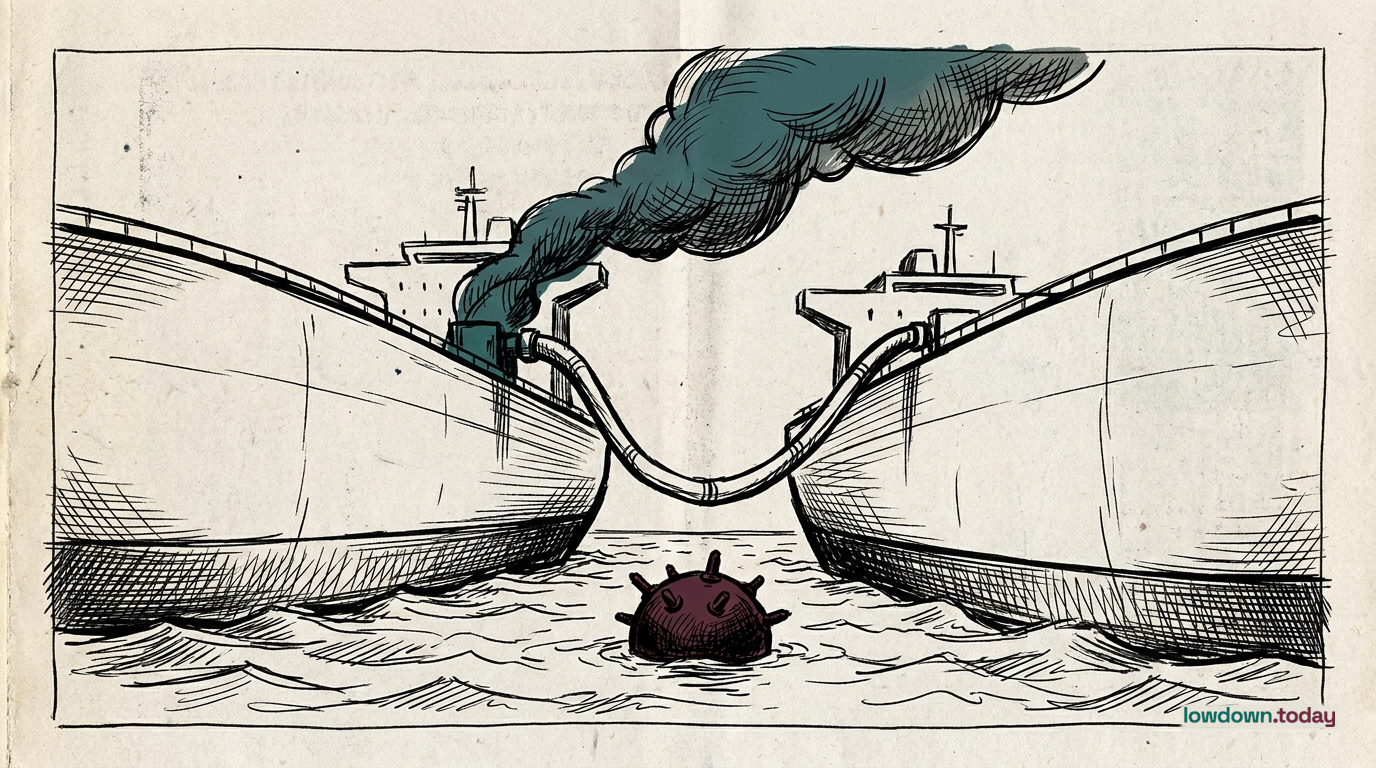
Oil tankers began voluntarily avoiding the Strait of Hormuz following the 28 February 2026 strikes on Iran, achieving a partial chokepoint effect through commercial risk calculation rather than Iranian military interdiction.

Oil tankers began avoiding the strait of Hormuz following the US-Israeli strikes on Iran.

Tanker avoidance of Hormuz, through which approximately 20% of global oil transits, creates immediate supply disruption risks and freight cost spikes. 

Brent crude stood at approximately $73 per barrel immediately before the 28 February 2026 strikes, with analysts forecasting a rise to $80–100 — well below the $150–200 predicted in earlier modelling — as markets priced partial, reversible Hormuz disruption rather than a formal blockade.

Brent crude oil was priced at approximately $73 per barrel immediately before the US-Israeli strikes, with analysts forecasting a rise to $80–100 per barrel rather than the predicted $150–200.

The more modest oil price forecast relative to pre-strike predictions suggests markets assessed Iranian oil infrastructure damage and Hormuz risk as manageable in the short term. 

Mass protests described as the largest since 1979 had been ongoing across Iran since December 2025, demonstrating that the regime had lost popular legitimacy months before the US-Israeli strikes — making the Iran-Iraq War rally-round-the-flag analogy structurally inapplicable.

Mass protests in Iran, described as the largest since 1979, had been ongoing since December 2025, meaning the regime had already lost popular legitimacy before the strikes.

The pre-existing protest movement fundamentally altered the domestic political context, invalidating analogies to the 1980 Iran-Iraq War rally-round-the-flag dynamic. 

Different Perspectives
Gulf shipping and insurance markets
With Hormuz and Bab el-Mandeb both hostile at once, war-risk underwriters face their first dual-chokepoint pricing problem; the rerouting hedge that absorbed one closure is gone for Israeli-linked hulls. Any deal that reopens Hormuz without a Houthi stand-down clause delivers only partial shipping relief.
Russia and China
Russia and China
Russia and China met IAEA chief Grossi jointly in Geneva on 5 June to coordinate an advance blocking position against Washington's censure resolution, the first documented instance of proactive pre-session obstruction rather than reactive post-vote dissent. Beijing's move came four days after OFAC designated Shanghai Qianye Energy under Iran energy sanctions.
Saudi Arabia
Saudi Arabia
Saudi Arabia was left out of the emergency $4.01 billion Patriot waiver Qatar received on 2 May as its own PAC-3 stocks ran near-empty from intercepting Iranian salvoes over Aramco facilities. Riyadh is on a standard 18-month FMS queue behind a production line booked through 2030, with no equivalent priority to Qatar's Al Udeid basing role.
Houthis (Ansar Allah)
The Houthis declared a complete ban on Israeli Red Sea navigation on 8 June and struck Jaffa, their first attack on Israeli territory since April, seven days after the Tasnim authorisation to activate other fronts including Bab el-Mandeb. The declaration put both chokepoints under hostile authority simultaneously.
Iran
Iran
Iran agreed the 9 June mutual halt after the Mahshahr exchange and coordinated with Russia and China to block Washington's IAEA censure resolution, using the Board as a second front while the bilateral pause held on the military one. Tehran's acceptance of the Lebanon carve-out contradicts the linkage position it stated on 1 June.
Benjamin Netanyahu and the IDF
Israel struck the Karun Petrochemical plant at Mahshahr on 8 June over Trump's explicit objection, then agreed a halt with Iran the following day scoped on Israeli terms with Lebanon carved out. Netanyahu's posture is that the IDF will not accept Iranian missile factories as off-limits regardless of US diplomatic timelines.