Skip to content
You can now search across every topic, entity and event.What's new
European Energy Markets
15JUN

Riyadh asks Washington to end blockade

4 min read
12:23UTC

Lowdown Newsroom

EconomicDeveloping
Key takeaway

Saudi Arabia's Hormuz bypass works only while the Red Sea stays quiet, and Riyadh cannot secure it.

Saudi Arabia is formally pressing the United States through Arab officials to end the Hormuz blockade and return to negotiations with Iran. Wall Street Journal reporting, relayed via the Jerusalem Post, says Riyadh is 'especially concerned that the Islamic Republic could use the Houthis in Yemen to threaten the Bab el-Mandeb Strait.' Gulf states want Washington as 'guarantor of maritime security, not as a disruptor.' Mona Yacoubian at CSIS (Center for Strategic and International Studies) warns the Houthis 'could engage on Red Sea shipping' if the blockade tightens; Elisabeth Kendall, the Girton College Yemen scholar, characterises current Houthi restraint as 'strategic patience, not avoidance.'

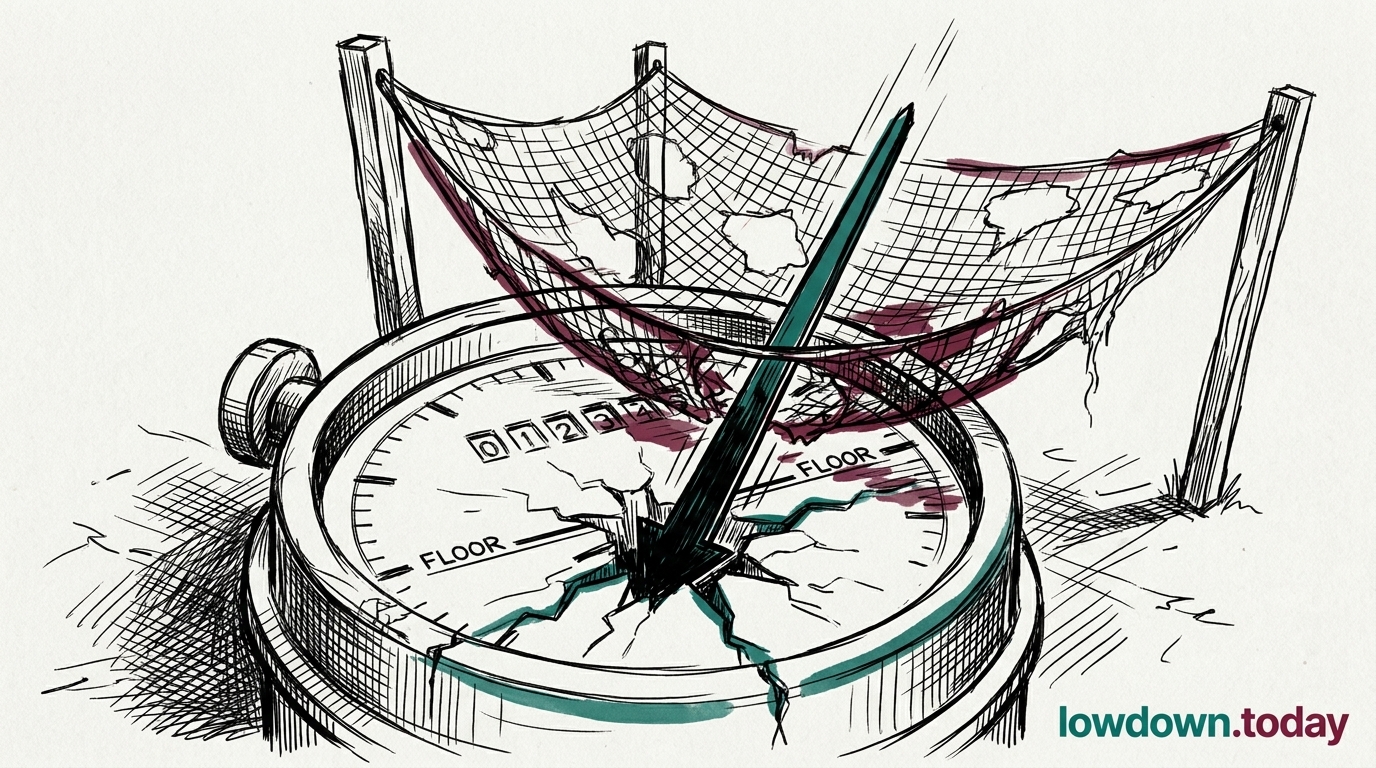
The geometry is the argument. Saudi Arabia restored the Petroline pipeline to seven million barrels per day earlier this week as its published contingency against a Hormuz closure . A fifth of global seaborne oil still transits Hormuz daily, and Petroline cannot carry it. In practice, that bypass ends at Yanbu on the Red Sea. A Houthi kinetic action in Bab el-Mandeb, the strait at the southern end of the Red Sea, eliminates the bypass in a single decision. Riyadh's formal pressure on Washington is the first public acknowledgement that its own backup plan requires US restraint on the blockade to keep functioning.

The International Crisis Group warning relayed earlier this week has now been echoed by the host government of the largest American base in the region. Redirected Saudi crude is only useful if the Red Sea stays clear, and the Red Sea is not in Riyadh's gift. For European households dependent on Gulf energy, that warning translates into a dual-chokepoint risk not yet priced at the current oil benchmark: one closure would remove roughly a quarter of seaborne energy supply, a scenario the market has quietly declined to imagine. The coalition is wobbling from its Gulf end first.


Deep Analysis

In plain English

Saudi Arabia is quietly asking the United States to stop the blockade of Iran's ports. The public reason given is fear of the Houthis; the armed group in Yemen that controls the south end of the Red Sea. Saudi Arabia built a pipeline to send its oil around the Strait of Hormuz if that route gets blocked. But that pipeline ends at the Red Sea, which the Houthis could also close. In other words: Riyadh's backup plan for a Hormuz problem only works if the Red Sea stays open. Saudi Arabia cannot keep the Red Sea open; that depends on the Houthis, who answer to Iran. So Riyadh is in the position of asking Washington to ease pressure on Iran, because if the blockade squeezes Iran too hard, Iran may tell the Houthis to close the second chokepoint, and Saudi Arabia's entire energy bypass collapses.

Deep Analysis
Root Causes

The structural condition driving Saudi pressure is the Petroline bypass paradox: Riyadh publicly presented the 7 million bpd Petroline restoration as its structural answer to a Hormuz closure, but Petroline terminates at Yanbu on the Red Sea; meaning a Houthi Bab el-Mandeb action negates the bypass entirely. Saudi Arabia cannot credibly protect its own contingency plan from the force its own ally (the US) is provoking.

The deeper structural driver is NEOM and Vision 2030: Saudi Arabia's economic transformation is predicated on Red Sea stability for tourism, logistics, and the NEOM smart-city corridor. A Houthi Bab el-Mandeb closure is not merely an oil revenue risk; it is an existential threat to the infrastructure investments Riyadh is using to diversify away from oil. Washington treating Hormuz as a lever while leaving Bab el-Mandeb as a Houthi option is strategically incoherent from Riyadh's perspective.

What could happen next?
  • Risk

    Saudi Arabia's Petroline bypass; publicly presented as the structural solution to Hormuz; is negated by a single Houthi Bab el-Mandeb decision, exposing Riyadh's contingency plan as dependent on the same US restraint it is requesting

    Short term · 0.85
  • Consequence

    Coalition host-base architecture narrows: Bahrain and Kuwait remain committed but Saudi pressure signals the Gulf coalition cannot be assumed stable beyond the current operational window

    Immediate · 0.75
  • Risk

    Dual-chokepoint scenario; Houthis activating Bab el-Mandeb simultaneously with Hormuz partial closure; remains unpriced in Brent at $94.79, implying a repricing risk of $35-55 per barrel if Saudi pressure fails and Houthi restraint breaks

    Medium term · 0.6
First Reported In

Update #69 · Cooper joins the instrument gap

Jerusalem Post (citing Wall Street Journal)· 15 Apr 2026
Read original
Different Perspectives
Spain's LNG terminal operators
Spain's 9,145 GWh terminal inventory is the largest single stock in the EU LNG network, an option value that can reroute cargoes wherever the winter strip pays best rather than a cavern gas obligation tied to a fixed date. That flexibility matters more as Germany's cavern shortfall pushes more of the winter security question onto import infrastructure.
European Commission
European Commission
Brussels holds the bloc to 90% on a flexible window while Germany, holding roughly a quarter of EU storage capacity, tracks toward missing its own lower 80% figure by 21 points. A national shortfall this size in the anchor market matters more to bloc security than the flexible timetable alone can absorb.
French power exporters and CRE
French day-ahead rose in step with Germany but by less, reopening a EUR 7-17 premium that makes northward export flows commercially attractive again after the EUR 43.09 discount evaporated in days. CRE separately authorised RTE and Enedis to buy flexibility locally, betting the coming winter's binding constraint is grid congestion rather than a shortage of firm capacity.
TTF trading desk
TTF trading desk
A visible national shortfall like Germany's 21-point gap is a directional signal, not noise, for a desk holding the summer-winter spread. TTF's flat EUR 58-60 range through this week's German price swings says the market has not yet chosen to reprice refill risk into the front of the curve.
German cavern and CCGT operators
German caverns kept buying prompt gas at TTF near EUR 58-60 through the inversion; the wind collapse to 2.4 GW then flipped the spark spread to plus EUR 29 and put turbines back in the same queue. Every day turbines win that bid, injection at a third of the 877 GWh/day pace needed falls further behind.
Slovakia
Slovakia
Slovakia says it dropped its hold-out on the 21st sanctions package only after Ursula von der Leyen personally signed written gas-price and supply guarantees. The Council of the European Union's own 17,238-character release on the package names neither Slovakia nor any guarantee, leaving Bratislava's account unconfirmed by the institutional record.



