Girton College
Cambridge constituent college founded 1869; current Mistress is Yemen scholar Elisabeth Kendall.
Last refreshed: 15 April 2026 · Appears in 1 active topic
How does a Cambridge college end up with its own moment in the Iran-conflict coverage?
Timeline for Girton College
Mentioned in: Riyadh asks Washington to end blockade
Iran Conflict 2026Background
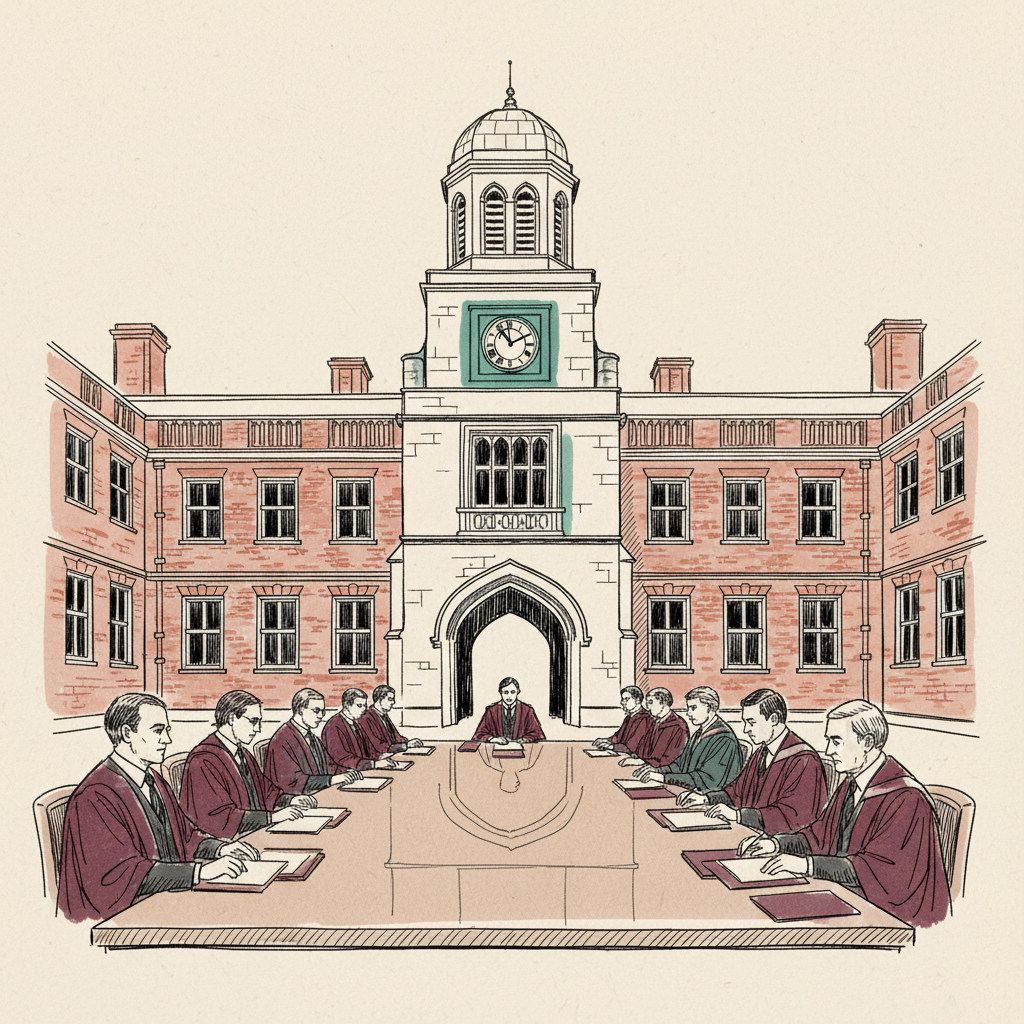
Girton College is one of the constituent colleges of the University of Cambridge, founded in 1869 as the first Cambridge college to admit women. It is located approximately 3 kilometres from the city centre on Huntingdon Road. Its current Mistress — the title used for Girton's head — is Elisabeth Kendall, a leading Yemen and Arabian Peninsula scholar and Laudian Professor of Arabic at the University of Oxford. Kendall's analysis of Houthi behaviour in the context of the Iran conflict was cited in international news reporting in April 2026, bringing Girton's scholarly output briefly into the coverage of a live geopolitical crisis.
Girton's founding was pioneering: established by Emily Davies and Barbara Bodichon, it was specifically designed to allow women to study to the same standard as male Cambridge students, initially in a geographically separate location to reduce institutional opposition. It became a mixed-gender college in 1977 and has since produced graduates in every field, including politics, law, Science, and the arts. The college holds significant endowments and has an active alumni network.
In the context of this briefing, Girton is relevant primarily as the institutional home of Elisabeth Kendall, whose scholarly reputation on Yemen gives her analysis authority that a freelance commentator would not carry. The college's historic role as an institution built around intellectual independence and rigorous scholarship aligns with Kendall's practitioner-adjacent academic approach: fieldwork-heavy, directly engaged with the subjects she studies, and willing to offer unambiguous analytical assessments in public.
Who is the head of Girton College Cambridge?
What did Girton College say about the Houthis?
When was Girton College Cambridge founded?



