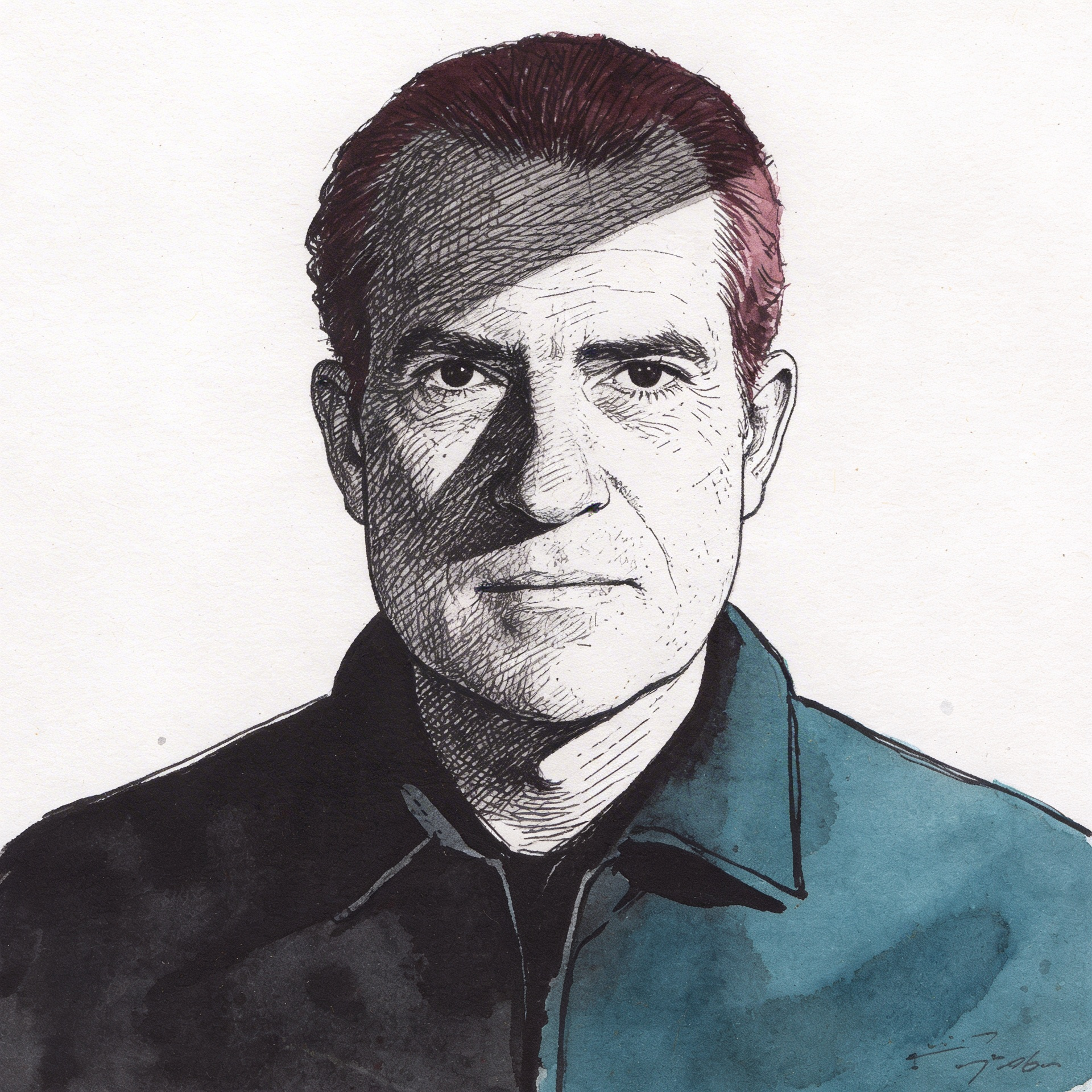
Nixon
37th US President (1969-1974); resigned over Watergate; his veto of the 1973 WPR was overridden.
On 23 July, Congress again failed to bind Donald Trump’s Iran campaign under the War Powers Resolution, the law whose 1973 veto override remains Nixon’s constitutional legacy.
Last refreshed: 22 September 2026 · Appears in 1 active topic
Nixon vetoed the WPR in 1973: does his ghost now protect Trump's Iran war?
Timeline for Nixon
Mentioned in: Tillis crosses but Iran vote fails 49-50
Iran Conflict 2026Mentioned in: House votes to end war, Senate won't
Iran Conflict 2026Mentioned in: Judge blocks DOJ 2020 poll-worker demand
US Midterms 2026Mentioned in: Trump talks $2.50 petrol, signs nothing
Iran Conflict 2026Mentioned in: Trump touts a deal he cannot sign
Iran Conflict 2026Background
Nixon was the 37th president of the United States. His presidency ended with his resignation over Watergate, making him the only US president to leave office that way. His durable constitutional relevance includes the War Powers Resolution, which Congress enacted after overriding his veto in 1973.
The resolution sought to limit a president’s ability to continue hostilities without Congress. Its place in Nixon’s record sits alongside an administration known for executive power, the opening to China, détente with the Soviet Union and the winding down of US ground involvement in Vietnam. The law’s later difficulty in constraining the Iran conflict shows why Nixon’s veto still matters to arguments about presidential war powers.
Nixon remains a reference point for both foreign-policy realignment and institutional restraint. The War Powers Resolution’s continued use in congressional disputes makes his unsuccessful attempt to block it relevant long after his presidency.
Nixon’s veto legacy has failed
On 1 June, the War Powers Resolution withdrawal clock lapsed for a third time during the Iran conflict. The law was enacted in 1973 after Congress overrode Nixon’s veto, intending to force a choice between congressional authorisation and withdrawal.
Nixon's role concerns the institution rather than his personal involvement. The measure associated with his failed veto has recorded congressional opposition, but it has not compelled an end to hostilities. On 23 July, The House passed a withdrawal measure while the Senate rejected its binding counterpart, leaving the conflict without a matching congressional instruction.
Reference
What is the 1973 War Powers Resolution and what does it have to do with Nixon?
Did Nixon ever try to control prices the way Trump has demanded for petrol?
What did Nixon achieve in foreign policy?
Why did Nixon resign from the presidency?
When does the WPR clock expire for the Iran war?

