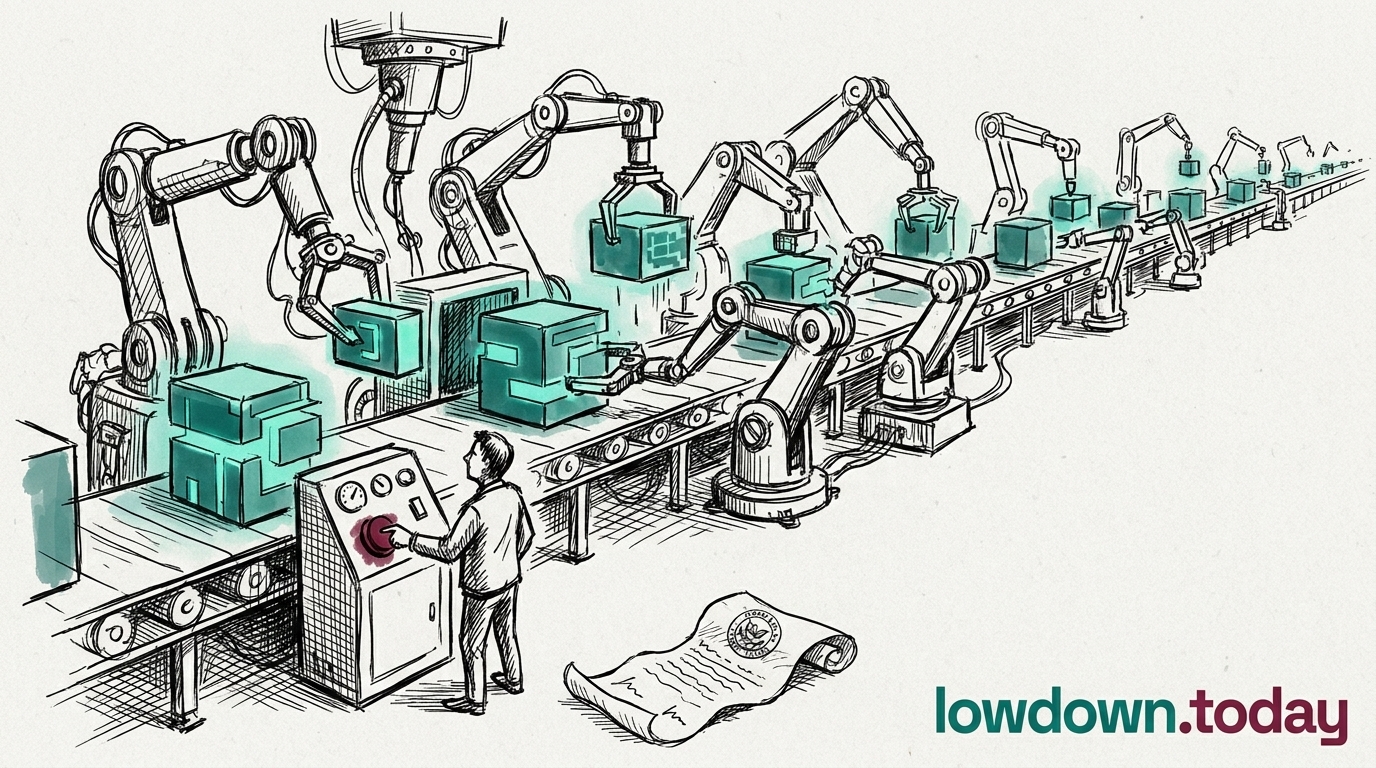
By 15 May 2026, four major US employers have each restructured their workforces citing AI efficiency within a two-month window without a single enforcement action under the WARN Act: Oracle, Microsoft, PayPal, and GitLab. Oracle's March 2026 cut produced WARN notices for under 4% of those affected; Massachusetts produced nothing at all. PayPal stretched its timeline to avoid the threshold. Microsoft made departures voluntary. GitLab has no qualifying single US site. Each method is different; none triggered enforcement.
The Economy of the Future Commission Act (S.3339), introduced by Senators Warner and Rounds and the most viable US AI workforce legislative vehicle as of 15 May 2026, has been publicly endorsed by Microsoft and Google. S.3339 establishes a federal Commission to study AI's economic and workforce impacts; it does not create new enforcement obligations, does not extend the WARN Act to AI-driven restructuring, and does not establish individual worker rights. The companies endorsing it are the same companies whose restructuring decisions the Commission would study.
The Attorney General's AI Task Force, established 9 January 2026, has produced no legal filings by 15 May. California's SB 951 (requiring 90 days' notice for AI-driven mass layoffs) and New York's WARN Act AI disclosure amendment remain on the books; the Trump administration's preemption framework positions them as targets when enforcement begins. Nothing has been filed.
The Hangzhou Intermediate People's Court ruling and the Beijing People's Court Liu case ruling represent the only binding judicial precedent in any major jurisdiction requiring employers to bear the legal consequence of deliberate AI-driven dismissal. The US and EU, which spent 2023 and 2024 building regulatory frameworks premised on the assumption that enforcement would precede significant displacement, have arrived at May 2026 with the displacement wave in progress and the enforcement mechanism unused.





