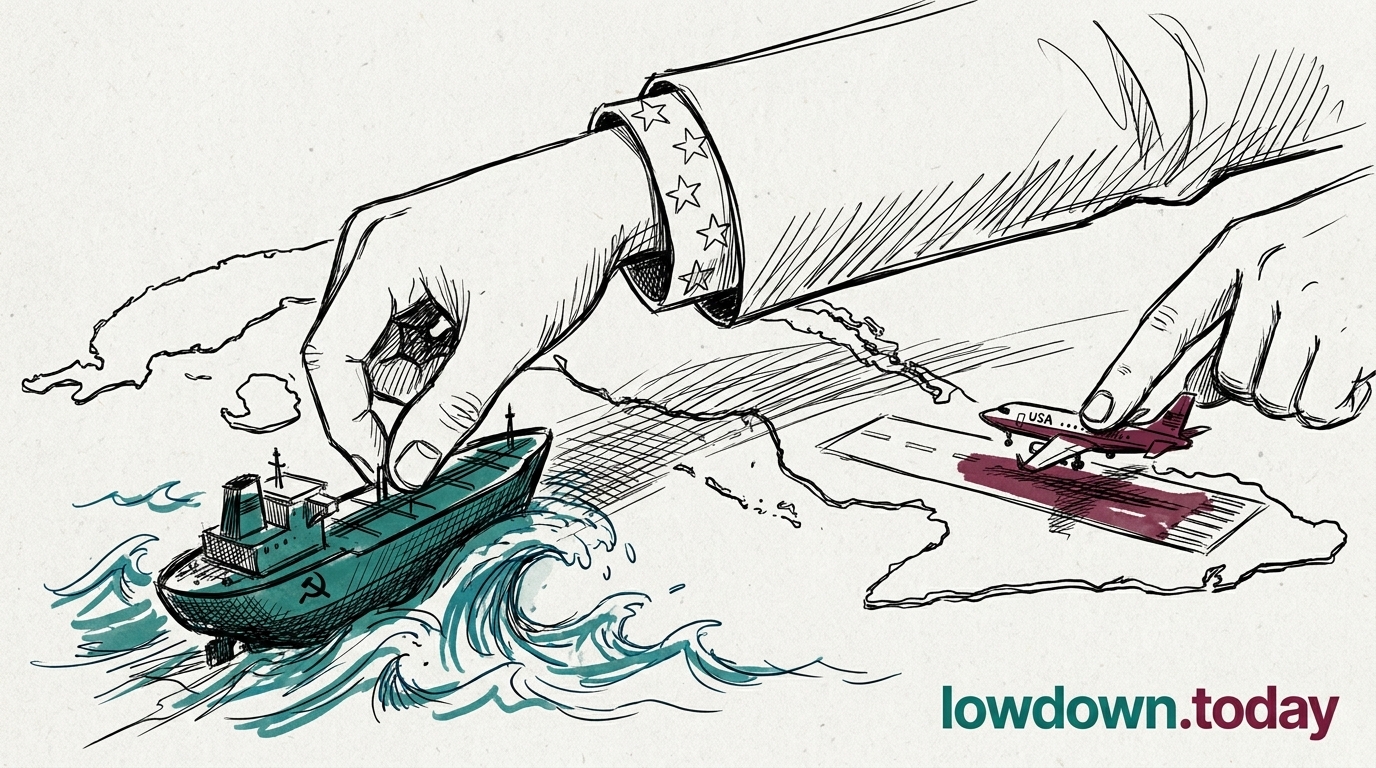
US Treasury issued OFAC General Licence 134B on Saturday 18 April 2026, authorising transactions in Russian crude loaded before 17 April and running through 16 May. Treasury Secretary Scott Bessent justified the licence on grounds the oil was "already in transit" and would not deliver Russia "significant financial benefits". OFAC is the Office of Foreign Assets Control, the Treasury division that administers US sanctions. The cargo most directly covered is the Universal, a 50,923 DWT Sovcomflot tanker carrying roughly 700,000 barrels of crude expected at Matanzas around Wednesday 29 April.
GL 134B is the second consecutive 30-day wind-down extension from OFAC, following GL 134A on 19 March. It sits inside the EO 14380 sanctions architecture that took effect in late January and nominally authorises secondary tariffs against third countries shipping crude to Havana. Secondary tariffs are penalties Treasury can impose on insurers, banks and shipping firms doing business with sanctioned suppliers; a wind-down general licence narrows that exposure for the specific cargoes the licence names. The instrument lets enforcement claim a hard line in public while permitting transactions already in flight to settle.
A parallel Venezuela private-sector licence dated 25 March has moved no crude at all. The PDVSA carve-out from a sister Treasury action walled off Cuban state buyers from Venezuelan oil entirely, which means Sovcomflot tankers from the Baltic are now the island's last resupply line. The Florida congressional delegation that demanded a comprehensive licence purge in February has heard nothing back from Treasury for 75 days. Two consecutive wind-down extensions covering Sovcomflot deliveries signal an enforcement posture more permissive than the headline.
If a third extension follows in mid-May, the GL 134/A/B sequence becomes a de facto 60-day rolling licence for Sovcomflot deliveries to Cuba. Insurance and shipping markets will then price these extensions as predictable rather than exceptional, eroding the deterrent effect of secondary tariffs on subsequent Russian cargoes.




