
Skip to content
Briefings are running a touch slower this week while we rebuild the foundations.See roadmap
Iran Conflict 2026
7MAY

Day 69: Pakistan carries paper; Brent below $100

4 min read
12:43UTC

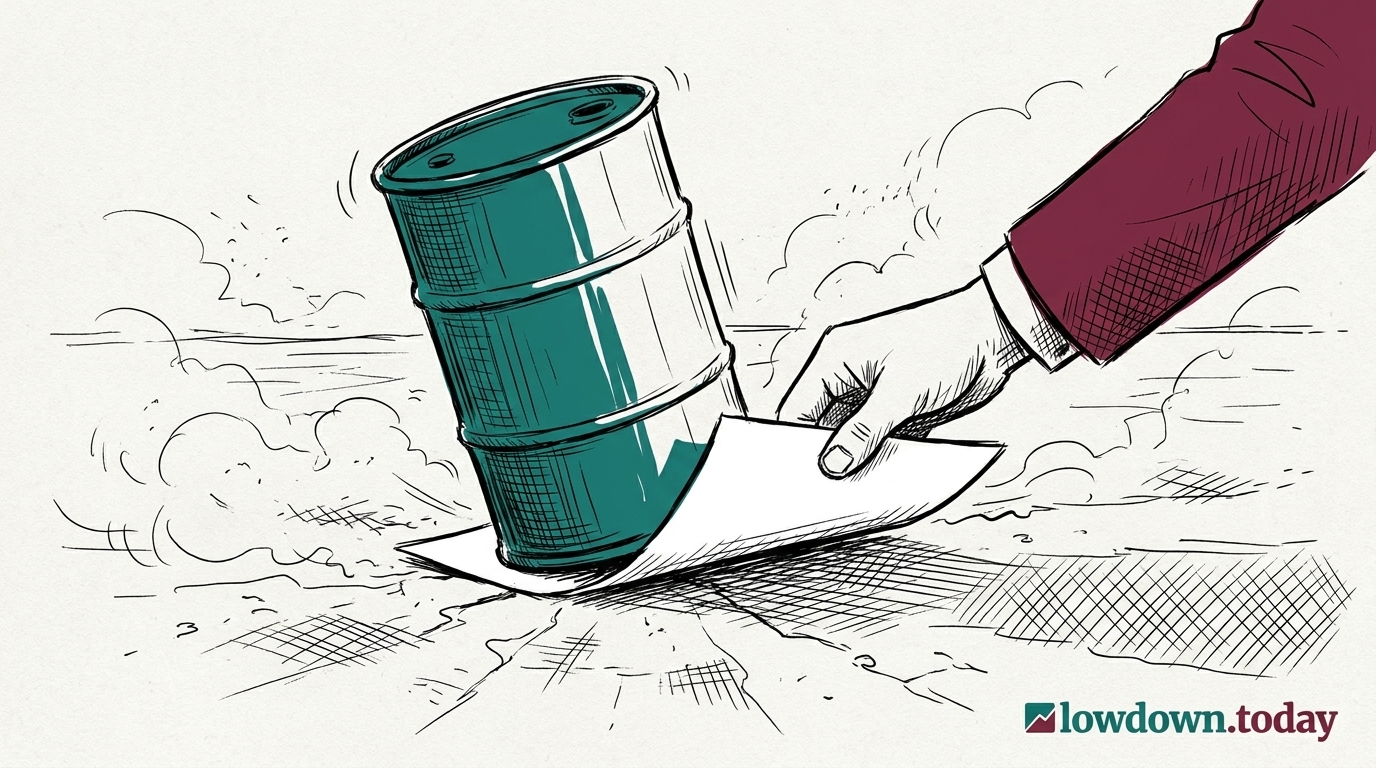
A one-page US memorandum reached Tehran via Pakistan on Thursday; Iran's Foreign Ministry confirmed receipt. Brent settled at $99.40, the first sub-$100 close since the war began. Trump's accompanying Truth Social post threatened that bombing would resume if Iran refused; the market priced the paper, not the post.

Key takeaway

The first US paper of the war concedes the sequencing Rubio rejected three days earlier; Brent priced the paper, not the post.

This briefing mapped
Loading map…
Diplomatic
Regulatory
Military

Pakistan carried a one-page US memorandum into Tehran on Thursday 7 May; Iran's Foreign Ministry confirmed receipt and Brent settled at $99.40, the first sub-$100 close of the war.

Sources profile:This story draws on centre-left-leaning sources from United States and Qatar
United StatesQatar

A one-page US memorandum of understanding reached Tehran via Pakistan on Thursday 7 May 2026, the first paper to move from Washington to Tehran in 67 days of war. Iran's Foreign Ministry spokesman Esmaeil Baqaei confirmed receipt; the text proposes a formal end to the conflict, the lifting of the US naval blockade, and a phased reopening of the strait of Hormuz over 30 days, with the nuclear file held back to a separate later track. Trump's accompanying Truth Social post threatened that bombing would resume if Iran refused; ISNA dismissed the 'memorandum' label as media speculation but did not deny the document.

The first US-side written instrument to enter Tehran in 67 days of conflict adopts the Hormuz-first, nuclear-deferred sequencing Marco Rubio publicly rejected three days earlier. 

The Persian Gulf Strait Authority opened registration via info@pgsa.ir on 6 May, requiring vessels to email destination, flag history, cargo value and crew nationalities; not one of the 2,000-vessel stranded fleet has registered.

Sources profile:This story draws on mixed-leaning sources from United States and Iran (includes Iran state media)
United StatesIran

The Persian Gulf Strait Authority, created by Iran on 5 May, opened registration via info@pgsa.ir on 6 May, requiring vessels to submit ship destination, flag history, cargo value and crew nationalities. The IRGC Navy posted an X statement promising safe, stable passage. Zero per cent of the estimated 2,000-vessel stranded fleet had registered. Fearnleys Shipbrokers and BIMCO both declined to update safety guidance, citing insufficient clarity on transit rules.

An operational permitting body without an insurance market is a press release; BIMCO's continued silence is the leading commercial indicator that no shipper believes the IRGC Navy's safe-transit guarantee. 

A US fighter jet fired rounds at the rudder of an Iranian-flagged oil tanker in the Gulf of Oman on Thursday 7 May after the crew ignored multiple warnings; the disabled vessel ceased transit toward Iran.

Sources profile:This story draws on centre-left-leaning sources from United States
United States

A US fighter jet fired rounds at the rudder of an Iranian-flagged oil tanker in The Gulf of Oman on Thursday 7 May after the crew ignored multiple warnings, CENTCOM confirmed. The disabled vessel ceased transit toward Iran. This was the first confirmed instance of a US fighter disabling an Iranian vessel's propulsion mechanism rather than boarding or rerouting it. The cumulative blockade redirection figure reached 52 vessels, up from 48 on 3 May.

The first confirmed instance of a US fighter disabling an Iranian vessel's propulsion mechanism, rather than boarding or rerouting it, escalates the blockade tactic while the kinetic phase is paused. 

Sources:NPR
1 NPR

Marco Rubio told Fox News on Monday 4 May the United States would never accept paying Iran a toll for Hormuz; the document delivered to Tehran 72 hours later proposes the sequencing he rejected.

Sources profile:This story draws on centre-left-leaning sources from Qatar
Qatar

Marco Rubio told Fox News on Monday 4 May that the United States would never accept paying Iran a toll to use the strait of Hormuz, then on Tuesday 5 May declared Operation Epic Fury concluded and shifted to an MOU framing for future negotiations. The one-page MOU delivered to Tehran on 7 May proposes the exact Hormuz-first, nuclear-deferred sequencing Rubio had publicly rejected three days earlier; Brent fell 12 per cent intraday on the same session.

Position vs paper: the Secretary of State's televised rejection and the MOU's text contradict each other, and the paper went anyway. 

Sources:Al Jazeera

China's Ministry of Commerce issued Announcement No. 21 on 2 May, directing Chinese citizens, companies and organisations not to comply with the two US executive orders that authorise OFAC's Iran sanctions programme.

Sources profile:This story draws on centre-leaning sources from United States
United States
LeftRight

China's Ministry of Commerce issued Announcement No. 21 on 2 May, directing Chinese citizens, companies and organisations not to recognise, enforce or comply with US Executive Order 13902 (January 2020) or Executive Order 13846 (August 2018), the instruments authorising OFAC's Iran secondary sanctions programme. The announcement activated the dormant 2021 Blocking Rules for the first time in five years and created a private right of action allowing Chinese entities to sue Western counterparties in Chinese courts for complying with US Iran sanctions.

Beijing's first invocation of its 2021 Blocking Rules creates a private right of action in Chinese courts against Western firms that enforce US Iran sanctions, eight days before the Trump-Xi summit

Sources:Fortune

Xi Jinping wrote separately to Donald Trump confirming China is not transferring weapons to Iran, ahead of the 14-15 May Beijing summit, the first US presidential visit to China in eight years.

Sources profile:This story draws on centre-leaning sources from Hong Kong SAR China
Hong Kong SAR China
LeftRight

Xi Jinping wrote to Trump before the 14-15 May Beijing summit confirming China was not transferring weapons to Iran. The letter exchange confirmed the summit as Trump's first overseas trip since 28 February and the first US presidential visit to China in eight years. Foreign Minister Abbas Araghchi met Wang Yi in Beijing on 6 May; China called for a comprehensive Ceasefire before the summit. Pakistan Foreign Minister Ishaq Dar confirmed on 6 May that Pakistan brokered the first US-Iran direct talks in 47 years, moving the back-channel on the record. Treasury Secretary Scott Bessent urged Beijing to join in opening Hormuz; Beijing named no agenda item.

The letter exchange and the on-record Pakistan brokerage move what was a tacit back-channel architecture into named, dated diplomatic record before Trump arrives in Beijing

Twenty days after the Paris conference stood up the European 40-nation Strait of Hormuz mission, the operationalised force at the UK Permanent Joint Headquarters has not deployed; the UK Defence Secretary's ceasefire trigger remains unfilled.

Sources profile:This story draws on centre-left-leaning sources from United States
United States

The European Strait of Hormuz Maritime Freedom of Navigation Initiative — the 40-nation mission stood up at the 17 April Paris conference and operationalised at the UK Permanent Joint Headquarters at Northwood between 22-23 April — had not deployed by 7 May, twenty days after the Paris conference. The UK Defence Secretary's 'when conditions are met, following a sustainable Ceasefire' trigger remained unfilled. Iran's Persian Gulf Strait Authority opened registration on 6 May creating a counter-permitting framework under Iranian domestic law; the Northwood mission's UNCLOS-doctrine framework has no operational response to a permitting body that contradicts UNCLOS Article 38.

Iran has produced an operational permitting body and a vessel-disabling response in the same week; Europe has produced a posture that is still waiting for its own deployment trigger. 

Sources:NPR

Israeli forces struck Dahiyeh, southern Beirut, on 7 May, killing Ahmed Ali Balout, commander of Hezbollah's Radwan Force; Iran's Foreign Ministry threatened within hours to collapse its own ceasefire with Israel.

Israeli forces struck Dahiyeh, the southern Beirut suburb, on 7 May 2026, killing Ahmed Ali Balout, commander of Hezbollah's Radwan Force elite commando unit. The strike was the first IDF airstrike on the Lebanese capital since the Trump Ceasefire of 16 April. Iran's Foreign Ministry warned within hours that continued Israeli strikes on Lebanon would constitute grounds for collapse of Iran's own Ceasefire with Israel.

The first IDF airstrike on the Lebanese capital since the 16 April Trump Ceasefire pulls Lebanon inside the Iran file rather than adjacent to it, on the same day Pakistan delivered the US paper to Tehran

Sources:JNS
1 JNS2 JNS
Closing comments

Direction: de-escalatory on the strait, decoupled on the nuclear file, escalatory on Lebanon. Brent at $99.40 on 7 May 2026 reflects the market's read of the MOU as a genuine term sheet, not a gesture; a second IDF Beirut strike would retrace the $108-$123 range within sessions. The named decision point is whether Defence Minister Katz or Chief of Staff Zamir authorises a second Dahiyeh strike before Murkowski's 11 May AUMF filing gives Congress a formal override mechanism: if the IDF acts before 11 May, Iran's Foreign Ministry has a pretext to collapse the ceasefire, the Pakistan channel fails, and the MOU's thirty-day Hormuz clock never starts.

Different Perspectives
Iran (Foreign Ministry)
Spokesman Esmaeil Baqaei confirmed receipt of the document on the record and said Iranian negotiators would route their reply back through Islamabad; ISNA simultaneously dismissed the 'MOU' label as media speculation without denying the document's existence. The dual signal preserves plausible deniability while keeping the channel open.
United States (Trump administration)
The White House has not publicly confirmed authorship of the MOU; Trump's accompanying Truth Social post threatened resumed bombing if Iran refused. The administration is running a written concession and a verbal threat in parallel, with no signed presidential instrument behind either, maintaining the deniability structure that has held for 67 days.
China (MOFCOM / Xi Jinping)
Xi wrote to Trump before the 14-15 May summit denying weapons transfers to Iran; MOFCOM Announcement No. 21 simultaneously activated the 2021 Blocking Rules, shielding five named Chinese refineries and creating a private right of action against OFAC-compliant Western firms. Beijing is publicly supporting de-escalation while legally pre-positioning for whatever sanctions outcome the summit produces.
Israel (IDF)
Israel (IDF)
Defence Minister Israel Katz said Hezbollah was applying pressure out of concern Israel would crush it; Chief of Staff Eyal Zamir told reporters the IDF is ready for a 'powerful and broad' Iran operation. Israel killed the Radwan Force commander in Beirut on the same day the MOU reached Tehran, placing a live military action inside the diplomatic window.
Pakistan (Ishaq Dar)
Foreign Minister Dar confirmed on 6 May that Pakistan brokered the first direct US-Iran talks in 47 years, taking the back-channel on the record for the first time. Pakistan's mediating role is now publicly attributed; the channel's institutional memory is strong enough to carry text in both directions.
Global shipping (BIMCO / P&I clubs)
BIMCO has not updated its Hormuz safety guidance despite the IRGC Navy's safe-transit assurance; Fearnleys said owners need observable evidence of actual transits before filing a PGSA registration. Without P&I war-risk cover, the MOU's thirty-day reopening window cannot translate into commercial traffic regardless of what Iran and Washington sign.