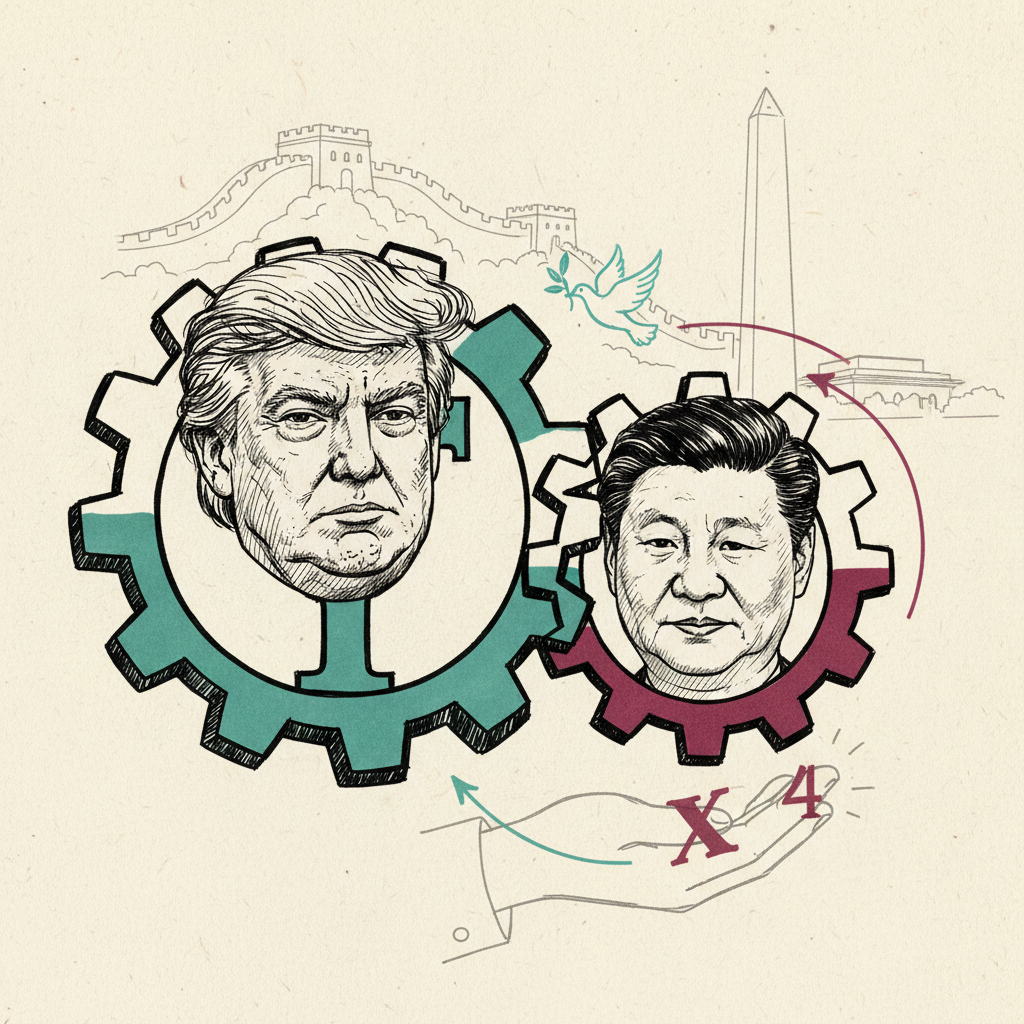
Trump-Xi summit
14-15 May 2026 Beijing bilateral; Trump's first overseas trip; US-China trade, Iran, and Taiwan agenda.
On 14 May, the Trump-Xi summit cleared 10 Chinese firms to buy Nvidia chips but produced no Iran instrument, leaving its Iran agenda without a recorded bilateral deal.
Last refreshed: 22 September 2026 · Appears in 1 active topic
Can Trump lock in a 72-hour Iran non-escalation window from Xi before leaving Beijing?
Timeline for Trump-Xi summit
Mentioned in: OFAC SDN round skips mainland refineries again
Iran Conflict 2026Mentioned in: Iran names new ambassador to Beijing
Iran Conflict 2026Mentioned in: Ghalibaf declares new world order, quoting Xi
Iran Conflict 2026Mentioned in: Brent hits $109.30 as summit dip fades
Iran Conflict 2026Mentioned in: OFAC designates twelve for IRGC oil routing
Iran Conflict 2026Background
The Trump-Xi summit is the bilateral forum for meetings between the presidents of the United States and China. The 2026 edition took place in Beijing on 14-15 May during Donald Trump's first overseas trip after returning to office. Its agenda connected trade, technology export controls, Taiwan and China's role in Iran-related diplomacy. On 14 May, a US technology clearance for 10 Chinese firms showed that the forum could produce a concrete policy decision.
The forum matters because the two governments can address issues that cut across commerce, security and sanctions in one direct channel. China entered the 2026 meeting after Xi denied arms transfers to Iran on 6 May, placing an Iran-related assurance alongside wider bilateral negotiations.
The Trump-Xi summit brings leaders together to discuss policies made elsewhere. It is a meeting format and diplomatic venue, while sanctions, export licences and Mediation channels remain separate state actions. Beijing's 13 May endorsement of Pakistan's US-Iran role illustrated that China could retain parallel diplomatic channels before the presidents met.
Summit yields no Iran pact
On 13 May, Beijing backed Pakistan as the US-Iran mediator before the Trump-Xi summit opened. That public choice preserved a separate channel for Iran diplomacy and limited the scope for a bilateral Beijing agreement.
On 14 May, the summit's first day produced US clearance for 10 Chinese firms to buy Nvidia chips, while no Iran executive instrument was signed. The meeting therefore recorded a technology deliverable without a written arrangement on Iran, despite Iran's prominence in its pre-summit diplomacy.
When is Trump meeting Xi Jinping in 2026?
What will Trump and Xi discuss about Iran at the Beijing summit?
Why did Xi write to Trump before the Beijing summit?
What will Trump and Xi discuss at the Beijing summit?
What is MOFCOM Announcement No. 21 and how does it affect the Trump-Xi summit?
How does the 2026 Trump-Xi summit differ from the 2017 Mar-a-Lago meeting?
What happened at the Trump-Xi summit in Beijing in May 2026?
Why did China's MFA readout not mention Iran at the Trump-Xi summit?
Did the Trump-Xi Beijing summit produce a ceasefire agreement on Iran?
What is China's MOFCOM No. 21 blocking statute and why does it matter for the Iran conflict?




Written with AI from Lowdown's published reporting. Not individually reviewed by an editor. Updated 22 September 2026. Editorial standards.