
Skip to content
Briefings are running a touch slower this week while we rebuild the foundations.See roadmap
Iran Conflict 2026
28MAR

Day 29: Houthis join; Iran holds two chokepoints

5 min read
17:06UTC

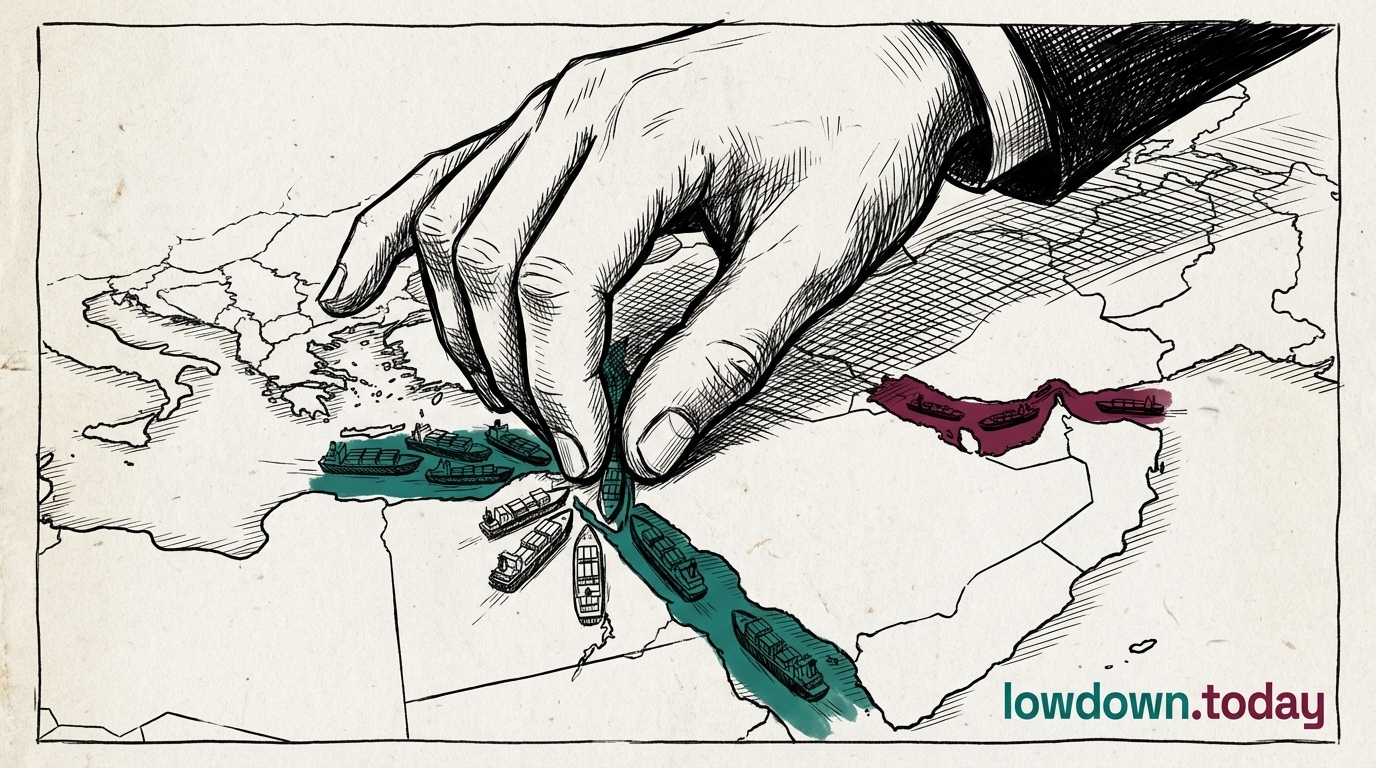
Yemen's Houthis fired their first missiles at Israel on Day 29, entering the war at Iran's direction after weeks of deliberate restraint. With Hormuz under Iranian traffic control via the Larak Island corridor and Bab al-Mandeb now under active Houthi threat, two of the world's three critical maritime chokepoints are contested simultaneously.

Key takeaway

Iran is converting military losses into permanent strategic and legal leverage that will survive any ceasefire.

This briefing mapped
Loading map…
Military
Diplomatic
Humanitarian
Domestic
Economic

Yemen's Ansar Allah launched ballistic missiles at Israeli military sites on Day 29, ending four weeks of deliberate restraint at Tehran's request.

Sources profile:This story draws on centre-left-leaning sources from Qatar and United States
QatarUnited States

Ansar Allah (Houthis) fired a barrage of ballistic missiles at Israeli military sites in southern Israel on 28 March — their first attack since the conflict began on 28 February. The IDF intercepted one missile; sirens sounded in Beersheba. Houthi military spokesman Brigadier-General Yahya Saree announced the strikes via Al Masirah TV and stated they would continue until aggression against all resistance fronts ceases.

Iran activated its most powerful remaining proxy the day after Pakistan confirmed talks had stalled, opening a second front and placing a second maritime chokepoint under threat. 

Sources:Al Jazeera·Axios

A senior Houthi official described closing the Red Sea strait as one stage in a deliberate escalation ladder.

Sources profile:This story draws on centre-left-leaning sources from United States
United States

Houthi deputy information minister Mohammed Mansour told reporters that closing the Bab al-Mandeb strait is 'among our options,' framing Houthi strategy as a staged escalation ladder. The entry came after Pakistan confirmed indirect US-Iran talks had stalled. Houthi entry combined with Iranian traffic control at Hormuz places two of the world's three critical maritime chokepoints under simultaneous pressure.

If the Houthis close Bab al-Mandeb while Iran controls Hormuz, the IEA's emergency reserves cannot compensate for the combined disruption. 

Sources:Axios

Iranian missiles hit Prince Sultan Air Base outside Riyadh, wounding 12 Americans and damaging the refuelling and surveillance aircraft a Kharg Island assault requires.

Sources profile:This story draws on mixed-leaning sources from United States
United States

Iranian ballistic missiles and drones hit Prince Sultan Air Base outside Riyadh on 27 March, wounding 12 US service members (two seriously) and damaging at least two KC-135 Stratotanker refuelling aircraft and one E-3 Sentry AWACS. Total US casualties now stand at 13 killed and more than 312 wounded, of whom 75% or more suffer traumatic brain injuries.

The strike degraded two specific capabilities the Pentagon's Kharg Island planning depends on, whether by design or coincidence. 

The UN nuclear watchdog disclosed that 440 kg of weapons-grade-threshold uranium has been unverified for eight months, with movement detected near stockpile sites.

Sources profile:This story draws on neutral-leaning sources from Austria
Austria

IAEA Director General Rafael Grossi told CBS Face the Nation on 22 March that Iran possessed 440.9 kg of uranium enriched to 60% U-235 per pre-strike inspection records — enough fissile material for approximately seven nuclear weapons if further enriched to weapons-grade 90%. Inspectors have had no access to previously declared enriched uranium inventories for more than eight months. The agency detected 'movement near stockpile sites' but cannot verify what has been moved or where.

The dominant narrative that strikes have "set back" Iran's nuclear programme ignores that the existing enriched stockpile, enough for seven weapons, is unaccounted for. 

The first cabinet-level admission that the original timeline has slipped came as Britain distanced itself from offensive action.

Sources profile:This story draws on centre-left-leaning sources from United States
United States

Secretary of State Marco Rubio told G7 foreign ministers on 27 March that the war would continue for 2-4 more weeks — the first cabinet-level acknowledgment that the original 4-6 week timeline has slipped. G7 allies remained hesitant; UK Foreign Secretary explicitly distanced Britain from 'offensive action.'

Rubio's admission contradicts CENTCOM's victory messaging and the 82nd Airborne deployment, which signals months of operations. 

Sources:Axios

Tehran published five conditions for ending the war. The fifth, permanent control of the Strait of Hormuz, would rewrite international maritime law.

Sources profile:This story draws predominantly on Iran state media, with sources from Iran
Iran

Iran's five conditions for ending the war, relayed through PressTV on 25 March, include: complete cessation of attacks; security mechanisms preventing reimposition of war; guaranteed reparations; end of war across all fronts; and recognition of Iran's natural and legal right to control the strait of Hormuz. Condition five amounts to a permanent revision to international maritime law under UNCLOS, which no US administration could accept.

The conditions function less as a negotiating position and more as a public statement that Iran does not intend to negotiate on terms Washington can meet. 

Sources:PressTV

The Pentagon released triumphant strike footage as America's premier rapid-reaction division shipped out for a theatre the administration says it has already won.

Sources profile:This story draws on mixed-leaning sources from United States (includes United States state media)
United States

CENTCOM released video of strikes on Iranian naval vessels with the caption 'Those days are over,' signalling declaratory finality. On the same day, the 82nd Airborne Division under Maj. Gen. Brandon Tegtmeier is deploying its headquarters with a battalion of the 1st Brigade Combat Team — initial elements expected to begin moving within a week of the 24 March order. Combined with two Marine Expeditionary Units already at sea, 6,000-8,000 US ground troops are moving into proximity to Iran.

Three incompatible US signals, victory, more time needed, and ground force deployment, will collide at the 6 April deadline. 

Official and independent casualty counts now diverge by a factor of 3.4, and the UN warned that the conduct of the conflict may amount to crimes against humanity.

Sources profile:This story draws on neutral-leaning sources from Austria and Iran (includes Iran state media)
AustriaIran

At the war's one-month mark on 28 March, Iran's Deputy Health Minister revised the official death toll to 1,937 killed including 240 women and 212 children, with 24,800+ injured. Hengaw reported 6,530 killed as of Day 25 (ratio 3.4:1 against official count). The UN Fact-Finding Mission warned the conduct 'may amount to crimes against humanity.' The Iranian Red Crescent documented 6,668 civilian units struck including 65 schools. In Lebanon: 1,116 killed including 121 children, 1.2 million displaced. US: 13 killed, 312+ wounded.

The widening gap between official and documented figures reveals systematic under-reporting, not a time lag. 

Six hundred projectiles in 24 hours, twice the previous record, preceded an Israeli strike that killed two senior Hezbollah officials in southern Beirut.

Sources profile:This story draws on mixed-leaning sources from Israel and United States
IsraelUnited States
LeftRight

Hezbollah fired 600 projectiles in 24 hours on 26 March, double its previous single-day record of 300, targeting IDF forces in southern Lebanon. The IDF responded by striking southern Beirut on 28 March, killing Hezbollah officials Ayyoub Hussein Yaacoub and Yasser Mohammad Mubarak. The IDF deployed a fourth division to southern Lebanon. Three journalists from Al-Manar and Al-Mayadeen were killed in an Israeli strike on their vehicle on 28 March.

Hezbollah's surge is timed to pressure both sides into a ceasefire before the 6 April deadline; four IDF divisions cannot suppress it. 

Europe's foreign affairs chief named Russia as an active participant in attacks on US forces while the EU itself issued contradictory human rights statements in 48 hours.

Sources profile:This story draws on neutral-leaning sources from Austria and United States
AustriaUnited States

EU foreign affairs chief Kaja Kallas accused Russia of providing satellite imagery to help Iran target US warships and aircraft, and supplying drones to bolster Iranian capabilities. Russia offered to stop in exchange for the US suspending intelligence support to Ukraine; Washington rejected the offer. The EU issued two structurally different UN Human Rights Council statements in 48 hours: condemning Iran on 26 March, then using 'all parties' language and acknowledging children killed in Iran including the Minab school strike on 27 March.

The US silence on the accusation is deliberate: acknowledging it would trigger a NATO collective defence conversation nobody wants. 

Supermajority disapproval in the war's first month is historically unusual; even young Republicans are split below 50%.

Sources profile:This story draws on neutral-leaning sources

Pew Research Center surveyed 3,524 US adults between 16 and 22 March: 59% said striking Iran was wrong; 61% disapprove of Trump's handling with 44% strongly disapproving. Young Republicans aged 18-29 approve at only 49%, below majority. A separate Ipsos poll found 78% oppose sending ground troops. The expected rally-around-the-flag effect has not materialised.

The absence of a rally-around-the-flag effect constrains the administration's room for escalation, particularly on ground troops. 

The IEA's largest-ever emergency oil release has not stabilised prices; a Dow executive warned supply chains will take nine months to recover after the strait reopens.

Sources profile:This story draws on neutral-leaning sources from United States and Austria
United StatesAustria
LeftRight

Brent crude closed at $112.57 on 28 March, up 4.22% on the day, driven by Houthi entry and Iran's firm rejection of negotiations. Pre-war Brent was $67.41 — a 67% increase in 29 days. The IEA's record 400 million barrel emergency release has not stabilised prices; European reserves are predominantly industry-held. DoW CEO Jim Fitterling stated petrochemical supply chains will take 250-275 days to unwind after Hormuz reopens. US farmers face a 2 million tonne urea shortfall with prices up 49% to $720 per tonne.

The economic damage is already locked in regardless of when the war ends; the petrochemical and fertiliser shocks will outlast any ceasefire by months. 

Riyadh granted access to a second air base as a defence analyst placed 75% odds on American boots touching Iranian soil.

Sources profile:This story draws on mixed-leaning sources from United States
United States
LeftRight

Saudi Arabia granted the US access to King Fahd Air Base, marking a structural change in Gulf war posture. Capital Alpha analyst Byron Callan assessed a 75% probability that US boots will touch Iranian soil and gave 35% odds the war extends into 2027. IDF officers told reservists to prepare for operations lasting until at least May.

Saudi Arabia is deepening its military involvement despite Iranian strikes on its territory, a structural shift from the neutrality it attempted in the war's first week. 

Closing comments

The war is escalating along two axes simultaneously. Horizontally, the Houthi entry opens a new geographic front. Vertically, the 82nd Airborne deployment and Saudi base access suggest planning for a ground component. The dual-axis escalation exceeds what the current diplomatic channel through Pakistan was designed to manage. Without a new diplomatic mechanism, the trajectory points toward a wider, longer war.

Different Perspectives
Iran
Iran
Tehran activated the Houthis on 28 March after talks stalled, published five war-ending conditions including permanent Hormuz sovereignty, while official dead stands at 1,937 against Hengaw's 6,530 across 26 provinces. Iran is converting military attrition into legal architecture designed to survive any ceasefire.
United States
United States
CENTCOM declared victory, Rubio admitted 2-4 more weeks, and the 82nd Airborne deployed for potential ground operations — three incompatible positions, with 59% of Americans calling the strikes wrong and 78% opposing ground troops the Pentagon is already moving.
Israel
Israel
The IDF struck southern Beirut killing two Hezbollah officials, deployed a fourth division to Lebanon, and told reservists to prepare for operations until at least May — signalling no drawdown regardless of US timeline pressure.
Ansar Allah (Houthis)
Entered the war on 28 March with ballistic missiles at Israel after four weeks at Tehran's request, framing Bab al-Mandeb closure as a next rung on a deliberate escalation ladder. Their entry places a second critical maritime route under simultaneous threat.
Saudi Arabia
Saudi Arabia
Granted the US access to King Fahd Air Base, deepening military alignment with Washington, even as Iranian strikes on Prince Sultan demonstrated Riyadh absorbs direct retaliation for hosting American forces.
Pakistan
Pakistan
Confirmed indirect US-Iran talks had stalled on 26 March, a disclosure that directly preceded the Houthi entry. Islamabad's diplomatic channel is now under pressure as escalation outpaces the framework it constructed.