
Skip to content
You can now search across every topic, entity and event.What's new
Iran Conflict 2026
27MAR

Day 28: Hormuz toll into law; Tangsiri killed

3 min read
14:13UTC

Iran's parliament is drafting legislation to make the Strait of Hormuz toll permanent, codifying the blockade into domestic law while the architect of the system, IRGC Navy Commander Alireza Tangsiri, was killed in a 3am Israeli strike on Bandar Abbas. The same day, Pakistan confirmed indirect US-Iran talks, Trump extended his energy-strike deadline to 6 April for the third time, and American farmers learned they face a two-million-ton fertiliser shortfall for spring planting.

This briefing mapped
Loading map…
Diplomatic
Military
Economic
Humanitarian
Legal
Sources profile:This story draws on centre-left-leaning sources from United States and Israel
IsraelUnited States

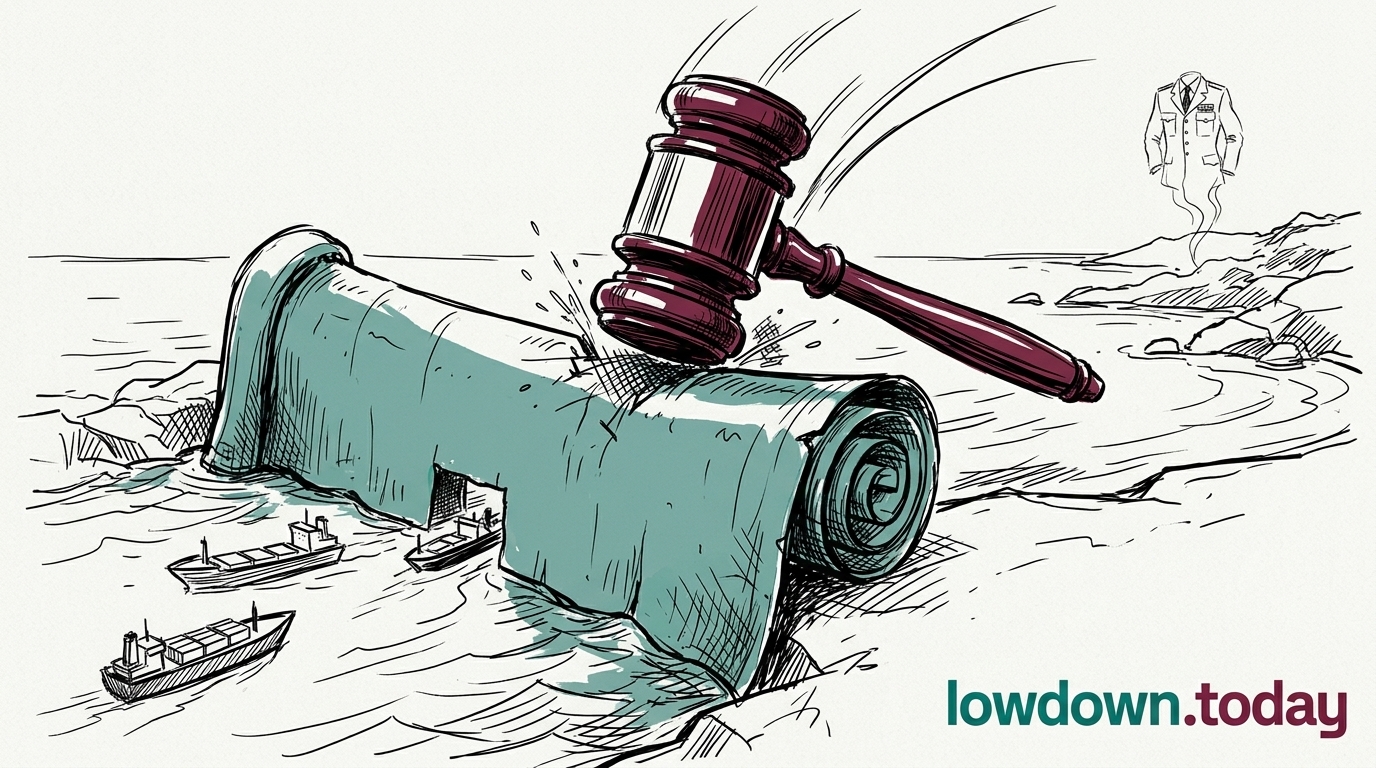
Iran’s Majlis is drafting legislation to write the strait of Hormuz toll into domestic law, with finalisation due the following week. Twenty-six vessels have transited under Islamic Revolutionary Guard Corps (IRGC) vetting since the system began.

The closest parallel is Egypt’s 1957 Suez Canal nationalisation, which survived military invasion and became permanent. Iran is converting a wartime military mechanism into statute so that any post-ceasefire negotiation starts from a new legal baseline. 

Sources profile:This story draws on mixed-leaning sources from Qatar and Iran (includes Iran state media)
QatarIran

Israel killed IRGC Navy Commander Admiral Alireza Tangsiri, intelligence chief Behnam Rezaei, and senior naval aides in a 3am airstrike on Bandar Abbas on 26 March. Tangsiri had commanded the IRGC Navy since August 2018 and personally built the Hormuz toll system.

He died as the Majlis was drafting his toll mechanism into permanent statute. The architecture he built now runs without him, backed by 26 vessel transits and a parliamentary codification process already underway. 

Sources profile:This story draws on centre-left-leaning sources from Qatar and United States
QatarUnited States
Sources profile:This story draws on mixed-leaning sources from Saudi Arabia, United States and 1 more
United StatesSaudi ArabiaQatar

Pakistan Foreign Minister Ishaq Dar confirmed on 26 March that Pakistan is relaying a 15-point US ceasefire proposal to Tehran, the first public confirmation by a third-party intermediary. JD Vance is the proposed US interlocutor.

On the same day, Ghalibaf, Iran’s proposed counterpart, called the talks an attempt to “escape the quagmire” and threatened Gulf infrastructure. Whether that is hardball posturing or genuine rejection is the question no third party can yet answer. 

Sources profile:This story draws on mixed-leaning sources from United States
United States

Trump extended the deadline for striking Iran’s power grid to 6 April, the 3rd extension since his original 48-hour ultimatum. He cited 10 oil tankers through Hormuz as an Iranian gesture, but those were Pakistani-flagged ships already cleared under Iran’s pre-existing vetting rules.

After 3 postponements in 5 days, Iran has learned that deadlines are negotiable. Each extension without consequence further erodes the credibility of the threat, narrowing Washington’s room to escalate. 

Sources profile:This story draws on centre-left-leaning sources from United States
United States

Iranian Parliamentary Speaker Mohammad Bagher Ghalibaf warned on 26 March that if any regional country assists in a Kharg Island occupation operation, Iran will conduct 'continuous and relentless atta


Sources:Bloomberg
Sources profile:This story draws on neutral-leaning sources

The Fertilizer Institute projects US farmers will be short 2 million tonnes of urea this spring, with prices up 30% since the war began. Some cannot source supply at any price; spring planting cannot be delayed.

Iran and Russia together supply roughly 25% of global urea exports. Hormuz disruption has cut those shipments, producing a structural shortage of about 15% of annual US nitrogen demand, with yield losses of 10-20% expected on affected acres. 

EU foreign affairs chief Kaja Kallas accused Russia on 26 March of giving Iran targeting intelligence “to kill Americans” and supplying drones to bolster Iranian capabilities against US bases and neighbouring states.

Washington has not responded. If intelligence-sharing enables attacks on US forces, it approaches the spirit of NATO collective defence without meeting the textual threshold of Article 5, a gap no one in the Alliance wants to define while the Iran campaign continues. 

Sources profile:This story draws predominantly on Iran state media, with sources from Iran
Iran

CENTCOM Commander Admiral Brad Cooper said on 25 March the US has struck over 10,000 targets in Iran, up from 9,000 two days earlier . Ninety-two percent of Iran’s largest naval vessels have been hit; missile output is down 90% from week one.

Yet Israeli cities absorbed multiple missile waves that day. A 90% production cut alongside rising operational tempo is not contradictory: Iran appears to be burning stockpiles faster than it rebuilds them. 

Sources:PressTV
Sources profile:This story draws on centre-left-leaning sources from United States
United States

Iran’s Deputy Health Minister Ali Jafarian revised the official death toll to 1,937 killed, including 240 women and 212 children, with 24,800 injured. Hengaw, a Kurdish rights group, counted 6,530 by Day 25, a ratio of 3.4 to 1 against the official figure.

That ratio widened from 2.5 to 1 at Day 18 . The gap is growing, not stabilising, suggesting systematic under-reporting rather than a lag in hospital processing. 

Sources:Bloomberg
Sources profile:This story draws on mixed-leaning sources from Israel
Israel

Iran's UN representative Ali Mousavi told the International Maritime Organisation this week that vessels from “aggressor parties” forfeit the right of innocent passage through the strait of Hormuz. Approved countries include India, China, Russia, Iraq, and Pakistan.

The statement pairs with a Majlis bill drafting a domestic toll law: 2 legal layers, one from Parliament and one via a UN body, building a framework designed to outlast any ceasefire. 

Different Perspectives
Iran
Iran
Iran is converting military necessity into permanent legal architecture. The Majlis toll bill, the IMO innocent passage notification, and Ghalibaf's UAE deterrence threat form a coherent strategy: legislate before any ceasefire, establish legal claims that survive any resolution, and deter the staging infrastructure a US Kharg assault requires. Iran publicly denies genuine negotiating intent while preserving the back-channel through studied ambiguity.
United States
United States
The administration is managing a structural contradiction: pursuing military degradation of Iran through Israel while simultaneously constructing a diplomatic off-ramp via Pakistan. It is extending deadlines to preserve the channel, removing names from the kill list to protect negotiating partners, and crediting Iran with concessions Iran has not acknowledged, all while CENTCOM reports accelerating campaign progress.
Israel
Israel
Israel is pursuing a maximalist targeting strategy, killing the IRGC naval commander on the same day protective status was granted to Iran's diplomats, and maintains that military decapitation of Iran's command structure is separable from and compatible with the US diplomatic track, even as the simultaneous actions create credibility problems for negotiations.
Pakistan
Pakistan
Pakistan has positioned itself as the indispensable intermediary, publicly confirming the existence of indirect talks despite the diplomatic risk, securing the removal of Iranian officials from the joint target list, and proposing the Vance-Ghalibaf channel. It is converting its neutrality into strategic leverage at a moment when no other interlocutor has this access.
European Union
European Union
The EU is publicly escalating its accusations against Russia, naming Moscow as an active participant in attacks on American forces, while Washington maintains silence. The EU appears to be attempting to force a US acknowledgement of Russian operational involvement that would create alliance obligations the US is currently avoiding.
Russia
Russia
Russia is exploiting the US-Iran conflict to provide operational support to Tehran, including intelligence and drone deliveries, while calculating that the US cannot open a second confrontation front. The EU accusation has received no public American response, confirming that Russia's calculation is correct: the cost of acknowledging Russian involvement exceeds the benefit of responding to it.