Skip to content
Briefings are running a touch slower this week while we rebuild the foundations.See roadmap
Iran Conflict 2026
28MAR

Houthis strike Israel for the first time

2 min read
17:06UTC

Yemen's Ansar Allah launched ballistic missiles at Israeli military sites on Day 29, ending four weeks of deliberate restraint at Tehran's request.

ConflictDeveloping
Key takeaway

Iran activated the Houthis after talks collapsed, threatening a second chokepoint.

Ansar Allah fired a barrage of ballistic missiles at military sites in southern Israel on 28 March, their first attack since the war began on 28 February. 1 The IDF intercepted one missile; sirens sounded in Beersheba.

Houthi military spokesman Brigadier-General Yahya Saree announced the strikes via Al Masirah TV and stated they would continue "until the aggression against all fronts of the resistance ceases." 2 The Houthis had sat out the war's first four weeks at Tehran's request. Their entry is a reversal, and its timing is deliberate: it came the day after Pakistan confirmed indirect US-Iran talks had stalled and the day Iran published five conditions for ending the war, including sovereignty over the Strait of Hormuz .

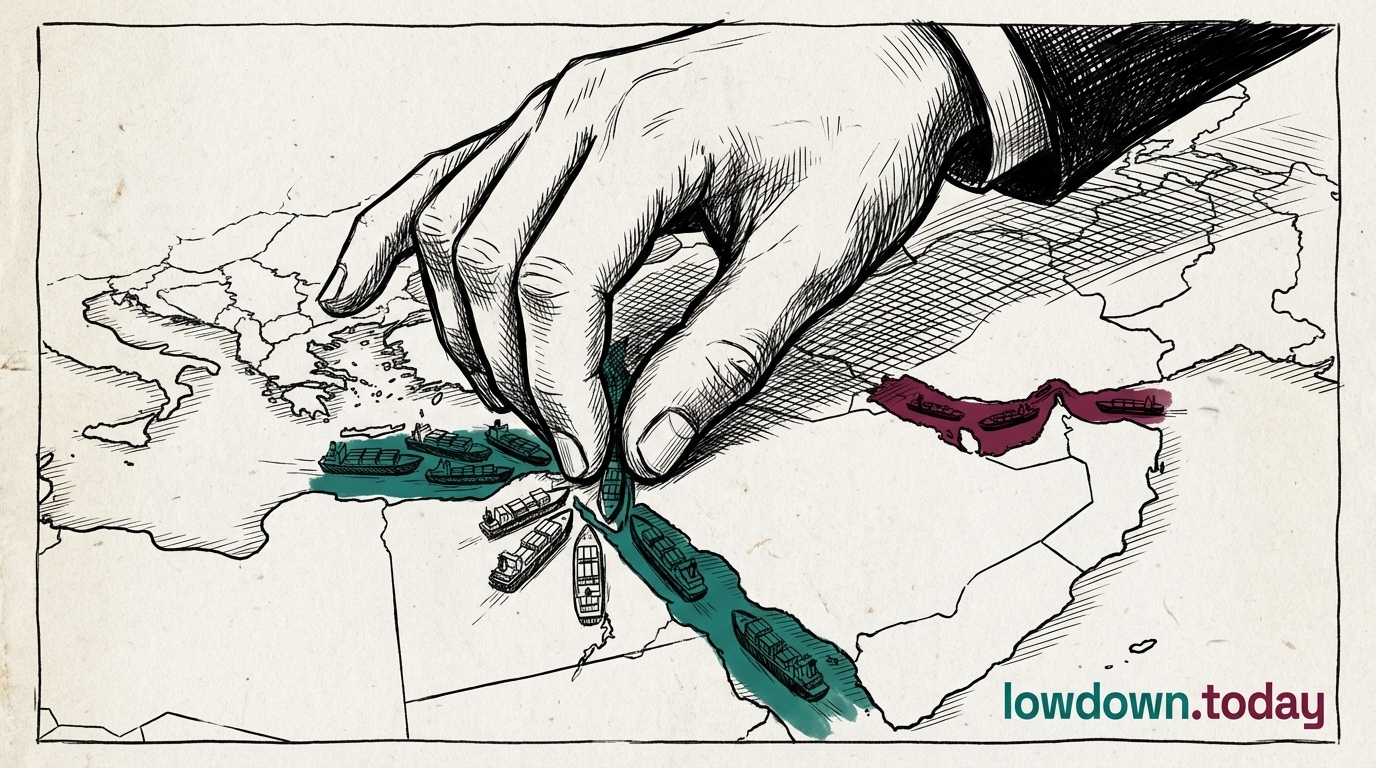
Tehran chose this moment to activate the proxy it had held in reserve. The military threat from a single intercepted missile is secondary. The strategic threat is geographic: combined with Iran's existing traffic control at Hormuz, where only five vessels crossed on 25 March , two of the world's three critical maritime chokepoints are now contested simultaneously for the first time since the 1973 oil crisis.

Deep Analysis

In plain English

Iran has a network of armed groups across the Middle East it funds and supplies. The Houthis, who control northern Yemen, are one of these. Since the war began on 28 February, they had stayed out of the fight at Iran's request. On 28 March they fired their first missiles at Israel. One was shot down; air raid sirens went off in the southern Israeli city of Beersheba. The Houthi spokesman said they would keep firing until all attacks on their allies stop. Why does this matter beyond one intercepted missile? Because the Houthis sit on the coast next to a second major oil shipping route called Bab al-Mandeb. Iran already controls the Strait of Hormuz. If both routes come under threat at the same time, the world's energy supply faces a problem no emergency reserve can fix.

Deep Analysis
Root Causes

The Houthis' decision calculus has two structural drivers the body does not address. First, Israeli strikes in August-September 2025 destroyed Houthi command-and-control, leaving the group with missiles but no officers who could plan integrated operations . Tehran has spent the war's first four weeks rebuilding that coordination layer, which explains the delay.

Second, the Houthis are politically incentivised to enter regardless of Iranian instructions. Sitting out a war that kills co-religionists in Gaza and Lebanon while the group claims to be the region's most committed resistance force is a legitimacy problem. Iranian restraint and Houthi domestic politics were converging toward the same outcome.

What could happen next?
  • Risk

    If the Houthis close Bab al-Mandeb, the IEA's 400 million barrel reserve release cannot compensate; two chokepoints cannot be substituted simultaneously.

    weeks · High
  • Consequence

    Houthi entry invalidates the US ceasefire framework; any deal must now cover four fronts, not two.

    days · High
  • Precedent

    Iran has demonstrated it can hold proxies in reserve then activate on diplomatic cue, making proxy networks a coercive bargaining tool rather than a standing threat.

    long-term · High
First Reported In

Update #50 · Houthis join; Iran holds two chokepoints

Al Jazeera· 28 Mar 2026
Read original
Different Perspectives
IAEA
IAEA
Director General Rafael Grossi appeared in person at the UNSC on 19 May and warned that a direct hit on an operating reactor 'could result in very high release of radioactivity'. The session produced a condemnation record but no resolution, and the Barakah perimeter was already struck on 17 May.
Hengaw (Kurdish rights monitor)
Hengaw documented three judicial executions and the detention of Kurdish writer Majid Karimi in Tehran on 19 May, establishing Khorasan Razavi province as the newest geography in Iran's wartime judicial record. The organisation's Norway-based operation continues to surface a domestic repression track running in parallel with every diplomatic and military development.
India
India
Six India-flagged vessels conducted a coordinated cluster transit under PGSA bilateral assurances during the 17 May window, paying no yuan tolls. New Delhi's inclusion in Iran's state-to-state passage track insulates Indian energy supply without requiring endorsement of the PGSA's yuan-toll architecture or alignment with the US coalition.
Pakistan
Pakistan
Pakistan is the only functioning diplomatic bridge between Tehran and Washington. Its role is relay, not mediation in the settlement sense: it conveyed Iran's 10-point counter-MOU in early May, relayed the US rejection, and is now passing 'corrective points' in the third documented exchange of this sub-cycle without either side working from a shared text.
UK and France (Northwood coalition)
Twenty-six coalition members have published no rules of engagement eight days after the Bahrain joint statement; Lloyd's underwriters have conditioned war-risk reopening on written ROE from either Iran or the coalition. Italian and French mine-countermeasures deployments are operating on the in-water clearance task CENTCOM Admiral Brad Cooper's 90% mine-stockpile claim does not address.
Saudi Arabia
Saudi Arabia
Riyadh has not publicly commented on the Barakah strike or the 50-47 discharge vote. Saudi output feeds the IEA's $106 base case; the $5 Brent premium above that model reflects institutional uncertainty no Gulf producer can compress through supply adjustment alone.