Skip to content
Welcome, thoughtbot's Giant Robots listeners!Start here
Iran Conflict 2026
23JUN

Iran offers talks, lists 114 more ships

4 min read
11:42UTC

Masoud Pezeshkian said on 2 November that the Supreme Leader had given his government room to seek a way out through dialogue. The same day Iran's Hormuz permit agency blacklisted 114 more ships, Qatar's state carriers among them.

ConflictDeveloping
Key takeaway

Iran offered dialogue while blacklisting ships owned by Qatar, the state carrying its messages to Washington.

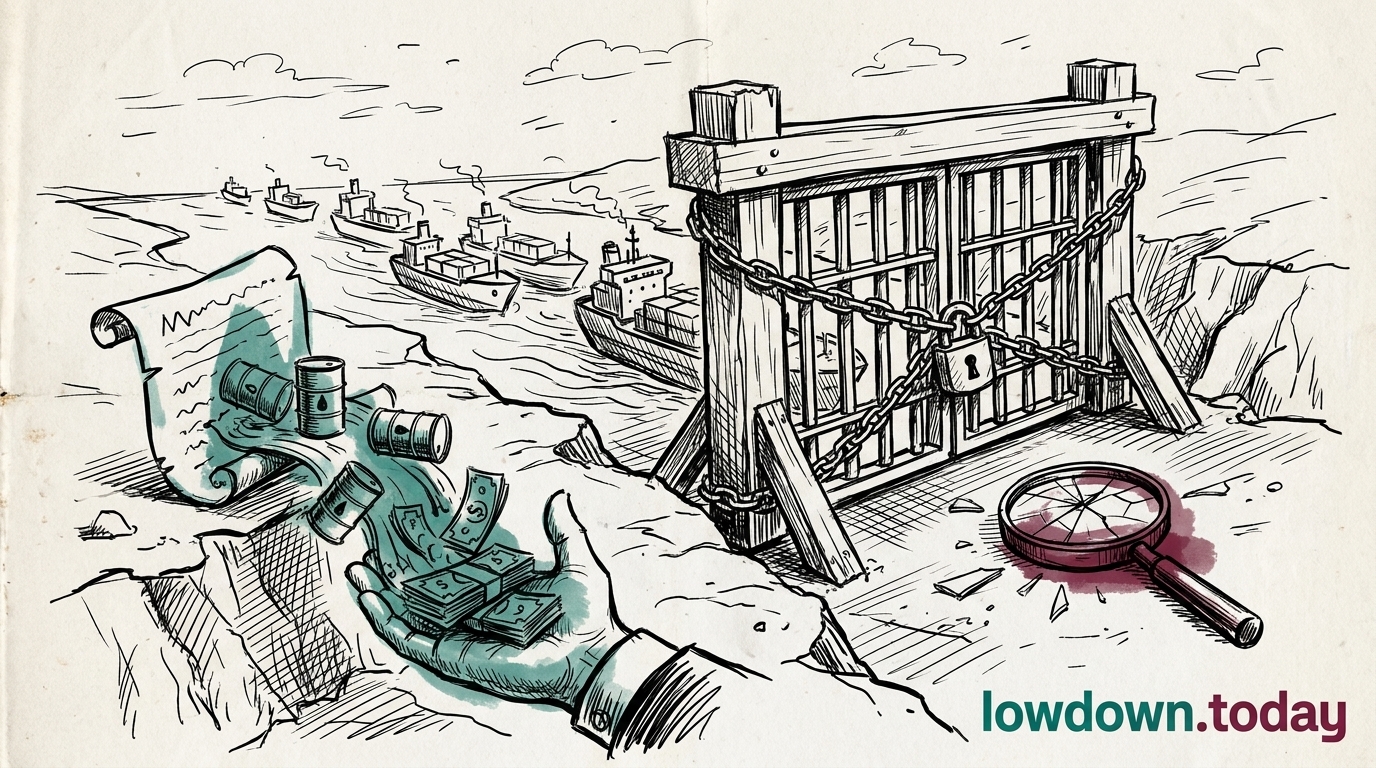
Iran's president and its Hormuz permit agency pulled in opposite directions on Monday 2 November. Masoud Pezeshkian said Supreme Leader Mojtaba Khamenei had "granted the government certain authorities" to seek a way out through dialogue, the Islamic Republic News Agency (IRNA) reported⁠1. Within the same day the Persian Gulf Strait Authority (PGSA), the body that issues transit permits for the Strait of Hormuz, added 114 ships to its non-compliance list, taking it to 240, The Maritime Executive reported⁠2.

Pezeshkian did not say what the authorities cover or whom they let him talk to. Less than a fortnight earlier he had told Pakistan's army chief that sanctions must be lifted before any negotiations. In the same speech he said the government was "not going to fight our own people"⁠3. Qatar carries the indirect channel. Deputy Foreign Minister Kazem Gharibabadi was in Doha to pass messages to Washington through Qatari intermediaries, and Iran's team left on Sunday 1 November with a draft proposal in circulation, an official briefed on the talks told Reuters⁠4. Four days before that, an Iranian official had called Doha's terms "ideas, not a proposal". Foreign Minister Abbas Araghchi said on 31 October that under a deal the strait, which normally carries about a fifth of the world's oil and liquefied natural gas, could open within two days; Tehran's September plan allowed seven.

The blacklist cuts against that offer. Seventy-two listed ships, 25 of them new, belong to Gulf state companies, among them the Kuwait Oil Tankers Company, Saudi Arabia's Bahri, the Abu Dhabi National Oil Company (ADNOC) and Qatar's Nakilat and QatarEnergy, according to an Orbital analysis the magazine relays. The PGSA warns of "restrictions on future passages, including fines, detention, or confiscation". Applied to Nakilat and QatarEnergy, that is a lever over the mediator's own export fleet. Ships tied to Sinokor Merchant Marine, the South Korean operator the PGSA threatened with legal action from 1 November, form the largest single group. Any vessel that takes cargo from a listed ship at sea is listed too, a rule aimed at the ship-to-ship transfers that the tracking firm Kpler says lifted Hormuz crude flows in October.

Tehran also worked its other capitals. Vladimir Putin received Mohsen Rezaei, secretary of Iran's Supreme National Security Council, at the Kremlin on 5 November, the Kremlin's schedule shows⁠5; Rezaei reportedly set out Tehran's terms for reopening Hormuz and carried a message from Khamenei⁠6. The United Arab Emirates foreign ministry logged a call from Araghchi to Abdullah bin Zayed Al Nahyan on 6 November, with no readout⁠7. Mohammad Eslami, head of the Atomic Energy Organization of Iran, told Russia's RT that Rafael Grossi of the International Atomic Energy Agency (IAEA) "has effectively become an operative for our enemy and their obedient follower"⁠8. Eslami offered no evidence, and the agency had not responded.

Deep Analysis

In plain English

Iran controls one side of the strait of Hormuz, the narrow sea lane between Iran and Oman that oil and gas tankers from The Gulf must pass through. During this war Iran set up an office, the Persian Gulf Strait Authority, that issues permits to cross. Ships it says break its rules go on a blacklist. On 2 November it added 114 ships, including ones owned by the national shipping companies of Kuwait, Saudi Arabia, the UAE and Qatar. The same day Iran's president, Masoud Pezeshkian, said the country's Supreme Leader had given his government room to settle the crisis by talking. Qatar is the go-between carrying messages between Tehran and Washington. So Iran is offering talks and tightening its grip on shipping at once.

Deep Analysis
Root Causes

the strait authority answers to a different chain from the foreign ministry. Its permit regime grew out of the IRGC Navy's control of the strait, and its listings carry enforcement threats (fines, detention, confiscation) that diplomats cannot waive by statement alone.

Gulf state carriers were exposed once their governments told shipping not to use the authority's route. Bahrain, Kuwait, Qatar, Saudi Arabia and the UAE wrote to the International Maritime Organization in May 2026 urging exactly that, which made their own national fleets non-compliant by Iran's definition.

Qatar's double role sharpens the problem. Doha brought "ideas, not a proposal" on 28 October, yet its two state shippers now sit on the list it is mediating over.

What could happen next?
  • Risk

    A Qatari state carrier detained or fined under the listing would put the mediator itself under Iranian enforcement and could stall the Doha channel.

    Short term · Suggested
  • Consequence

    The rule listing ship-to-ship partners of blacklisted vessels extends the measure from named ships to any tanker that trades with them.

    Immediate · Assessed
  • Meaning

    Pezeshkian's mandate was announced without its scope, so outside parties cannot yet tell whether his team can bind the strait authority.

    Short term · Assessed
First Reported In

Update #184 · Iran offers talks, blacklists 114 more ships

IRNA· 8 Nov 2026
Read original →
Different Perspectives
Office for Budget Responsibility
The OBR's 28 October forecast assumed $82 oil for 2026 and 2027, from market prices for the ten working days to 19 August, and blamed dearer wholesale energy on the war without naming Iran. It expects CPI inflation close to 4% in early 2027 even at that price.
Hengaw, Kurdish rights group
Hengaw reported the 3 November hangings of Amirhossein Maleki and Amirhossein Ebrahimi in Isfahan, saying Ebrahimi was tortured into confessing and that nine of 12 people sentenced to death in the case have now been hanged. Iran's judiciary holds that the defendants killed members of the security forces.
FINTRAC, Canada's financial intelligence unit
FINTRAC worked with the US Treasury on the 6 November designation of eight money services businesses in British Columbia, Ontario and Quebec. Treasury says the businesses still operate, some under new names, so closing them falls to Ottawa.
Abdul Qadir al-Dakhil, Governor of Nineveh
Al-Dakhil cancelled three Mosul International Airport contracts on 7 November over alleged links to armed groups, after meeting Prime Minister Ali al-Zaidi in Baghdad. He named no group or company, and said the contracts will go to international companies.
Kuwait
Kuwait
Kuwait condemned the Houthi missile fired towards the Madinah region on 5 November and restated its support for Saudi Arabia, the Qatar News Agency reported. Its state tanker company, Kuwait Oil Tankers Company, is among the Gulf state fleets on Iran's expanded Hormuz list.
Scott Bessent, US Treasury Secretary
Treasury designated an alleged Chandigarh false-flag network on 4 November and eight Canadian exchangers on 6 November, while State sanctioned alleged MANPADS intermediaries. None of the actions touches an oil buyer; they target the paper, cash and procurement around Iran's trade.

Written with AI from Lowdown's published reporting. Not individually reviewed by an editor. Editorial standards.
