Skip to content
You can now search across every topic, entity and event.What's new
Iran Conflict 2026
23JUN

Day 116: Trump's first Iran paper is an oil licence

3 min read
11:42UTC

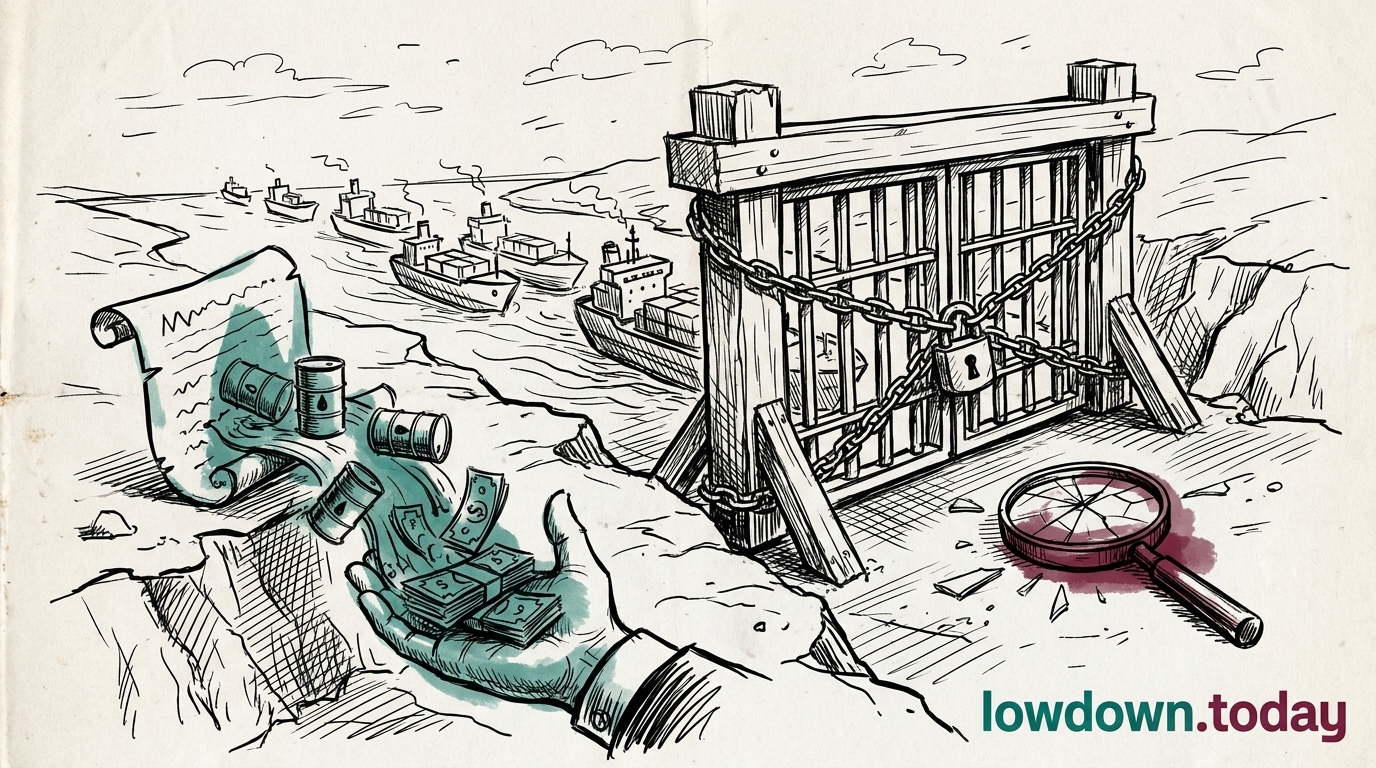
After 116 days of declaring the war won and signing nothing, Treasury Secretary Scott Bessent issued General License X on 22 June, the first Iran sanctions relief of the conflict. It authorises Iranian oil sales and dollar payments through 21 August. The same week, Iran ruled out inspections of its bombed nuclear sites and Hormuz traffic collapsed to a dozen ships a day.

Key takeaway

Iran banks the oil, builds the payment rails, and blocks the inspectors, all inside Washington's 60-day window.

This briefing mapped
Legal
Regulatory
Military
Economic
Diplomatic

Treasury Secretary Scott Bessent issued General License X on 22 June, the first Iran oil-sanctions relief of the war, authorising Iranian crude sales and dollar payments through 21 August.

Sources profile:This story draws on neutral-leaning sources

The US Treasury's sanctions office issued General Licence X on 22 June, the first Iran oil-sanctions relief instrument of the conflict. It allows Iranian crude, petrochemical and petroleum products to be sold with US dollar payments through 21 August 2026, a 60-day window.

The licence is an administrative instrument, not a presidential order, meaning OFAC can revoke it without congressional action. Its recitals state Iran agreed to IAEA inspector readmission, a claim Iran's Foreign Ministry denied the following day. 

Foreign Ministry spokesman Esmail Baghaei ruled out IAEA inspection of Iran's war-damaged nuclear sites on 23 June, the day after the oil licence claimed Tehran had agreed to admit them.

Sources profile:This story draws on mixed-leaning sources from Israel
Israel
LeftRight

Iran's Foreign Ministry spokesman Esmail Baghaei ruled out IAEA nuclear inspectors visiting the sites bombed by US and Israeli forces, contradicting GL X's own text, which said Iran had agreed to readmit them. Before the strikes, the Institute for Science and International Security estimated 155-175 kg of Iran's 440.9 kg stockpile of 60%-enriched uranium was unlocated.

Baghaei's denial means no one outside Iran can verify whether that material was destroyed, relocated, or is stored elsewhere. The IRGC-aligned Tasnim News Agency framed the closure as deliberate policy, not an oversight. 

USS Frank E. Peterson and USS Michael Murphy transited Hormuz to clear IRGC mines as Trump posted that the blockade could be reset in about 15 minutes.

Sources profile:This story draws on mixed-leaning sources from United States
United States
LeftRight

Two US destroyers, USS Frank E. Peterson and USS Michael Murphy, entered the strait of Hormuz on 22 June to begin clearing mines laid by Iran's Revolutionary Guard. CENTCOM added underwater drones to the effort. The US and Iran set up a direct communication hotline in Geneva for the 60-day window.

Trump posted that the blockade could be reset in about 15 minutes, while the Navy was engaged in slow physical mine-clearance that naval experts assess will take weeks to certify a lane safe for commercial traffic. 

General License X expires on 21 August, the Persian Gulf Strait Authority starts charging Hormuz fees around 17 August, and Iran's dollar-free payment corridor finishes Stage 3 the same month.

Sources profile:This story draws on neutral-leaning sources

Three deadlines converge in the third week of August: GL X expires on 21 August, Iran's Strait of Hormuz transit authority begins mandatory fees around 17 August, and Iran's dollar-independent payment system with Russia completes its third integration stage around the same time.

The 60-day relief window Washington gave Iran is almost exactly the period Iran needs to finish building financial infrastructure that makes the next round of sanctions harder to enforce. 

Hormuz transits collapsed from 55 ships on 20 June to 12 on 22 June, the day General License X authorised Iranian oil to move, with five of eight inbound vessels running dark.

Sources profile:This story draws on mixed-leaning sources from Qatar and United States
QatarUnited States

Strait of Hormuz crossings fell from 55 ships on 20 June to 12 on 22 June, the same day the US gave Iran permission to sell oil again. Five of the eight inbound vessels ran with their transponders switched off, a wartime signal, not a commercial one.

Brent Crude settled near $78 a barrel, pricing the 60-day relief window rather than a reopened strait. Maritime intelligence firm Windward described the pattern as a late-blockade baseline, not a functioning shipping route. 

Trump said unfrozen Iranian funds would buy US corn and soybeans; speaker Ghalibaf confirmed a $12 billion asset release that no US instrument has signed.

Sources profile:This story draws on mixed-leaning sources from United States
United States
LeftRight

Iran's parliament speaker Mohammad Bagher Ghalibaf confirmed an agreement to release $12 billion in frozen Iranian assets at the Geneva talks, halving the unverified $24bn figure Mehr News published last week. No OFAC instrument authorises the release; the Treasury office has issued oil-sales permission only.

Trump framed the funds as buying US corn and soybeans, a farm-state domestic pitch. Iran brought its Central Bank and Oil Ministry to Geneva alongside the nuclear team, confirming the financial track sits at the same table as the nuclear talks. 

Baghaei conditioned the nuclear sub-talks on a full ceasefire including Lebanon, where the IDF holds south of the Litani and Netanyahu says troops stay as long as necessary.

Sources profile:This story draws on mixed-leaning sources from United States
United States
LeftRight

Iran told the US on 22 June that nuclear sub-talks could not open until Washington delivered on the MOU's ceasefire clause covering Lebanon. The fifth Washington round on a pilot-zone framework, under which the Israeli military would withdraw and Lebanon's army would take control south of the Litani River, ran 22 to 24 June with no confirmed handover.

Israeli forces held their ground, capturing a Hezbollah tunnel at Majdal Zoun during the talks, while Netanyahu repeated that troops would stay as long as necessary. Lebanon has become the sequencing lock on the nuclear file. 

Closing comments

Sideways to down within the 60-day window, with a hard inflection at 21 August 2026. The Geneva deconfliction line and CENTCOM mine-clearance operations reduce accidental escalation risk through that date. Lebanon is the most likely trigger for an earlier break: IDF operations killed 20+ in Lebanon on 20 June and 16 on 21 June while the Washington pilot-zone round was running; if a similar strike kills Lebanese Armed Forces or UNIFIL personnel, Baghaei's MOU annulment threat, issued on 18 June at event ID:4356, moves from diplomatic posture to operational decision. Post-August, a GL X snap-back on 21 August would coincide with a fully operational Shetab-Mir payment corridor and PGSA fee schedule, making reimposed sanctions structurally harder to enforce than the original General License U regime that ran 325 tankers covering $31.5 billion in Iranian crude.

AI-assisted, human-edited under the editorial responsibility of Bannermedia Ltd. Reviewed by Ed Woodcock on 23 June 2026. Editorial standards.

Different Perspectives
United States (Bessent/Trump/Vance)
Bessent signed GL X on 22 June, delivering the first signed oil-relief instrument after 116 days. Trump simultaneously sold the frozen-asset release to farm states and posted that the Hormuz blockade could be reset in 15 minutes, while the Navy ran slow physical mine-clearance the 15-minute post did not describe.
Iran (Baghaei/Ghalibaf)
Baghaei ruled out IAEA inspections of war-damaged sites on 23 June, contradicting GL X's own recitals, while Ghalibaf publicly confirmed a $12bn frozen-assets agreement that no US instrument has signed. Iran's Central Bank and Oil Ministry both joined the Switzerland delegation, signalling the financial track is live regardless of the nuclear stall.
Israel (Netanyahu)
Israel (Netanyahu)
Netanyahu ordered IDF troops to hold south of the Litani as long as necessary and IDF forces captured a Hezbollah tunnel at Majdal Zoun during the Washington round. Israel's hold-position is the physical blocking item that keeps Iran's Lebanon precondition unmet and the nuclear sub-talks locked.
Gulf shippers and war-risk insurers (Lloyd's-Chubb consortium)
Chubb CEO Evan Greenberg described Hormuz security as hour to hour on 22 June with mines the greatest uncertainty. The $400 million Lloyd's-Chubb consortium launched on 19 June has not reinstated cover: GL X is a sanctions instrument, not an insurer certification, and the physical mine threat is what P&I clubs require cleared before they underwrite again.
Russia (Shetab-Mir co-builder)
Central Bank Governor Hemmati arrived in Moscow on 16 June and confirmed Shetab-Mir Stage 3 completion by August. Russia's role as Iran's payment-rail partner means it benefits from a GL X snap-back: the harder dollar sanctions become, the more Iranian trade routes through Moscow's financial infrastructure.
Pakistan and Qatar (mediators)
Pakistan and Qatar issued a joint communique on 22 June formalising a 60-day roadmap and High-Level Committee as the diplomatic architecture behind GL X. Islamabad's mediating role runs through Ghalibaf and Araghchi simultaneously, holding the back-channel that neither Washington nor Tehran can operate directly.





