Skip to content
You can now search across every topic, entity and event.What's new
Iran Conflict 2026
23JUN

Gulf producers build around the strait

3 min read
11:42UTC

Kuwait said it would raise production as Iraq's Kirkuk-Ceyhan and Saudi Arabia's Yanbu East-West pipelines moved roughly 9 million barrels a day around Hormuz, against the strait's normal 20 million.

ConflictDeveloping
Key takeaway

Gulf pipelines route about 9 million barrels a day around Hormuz, under half the strait's normal flow.

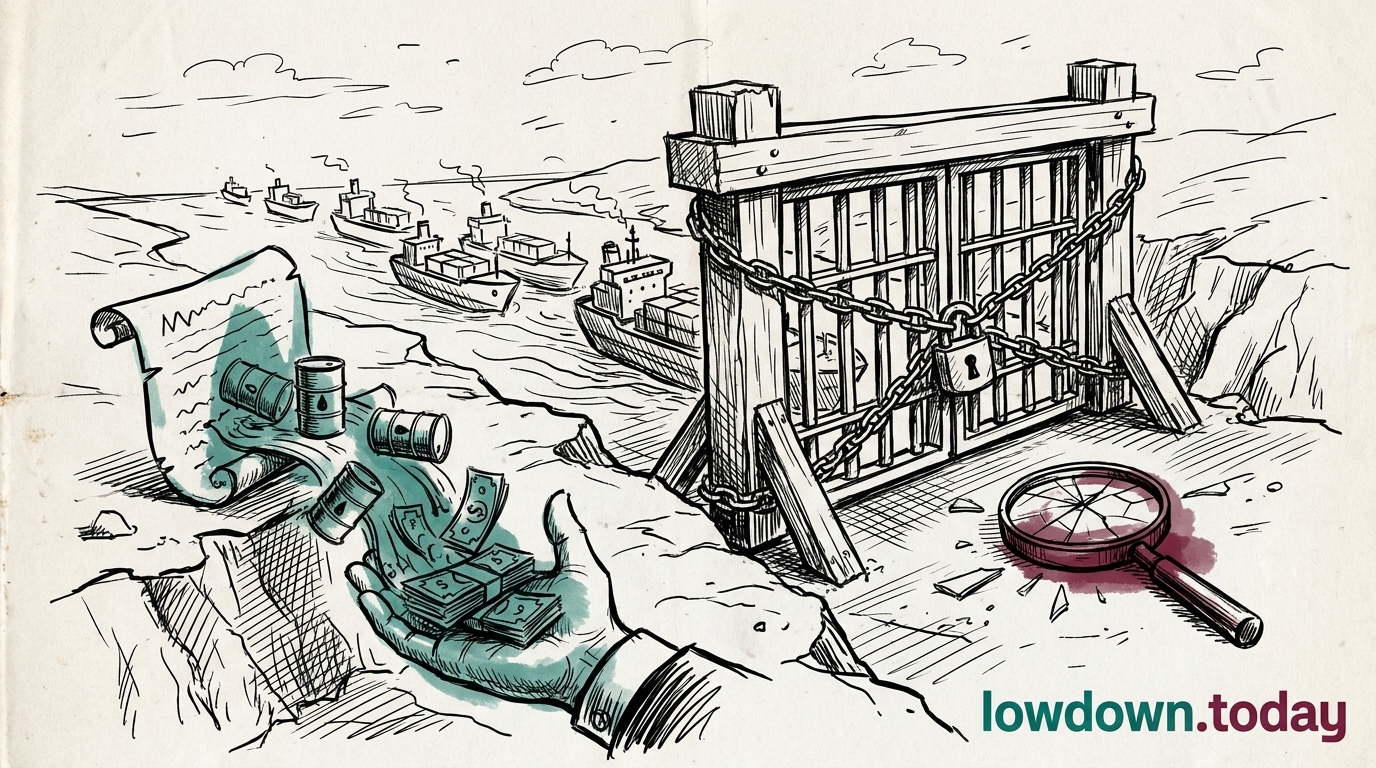
Kuwait said it would begin increasing production, and Gulf exporters drew on pipeline routes that skirt the strait of Hormuz entirely: Iraq's Kirkuk-Ceyhan line to Turkey's Mediterranean coast and Saudi Arabia's Yanbu East-West line to the Red Sea 1. Both run crude out to open water without touching the waterway the IRGC has formally declared closed.

The two pipelines carry roughly 9 million barrels a day between them, against the strait's normal 20 million 2. Producers can route under half their oil around Iran's leverage, which is why a closure threat still bites even as the workaround keeps prices calm: the alternatives soften the chokepoint without replacing it.

Three Saudi very large crude carriers reactivated their transponders off Oman on 19 June, the first confirmed commercial crossings since the closure declaration 3. Days earlier those same ships had only been positioned near Hormuz, not transiting ; by 22 June they were moving cargo across the closure line itself, turning a structural hedge for Riyadh and Baghdad into a live one.


Deep Analysis

In plain English

While Iran claims to have closed the Strait of Hormuz, Gulf oil producers have been routing crude through two alternative pipelines that avoid it entirely. One runs from Iraq's Kirkuk oilfields north to Turkey's Mediterranean coast; the other crosses Saudi Arabia from east to west, ending at the Red Sea port of Yanbu. Together these carry roughly 9 million barrels a day. The problem is that this is less than half of what normally goes through Hormuz (about 20 million barrels a day). So the world can get some oil out of the Gulf via these pipelines, but not nearly enough to replace what would normally flow through the strait. That is one reason energy prices remain elevated even as they fall from their peak.

What could happen next?
  • Consequence

    The 9 million barrels per day pipeline ceiling means Asian refiners dependent on Gulf crude face a persistent supply gap until the Oman corridor delivers full restoration; Kuwait's production increase partially offsets this but at reduced margin given sub-$80 Brent.

  • Precedent

    Saudi Aramco's resumption of VLCC transits through the Oman corridor, using AIS transparency rather than dark shipping, establishes a Gulf-producer norm for Hormuz reopening: producers will transit when the route is physically safe, regardless of IRGC declaration status.

First Reported In

Update #135 · Trump's threats peak, his paper stays blank

Wikipedia / Kpler· 22 Jun 2026
Read original
Different Perspectives
Turkiye
Turkiye
Erdogan followed the Pakistani delegation to Jeddah for an instrument that has not been signed. Ankara's entry widens Saudi Arabia's defence architecture beyond the existing Pakistan pact, adding a second non-Gulf military partner mid-conflict.
Oman
Oman
Muscat is the corridor's broker but has published nothing about the arrangement Fars describes on its behalf. The account leaves Oman administering outbound traffic only, a narrower role than the shared route its mediation has rested on since 1979.
Pakistan
Pakistan
Islamabad sent Sharif, Munir and Dar to Jeddah to widen a defence commitment it has honoured in cheaper registers since March, when Dar invoked the Saudi mutual defence pact. Jeddah tests whether that hedge becomes a binding trilateral instrument with Turkiye.
United States
United States
Washington rejected the Majlis Hormuz bill outright while CENTCOM's own tally kept climbing to 49 vessels redirected since 14 July. Both instruments tightened in the same week Trump promised the strait would reopen soon.
Iran
Iran
Iran's foreign ministry is selling a phased Hormuz corridor through Oman and denying any percentage cargo tariff, while its own Majlis is legislating fines to 20% and a bar on Israeli-linked cargo. The two accounts, from the same government, do not agree with each other.
Saudi Arabia
Saudi Arabia
Riyadh published a target forecast, not an attribution, for the campaign it says the Najran strike previewed. That keeps an Article 51 case available while it formalises a trilateral defence architecture with Pakistan and Turkiye.



