Kirkuk
Northern Iraqi city and governorate above one of the region's oldest oilfields.
Baghdad has been pushing more Kirkuk crude up the pipeline to Ceyhan since the Hormuz blockade, because northern oil never enters the strait. The line stalled near 190,000 barrels a day in June 2026, under a quarter of the Cabinet target.
Last refreshed: 1 October 2026
Can Kirkuk's northern oilfields compensate for Iraq's collapsed southern exports?
Timeline for Kirkuk
Mentioned in: Aramco restarts Petroline but not fully
Iran Conflict 2026Mentioned in: Gulf producers build around the strait
Iran Conflict 2026Mentioned in: OFAC's GL 134C lapses 17 June; EU cap at risk
European Oil MarketsMentioned in: Iraq's Ceyhan backstop stalls at 190kbd
European Oil MarketsIraq ramps Ceyhan pipeline toward 770kbd
European Oil MarketsBackground
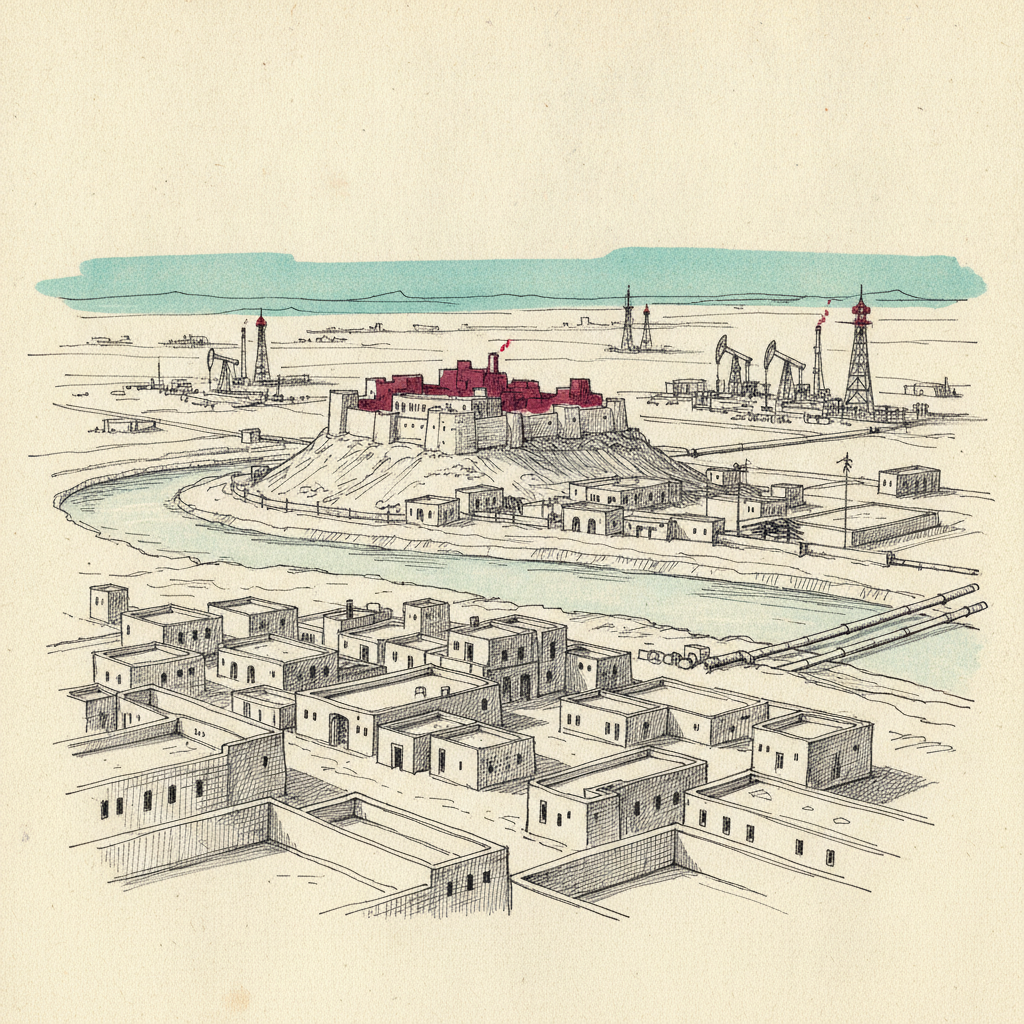
Kirkuk is a city and governorate in northern Iraq, about 250km north of Baghdad, above one of the oldest large oilfields in the Middle East. The Turkish Petroleum Company found oil at Baba Gurgur in 1927 and the Iraq Petroleum Company began production in 1934, once the pipelines to Haifa and Tripoli were finished. Recoverable oil is put at about 10 billion barrels, though output sits far below the field's 1970s peak.
Three authorities claim the city. The federal government in Baghdad, the Kurdistan Regional Government in Erbil and the city's mixed Arab, Kurdish and Turkmen population have contested it since 2003. Federal forces pushed Kurdish Peshmerga out in 2017, after the Kurdish independence referendum. International arbitration in 2023 found Turkey had wrongly allowed Kurdish exports without Baghdad's consent, which settled export rights in Baghdad's favour.
Geography is what makes Kirkuk valuable now. Its crude is a medium sour grade and it leaves Iraq north-west by pipeline to Ceyhan on Turkey's Mediterranean coast, so it never enters the strait of Hormuz. Baghdad has been raising throughput on that line accordingly, and Saudi Arabia is working the same problem from the other end with the one large pipeline that reaches the Red Sea without passing the strait.
Where is Kirkuk and why is it important for Iraqi oil?
Who controls the Kirkuk oilfields, Iraq or the Kurds?
What type of crude oil does the Kirkuk oilfield produce?
How much oil does Kirkuk produce per day?
When was oil found at Kirkuk?
How much oil is left at Kirkuk?
Why is Kirkuk disputed between Baghdad and Erbil?
Can Kirkuk oil avoid the Strait of Hormuz?


Written with AI from Lowdown's published reporting. Not individually reviewed by an editor. Updated 1 October 2026. Editorial standards.