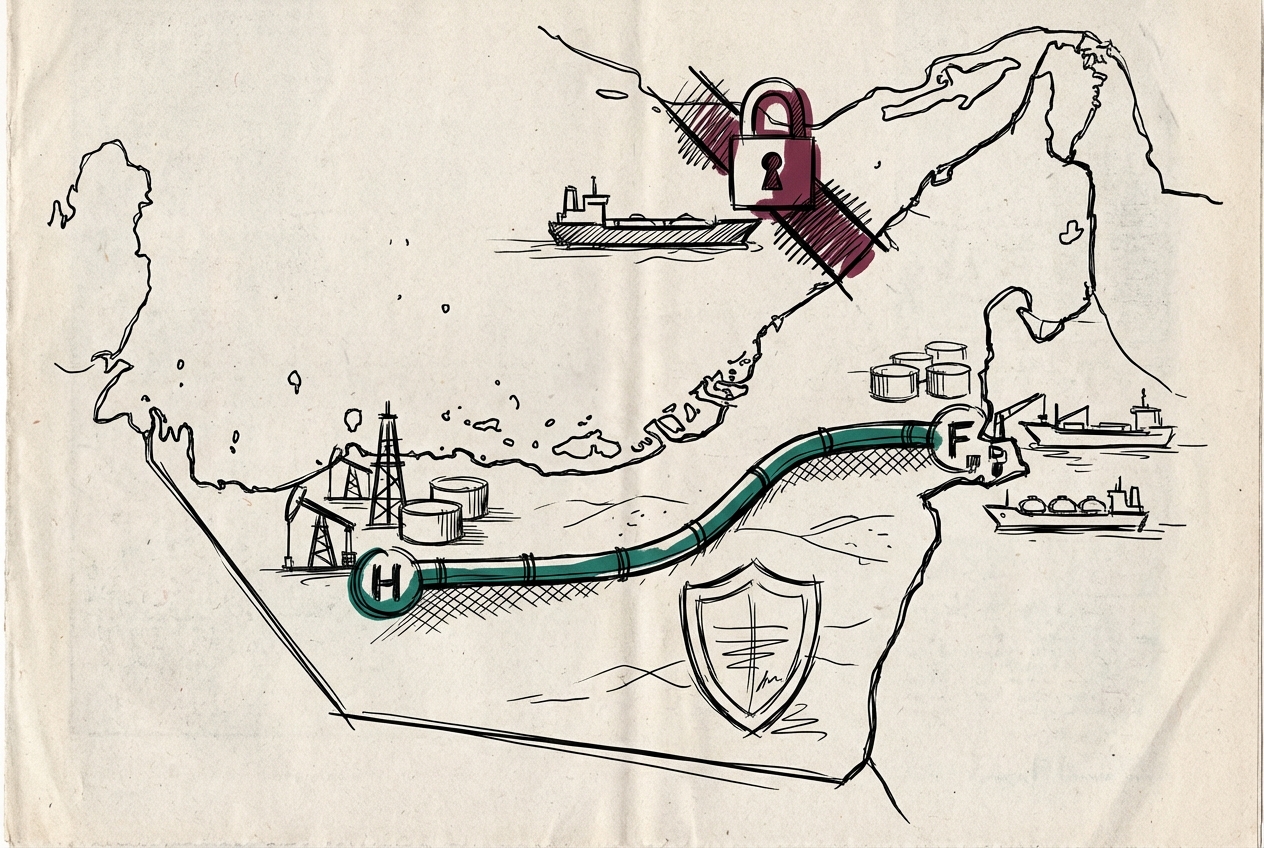
Habshan-Fujairah pipeline
Abu Dhabi oil pipeline bypassing the strait of Hormuz, capacity 750,000 Barrels Per Day.
The Habshan-Fujairah pipeline remained the UAE’s main overland Hormuz bypass on 19 August, when DP World accelerated related facilities and cargo routes through Fujairah.
Last refreshed: 20 August 2026 · Appears in 1 active topic
With Fujairah struck and Duqm damaged, has Iran closed every route out of the Gulf?
Timeline for Habshan-Fujairah pipeline
Mentioned in: DP World builds around the strait
Iran Conflict 2026Mentioned in: Gulf producers build around the strait
Iran Conflict 2026Mentioned in: Fujairah Bypass Pipeline Reaches 71% Capacity
Iran Conflict 2026Mentioned in: Brent closes above $100 for first time
Iran Conflict 2026Mentioned in: US crude posts 35.6% weekly gain, record
Iran Conflict 2026Background
The Habshan-Fujairah pipeline carries crude from Habshan in Abu Dhabi to Fujairah on The Gulf of Oman. ADNOC built the 407-kilometre route between 2008 and 2012 for $3.29 billion. Its purpose is to let the United Arab Emirates export oil without sending it through the strait of Hormuz.
The line terminates at Fujairah, so its strategic value depends on the security and capacity of that eastern port. A strike closed Fujairah during the 2026 conflict, showing that an overland bypass can still end at a coastal target within Iranian range. A later strike damaged a vessel seven nautical miles offshore.
The pipeline matters because it separates the UAE’s export route from Hormuz at SEA, but not from regional military risk. It is a fixed link between inland production and a single maritime outlet, making Fujairah’s storage, loading and port infrastructure part of the same system.
What is the Habshan-Fujairah pipeline?
Was the Habshan-Fujairah pipeline attacked?
Does the Habshan-Fujairah pipeline bypass the Strait of Hormuz?
How does the Habshan-Fujairah pipeline compare to Saudi Arabia's East-West pipeline?
How did the Fujairah strike affect oil prices?


