Skip to content
You can now search across every topic, entity and event.What's new
Iran Conflict 2026
23JUN

The paper says open, water says shut

3 min read
11:42UTC

Hormuz transits collapsed from 55 ships on 20 June to 12 on 22 June, the day General License X authorised Iranian oil to move, with five of eight inbound vessels running dark.

ConflictDeveloping
Key takeaway

General License X authorises a trade the mined, uninsured strait cannot yet carry.

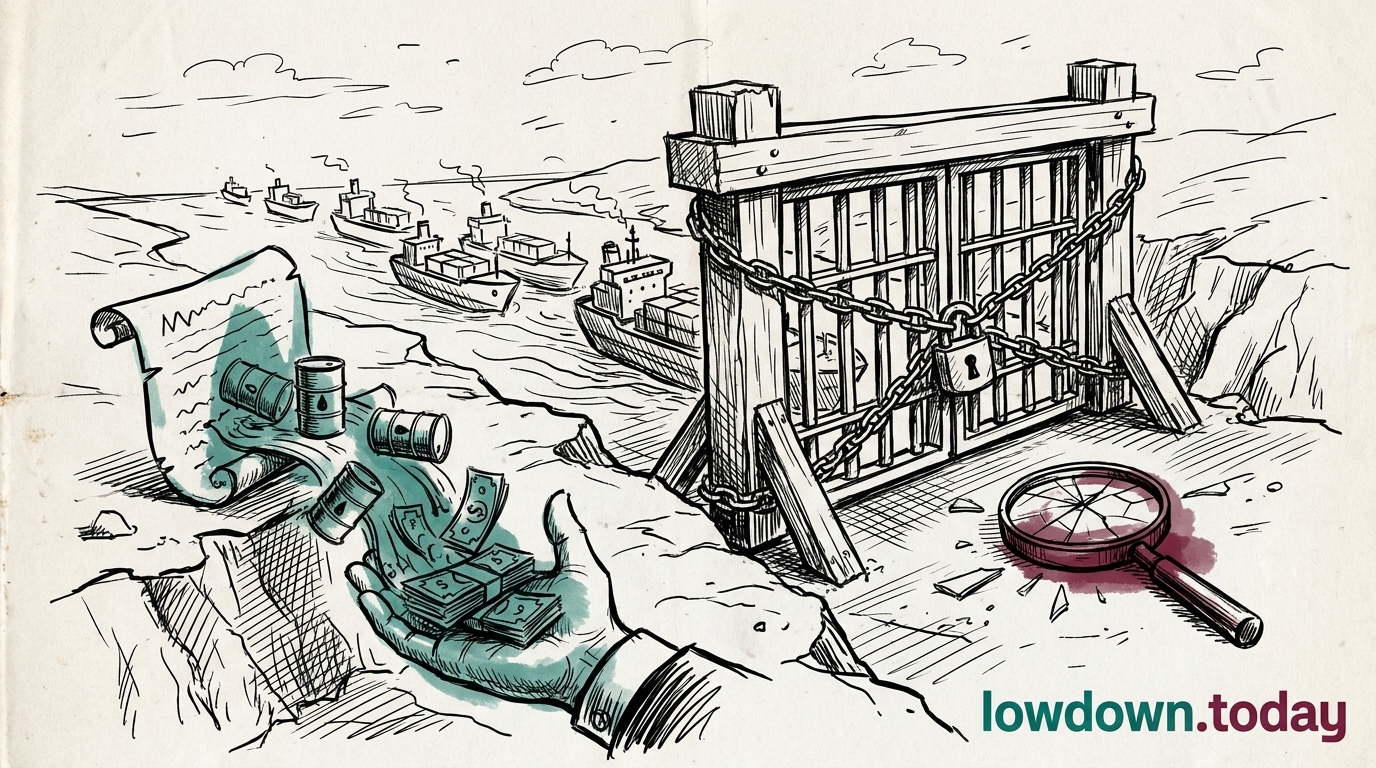
Hormuz transits collapsed from 55 ships on 20 June to 12 on 22 June, a 78 per cent drop between those two days, with five of eight inbound vessels running with their automatic identification systems switched off 1. AIS transponders broadcast a ship's identity and position; switching them off hides the vessel. The maritime intelligence firm Windward called the pattern a "late-blockade baseline," closer to wartime dark-fleet running than a functioning open strait 2. The collapse fell on the very day General License X authorised the oil to move.

The larger 20 June traffic had run through Oman's territorial waters, the bypass route that has carried Gulf crude since the closure , and markets have consistently priced that Oman route over Iran's words . Brent Crude fell to about $78 a barrel on 22 June, its lowest since early March, pricing the 60-day relief rather than delivery: a permit to sell oil that only 12 ships actually moved.

The freight and spread economics of a dark, fee-charged corridor are the European oil desk's beat. A 78 per cent fall on the exact day the licence issued is the cleanest evidence that the bottleneck is mines and war-risk, not sanctions, so lifting the sanctions moved nothing on the water. GL X authorised a trade the strait cannot physically carry yet.


Deep Analysis

In plain English

Before the conflict, around 55 ships crossed the Strait of Hormuz every day, carrying roughly a fifth of the world's oil. On 22 June, the same day the US gave Iran special permission to sell oil again, only 12 ships crossed, and five of them had turned off their GPS trackers, a sign that their crews were trying to avoid being noticed in a war zone. The oil market noticed the mismatch. Brent crude, the global oil price benchmark, settled around $78 a barrel, lower than before the conflict, but still elevated. Traders were pricing in the hope that the 60-day permission slip would eventually help reopen the strait fully, rather than treating it as done. A permission to sell oil is not the same as a safe route to ship it.

First Reported In

Update #136 · Trump's first Iran paper is an oil licence

Al Jazeera· 23 Jun 2026
Read original
Different Perspectives
Turkiye
Turkiye
Erdogan followed the Pakistani delegation to Jeddah for an instrument that has not been signed. Ankara's entry widens Saudi Arabia's defence architecture beyond the existing Pakistan pact, adding a second non-Gulf military partner mid-conflict.
Oman
Oman
Muscat is the corridor's broker but has published nothing about the arrangement Fars describes on its behalf. The account leaves Oman administering outbound traffic only, a narrower role than the shared route its mediation has rested on since 1979.
Pakistan
Pakistan
Islamabad sent Sharif, Munir and Dar to Jeddah to widen a defence commitment it has honoured in cheaper registers since March, when Dar invoked the Saudi mutual defence pact. Jeddah tests whether that hedge becomes a binding trilateral instrument with Turkiye.
United States
United States
Washington rejected the Majlis Hormuz bill outright while CENTCOM's own tally kept climbing to 49 vessels redirected since 14 July. Both instruments tightened in the same week Trump promised the strait would reopen soon.
Iran
Iran
Iran's foreign ministry is selling a phased Hormuz corridor through Oman and denying any percentage cargo tariff, while its own Majlis is legislating fines to 20% and a bar on Israeli-linked cargo. The two accounts, from the same government, do not agree with each other.
Saudi Arabia
Saudi Arabia
Riyadh published a target forecast, not an attribution, for the campaign it says the Najran strike previewed. That keeps an Article 51 case available while it formalises a trilateral defence architecture with Pakistan and Turkiye.



