Kirkuk-Ceyhan
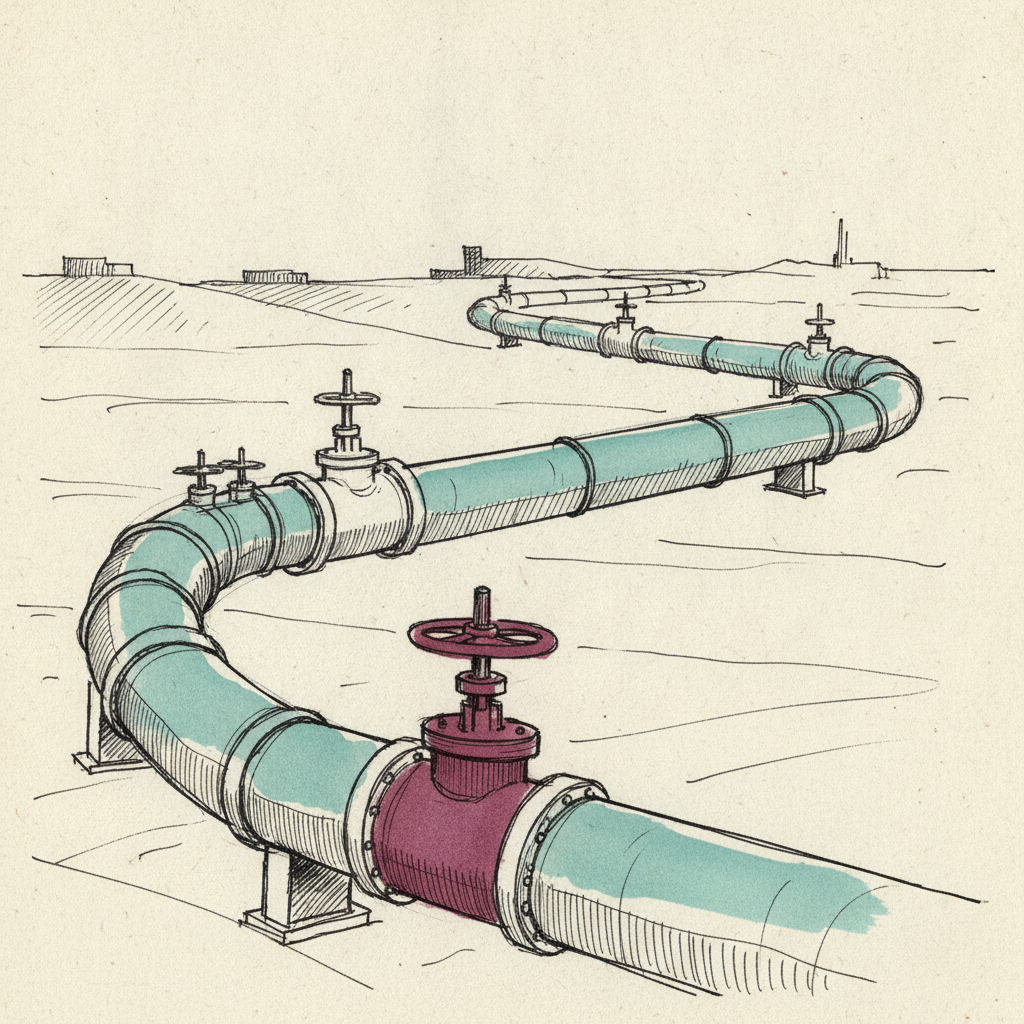
Iraq-Turkey crude oil pipeline, 970km from Kirkuk to Ceyhan Mediterranean terminal.
Last refreshed: 8 June 2026 · Appears in 2 active topics
How fast can Kirkuk-Ceyhan replace Iraq's collapsed southern crude exports?
Timeline for Kirkuk-Ceyhan
Mentioned in: Baghdad asks Tehran for a carve-out
Iran Conflict 2026Carried part of the ~9 million barrels per day pipeline bypass capacity
Iran Conflict 2026: Gulf producers build around the straitMentioned in: OFAC's GL 134C lapses 17 June; EU cap at risk
European Oil MarketsMaintained throughput near 190kbd against 770kbd cabinet target through 9-11 June
European Oil Markets: Iraq's Ceyhan backstop stalls at 190kbdIraq ramps Ceyhan pipeline toward 770kbd
European Oil MarketsBackground
The Kirkuk-Ceyhan pipeline is Iraq's main northern crude export artery, running approximately 970 kilometres from the Kirkuk oilfields in northern Iraq to the deepwater terminal at Ceyhan on Turkey's Mediterranean coast. Comprising two parallel 46-inch diameter pipes with a design capacity of up to 1.6 million Barrels Per Day, it offers Iraq a route to European and Mediterranean buyers entirely Independent of the strait of Hormuz. As southern Iraqi exports collapsed in the wake of the Hormuz blockade from March 2026, Baghdad began ramping the pipeline from a baseline of around 220kbd toward a declared target of 770kbd, aiming to achieve that level within roughly two and a half months.
The pipeline has had a troubled operational history. After carrying up to 1 million Barrels Per Day in the 1970s and 1980s, it was largely idle for over a decade following disputes between Baghdad and the Kurdistan Regional Government (KRG) over revenue-sharing and export rights. A 2023 international arbitration ruling against Turkey for allowing KRG-controlled exports without Baghdad's consent shut the pipeline entirely for a prolonged period. Resumption under centralised Iraqi control through the North Oil Company's Saralo pumping station with an initial rate of around 250kbd marked a significant political as well as commercial reset.
The pipeline gained renewed strategic importance in 2026 because it is one of only two major export corridors (alongside the Caspian Pipeline Consortium route through Novorossiysk) that can move substantial Iraqi and Kazakh volumes to European refiners without Hormuz exposure. The ramp to 770kbd would make Kirkuk-Ceyhan the second-largest crude export artery for European supply after the Saudi-Red Sea route, and the surge in Med Aframax TD19 freight rates to WS228 as of June 2026 directly reflected market pricing of that ramp.
How much oil does the Kirkuk-Ceyhan pipeline carry and where does it go?
Why was the Kirkuk-Ceyhan pipeline shut down and when did it reopen?
How is Iraq exporting oil without the Strait of Hormuz?
What is the capacity of the Iraq-Turkey pipeline?


Written with AI from Lowdown's published reporting. Not individually reviewed by an editor. Updated 8 June 2026. Editorial standards.