Skip to content
Foundations rebuilt, and the first new thing is here: search across every topic, entity, and event.Try search
Iran Conflict 2026
11JUN

Azizi names Hormuz toll regime on X

4 min read
09:17UTC

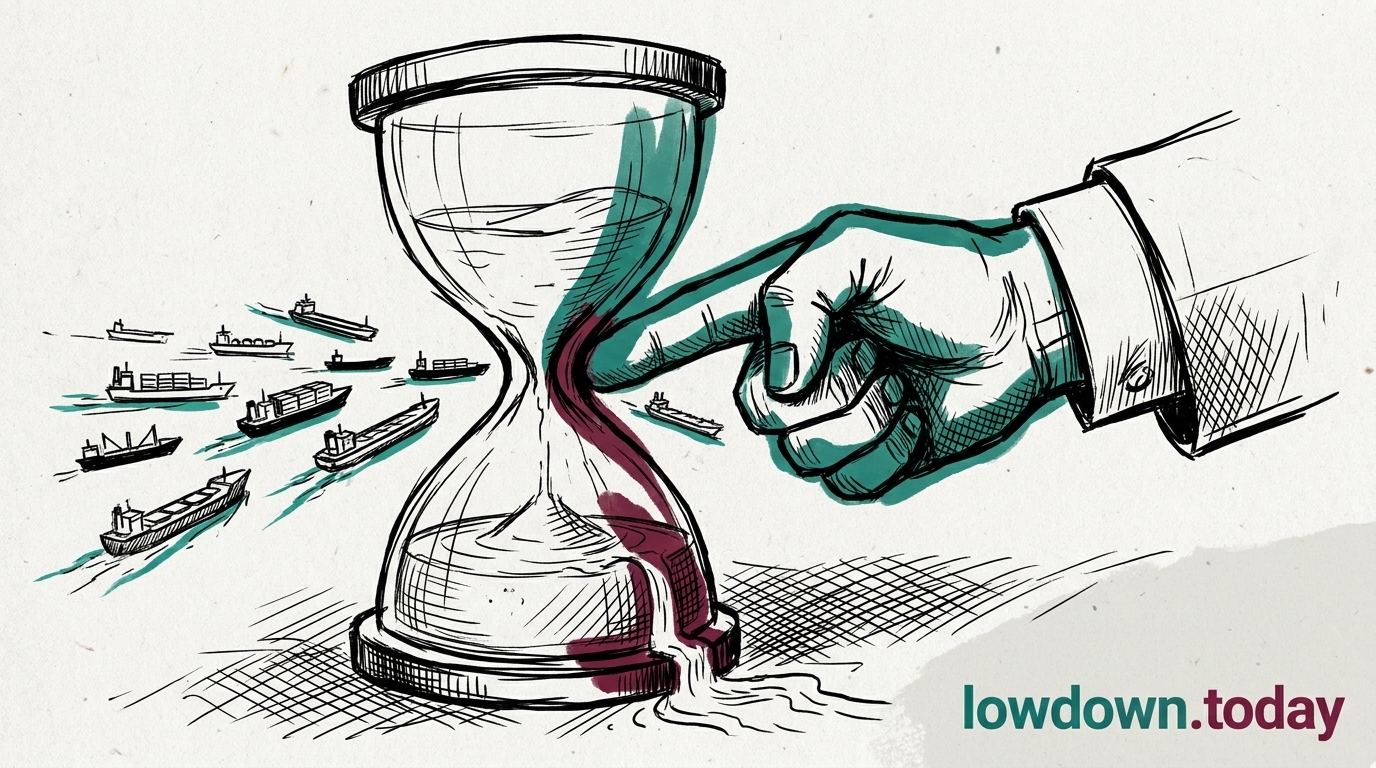
Ebrahim Azizi, who chairs Iran's parliamentary security committee, posted on Saturday that Iran has a 'professional mechanism' for Hormuz traffic with fees on cooperating vessels and Project Freedom barred from the route.

ConflictDeveloping
Key takeaway

Iran's parliament endorsed a Hormuz toll mechanism contradicting the UNCLOS Article 38 transit-passage framework.

Ebrahim Azizi, chairman of Iran's Majlis National Security and Foreign Policy Committee, posted on X on Saturday 16 May that Tehran has "prepared a professional mechanism" to manage Strait of Hormuz traffic along a designated route, with "necessary fees" collected from cooperating vessels and operators of "the so-called freedom project" expressly barred. The chairman attached no fee schedule, no unveiling date and no parliamentary vote 1. The Majlis is Iran's 290-seat parliament; its National Security Committee is the legislative branch's apex voice on military and Foreign Policy, and Azizi has chaired it since 2024.

The political claim arrives on top of operational machinery that has been live since early May. The Persian Gulf Strait Authority (PGSA) opened registration at info@pgsa.ir on 6 May and Lloyd's List documented vessels paying up to $2 million per voyage in Chinese yuan . The Iranian Supreme National Security Council finalised the underlying Hormuz security plan and barred US weapons from transit on 13 May , so Azizi's post extends an already-running architecture into a published political claim with a named exclusion class.

That exclusion class is the legal flashpoint. Project Freedom, the US operational umbrella Donald Trump announced on Truth Social before pausing in early May, is precisely the kind of military mission Article 38 of the 1982 UN Convention on the Law of the Sea treats as guaranteed transit passage for all flags. By naming a sovereign exclusion list in writing, Azizi puts the Majlis directly across from the 26-nation Hormuz coalition signed in Bahrain and Qatar on 12 May , whose mandate is built on that same Article 38 guarantee. Four separate Iranian institutions, the SNSC, the IRGC, the PGSA and now the Majlis security committee, are converging on a single Hormuz posture: selective accommodation policed by guided coordination through declared minefields.

Deep Analysis

In plain English

Iran's parliament has a committee that oversees national security. Its chairman, Ebrahim Azizi, posted on social media on 16 May that Iran has set up a formal system to charge ships a fee to pass through the Strait of Hormuz, a narrow waterway where roughly 20% of the world's oil travels. Ships linked to a US military operation called Project Freedom are explicitly banned from using the route. This is the first time Iran's parliament has formally backed what the country's military has been doing operationally since early May: collecting fees from ships that want to pass. The legal problem is that a 1982 international treaty guarantees all ships the right to pass through straits like Hormuz without paying a toll. Iran never signed that treaty.

Deep Analysis
Root Causes

Iran never ratified the 1982 UN Convention on the Law of the Sea, which means UNCLOS Article 38's transit-passage guarantee has no binding force in Iranian domestic law. Tehran's 2024 update to its maritime jurisdiction statutes, carried through the Majlis security committee Azizi chairs, inserted the category 'hostile-linked vessels' into Iranian law, broad enough to cover any flag state that has sanctioned Iran or joined a named coalition against it.

The PGSA's creation on 5 May preceded the Azizi post by eleven days: the parliamentary statement follows operational fact, not the other way around. The Majlis is providing retroactive legislative authority for an architecture the IRGC deployed before parliament voted. This sequencing, operational first, legislative second, is a structural feature of how Iran's dual-track state functions under war conditions.

Escalation

The parliamentary endorsement closes the gap between operational and legislative legitimacy on the Iranian side, making the PGSA toll mechanism harder to walk back in any negotiated settlement without a specific Majlis vote to repeal it. Four Iranian institutions, SNSC, IRGC, PGSA, and now the Majlis security committee, are now all on record supporting the same Hormuz posture.

What could happen next?
  • Precedent

    Parliamentary endorsement of a named exclusion class for a sovereign transit mechanism sets a legal template other states could reference when asserting chokepoint jurisdiction.

    Medium term · Medium
  • Risk

    The Majlis record makes the toll mechanism a legislative commitment, requiring a floor vote to reverse, which adds institutional friction to any ceasefire deal that includes Hormuz normalisation.

    Short term · High
  • Consequence

    Vessels operating under insurance from Lloyd's P&I clubs face cover withdrawal if their operators are classified as 'Project Freedom'-adjacent under the Azizi exclusion language.

    Immediate · Medium
First Reported In

Update #100 · Tehran prints the toll book; Delhi joins the queue

Investing.com· 17 May 2026
Read original
Different Perspectives
Oil markets / Lloyd's underwriters
Futures markets priced CENTCOM's strikes-complete statement as a de-escalation signal and pushed Brent down 1.7 per cent to $94.71, even as the IRGC declared Hormuz closed. Lloyd's war-risk premiums held elevated because institutional de-listing requires a UN Security Council resolution that Russia and China have just shown they will block.
Pakistan (mediator)
Pakistan (mediator)
Interior minister Mohsin Naqvi carried dual civilian and military letters to Mojtaba Khamenei in Tehran on 6-7 June with no public response. The IRGC's Hormuz closure on 11 June shows the corps is acting independently of the channel Pakistan is using, making the mediation structurally unable to produce a binding commitment without direct IRGC access.
Russia and China
Russia and China
Russia and China voted against GOV/2026/40 at the IAEA Board, following through on the blocking position coordinated with Grossi in Geneva on 5 June; both states continue to oppose Western institutional pressure on Iran at every multilateral venue.
E3 and IAEA (UK, France, Germany)
The E3 co-sponsored IAEA resolution GOV/2026/40, adopted 21-3-10 on 10 June, demanding Iran disclose 440.9 kg of unaccounted HEU and admit inspectors to four denied facilities. The 10 abstentions and Russia-China noes leave any Security Council referral without a viable enforcement path.
IRGC / Iran military command
The corps declared Hormuz closed to all traffic on 11 June and claimed two vessels struck, overriding the MoU its own civilian negotiators were pursuing through Pakistan. The closure order used the Persian Gulf Strait Authority apparatus to convert a toll mechanism into a military prohibition.
Trump administration / CENTCOM
CENTCOM completed a second day of strikes on Tehran, Sirik and Minab, rejected the IRGC Hormuz closure as inconsistent with observed transit, and said strikes were complete. Hegseth framed the bombing explicitly as the negotiation: the method is coercive deal-making with no stated pause threshold.