Skip to content
You can now search across every topic, entity and event.What's new
Vladimir Putin
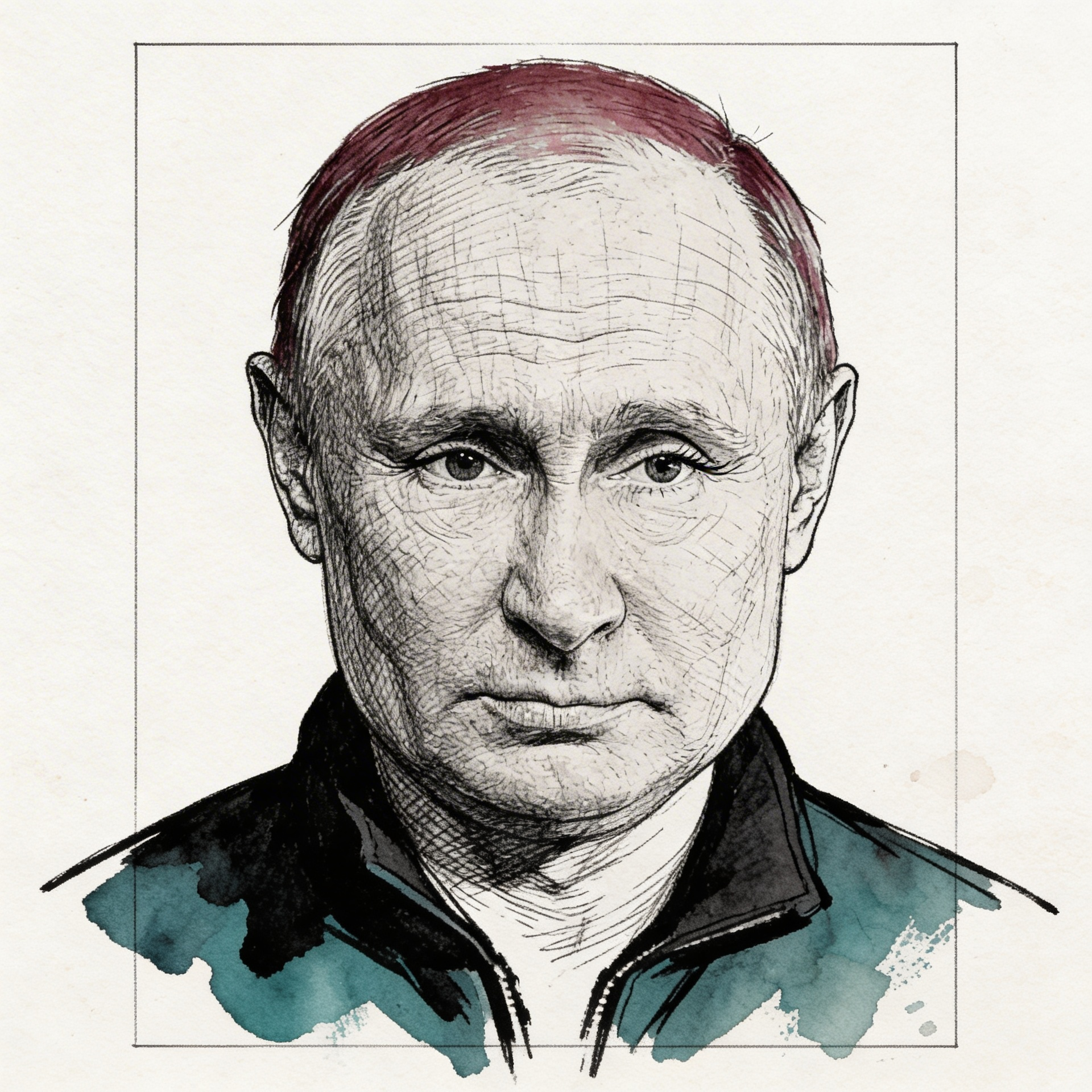
AI-generated editorial illustration
PersonRU

Vladimir Putin

President of Russia since 1999; central to both Ukraine war diplomacy and Iran's post-Khamenei realignment.

Last refreshed: 13 July 2026 · Appears in 3 active topics

Key Question

As Iran's uranium plan changes and Khamenei is buried, what's Putin's next move?

Timeline for Vladimir Putin

#24 9 Jul

Set the market-capitalisation target the slide undermines

Russia-Ukraine War 2026: Moscow posts surplus as shares sink
#23 8 Jul

Chaired the meeting authorising the export ban

Russia-Ukraine War 2026: Moscow bans its own diesel exports
#15 8 Jul

Chaired the meeting that widened the export restriction

European Oil Markets: Russia's diesel ban sets a record crack
#147 4 Jul

Sent Medvedev as his personal envoy rather than attending himself

Iran Conflict 2026: Medvedev likens Hormuz to nuclear arms
View full timeline →

Background

Vladimir Putin has governed Russia continuously since 1999, a former KGB lieutenant colonel who rebuilt centralised state power after the post-Soviet collapse and reoriented Foreign Policy around great-power competition with the West. Born in Leningrad in 1952, he served in Germany before entering the St Petersburg city administration, rising to FSB director and then prime minister before Yeltsin resigned on New Year's Eve 1999. He has since won five presidential elections, with constitutional amendments in 2020 permitting two further six-year terms to 2036.

At the St Petersburg International Economic Forum on 6 June 2026, Putin publicly reaffirmed Russia's standing offer to take custody of Iran's 440.9 kg stockpile of 60%-enriched HEU, positioning Moscow as the only third-country custodian still on the table after Trump vetoed both Russia and China on 27 May. Putin told the plenary that Russia is 'not arming Iran' and that Iran has 'requested no weapons', and disclosed that both the US and Israel privately told Moscow that recent shelling near Bushehr nuclear plant was accidental. Earlier, at a Moscow press conference on 9-10 May, Putin had claimed the US blocked a functioning Russian-custody arrangement by demanding uranium be transported exclusively to US territory, a narrative framing Washington as the obstacle to a deal regardless of how the conflict resolves. Rosatom evacuated 180 of 200 staff from Bushehr following strikes on Iran's energy grid; Carnegie's analysis found the Hormuz price premium has offset roughly two-thirds of Russia's revenue losses from Ukrainian strikes on its oil infrastructure, making the Iran war financially useful to Moscow even as the Kremlin publicly calls for a Ceasefire.

The premise behind Putin's custody offer weakened on 14 June when the US dropped its demand that Iran ship the stockpile abroad and accepted dilution inside Iran instead, narrowing the outstanding dispute to duration and verification rather than a third-country custodian. Russia's relationship with Tehran deepened further when Ali Khamenei's death led to a six-day state funeral from 4 to 9 July; Putin sent former president Dmitry Medvedev as his personal envoy, heading one of more than 30 national delegations after Iran's foreign ministry excluded every European government.

Putin launched the full-scale invasion of Ukraine in February 2022, absorbing Western sanctions that reshaped Russian trade toward China, India, and Iran. Russia's federal budget deficit reached 3.45 trillion roubles in January-February 2026 alone; Q1 oil tax revenue fell by roughly half year-on-year; Economic Development Minister Reshetnikov publicly admitted internal reserves are 'largely exhausted' while Putin attributed the shortfall to 'seasonal factors'. On 9 May, Putin declared the war 'coming to an end' but conditioned any summit with Zelenskyy on a comprehensive peace treaty already finalised beforehand, territorial demands unchanged: full Ukrainian withdrawal from all four annexed regions. Russia and Ukraine held direct talks in Istanbul on 16 May 2026, the first face-to-face contact since the March 2022 collapse, producing a 1,000-for-1,000 prisoner exchange agreement but no movement on the territorial precondition. Ukrainian forces recorded a war-high 9,096 kamikaze drones in a single day on 22 April 2026, while the 9 May Victory Day parade was the first in roughly twenty years with no tanks, missile launchers, or armoured vehicles, evidence of Ukraine's deep-strike reach into Moscow Oblast.

Putin hardened his position through June: at SPIEF on 5 June he rejected Zelenskyy's 4 June letter proposing direct talks, calling it 'rudeness', and restated his Donetsk-first precondition for any summit. Trump pivoted attention back to Ukraine at the 15 June G7 summit, calling Putin and Zelenskyy separately, while Lavrov proposed on 23 June that the EU replace the US as mediator, an offer ISW assessed as conceding nothing while excluding Washington. Domestically, Putin was personally forced to acknowledge the strain: on 28 June he admitted 'queues at gas stations' after Ukrainian strikes shut refineries feeding Moscow, the first time he rather than a subordinate minister owned the fuel shortage publicly. That domestic strain hardened into policy on 8 July, when Putin chaired the Kremlin meeting at which Deputy PM Alexander Novak announced Russia's first producer-binding Diesel Export Ban, a fixed decree running to 31 July that for the first time restricts producers as well as traders.

Common Questions

Reference

Who is Vladimir Putin?
President of Russia since 1999 (with an interruption as PM 2008-2012). A former KGB officer who launched the full-scale invasion of Ukraine in February 2022 and has positioned Russia as Iran's primary strategic partner.

Recently resolved

Did Putin and Trump speak about the war?
Putin and Trump held a one-hour phone call that produced zero public commitments on either Ukraine or Iran.Source: event
Why is Iran holding a state funeral for Khamenei in July 2026?
Ali Khamenei died and a six-day state funeral runs 4-9 July 2026. Iran's foreign ministry invited over 30 national delegations but excluded every European government; Putin sent Dmitry Medvedev as his personal envoy.Source: Lowdown Iran Conflict 2026 briefing
Is Putin admitting Russia has a fuel shortage?
Yes. At a 28 June 2026 Kremlin meeting, Putin personally acknowledged 'queues at gas stations', the first time he rather than a subordinate minister publicly owned the shortage caused by Ukrainian refinery strikes.Source: Lowdown Russia-Ukraine War 2026 briefing
Did the US drop its demand for Iran to ship out its uranium?
Yes. On 14 June 2026 the US dropped its demand that Iran ship its 440.9 kg of 60% enriched uranium abroad and accepted dilution inside Iran instead, narrowing the dispute to duration and verification and sidelining Russia's custody offer.Source: Lowdown Iran Conflict 2026 briefing
Is Russia arming Iran during the 2026 war?
Putin stated at SPIEF on 6 June 2026 that Russia is 'not arming Iran' and that Iran has 'requested no weapons'. Earlier reporting cited Ukrainian intelligence claims of Shahed drone supply; these have not been independently confirmed.Source: SPIEF plenary / Ukrainian General Staff
What did Putin say about Iran at the St Petersburg forum in June 2026?
At SPIEF on 6 June 2026, Putin reaffirmed Russia's standing offer to take custody of Iran's 440.9 kg HEU stockpile, stated Russia is not arming Iran, and disclosed that both the US and Israel told Moscow privately that shelling near Bushehr was accidental.Source: SPIEF plenary / TASS
Why did Trump reject Russia as the custodian for Iran's uranium?
At a 27 May Cabinet meeting Trump rejected both Russia and China as custodians for Iran's 440.9 kg enriched uranium stockpile and told negotiators 'not to rush into a deal', eliminating the only third-country storage option that had been on the table.Source: Reuters / White House readout
What did Putin say about the collapsed Iran nuclear deal?
At a 9-10 May press conference Putin claimed the US blocked a functioning Russian-custody arrangement by demanding the uranium go to American territory rather than Moscow, framing Washington as the obstacle. Tehran did not corroborate the claim.Source: event
What happened at Putin's meeting with Iran's foreign minister in April 2026?
Putin received Abbas Araghchi at the Kremlin on 25 April 2026 alongside Lavrov, declared the US naval blockade unlawful, and confirmed the Russian uranium custody offer remained open.Source: event
What happened at the Russia-Ukraine talks in Istanbul in May 2026?
Russia and Ukraine held their first direct face-to-face talks since March 2022 in Istanbul on 16 May 2026. They agreed a 1,000-for-1,000 prisoner exchange but made no progress on Russia's territorial precondition requiring Ukraine to withdraw from all four annexed regions.Source: Ukrainian delegation / Kremlin readout
What is Russia's offer to store Iran's enriched uranium?
Russia proposed taking custody of Iran's enriched uranium stockpile — a model used in 2015 when Iran's uranium was shipped to Russia as part of the JCPOA deal. Putin claimed on 10 May 2026 that Washington blocked a repeat arrangement by demanding the uranium go to US territory instead.Source: Moscow press conference / Arms Control Association
Is Russia running out of money to fund the Ukraine war?
Russia's federal budget deficit reached 3.45 trillion roubles in just January-February 2026, near the full-year target. Q1 oil tax revenue was down by half year-on-year, and the National Wealth Fund lost $4.8 billion in two months. Putin's own minister Reshetnikov said reserves were 'largely exhausted'.Source: event
Is Russia advancing in Ukraine during the Iran war?
Yes. Russia launched a buffer-zone offensive into Ukraine's Sumy and Kharkiv oblasts in March 2026, timed as Western attention and resources shifted to the Iran conflict.Source: event
Is Russia helping Iran in the 2026 war?
Russia has condemned the US-Israeli strikes and pledged 'unwavering support' for Tehran. Reports indicate Russia shared satellite targeting data with Iran, though no direct military intervention has been confirmed.Source: event
How is the Iran war affecting Russia's economy?
Carnegie analysis found the Hormuz price premium has offset roughly two-thirds of Russia's revenue losses from Ukrainian strikes on oil infrastructure. Russia's Q1 2026 oil tax revenue was nonetheless down roughly half year-on-year, with budget deficit near the full-year target by February.Source: Carnegie Endowment / Russian Finance Ministry
How is Russia funding its Ukraine war despite sanctions?
The 2026 Iran war's Hormuz price spike has offset roughly two-thirds of the revenue Russia loses from Ukrainian drone strikes on its oil infrastructure, giving Moscow fiscal room despite a 3.45 trillion rouble deficit in early 2026.
Source Material
