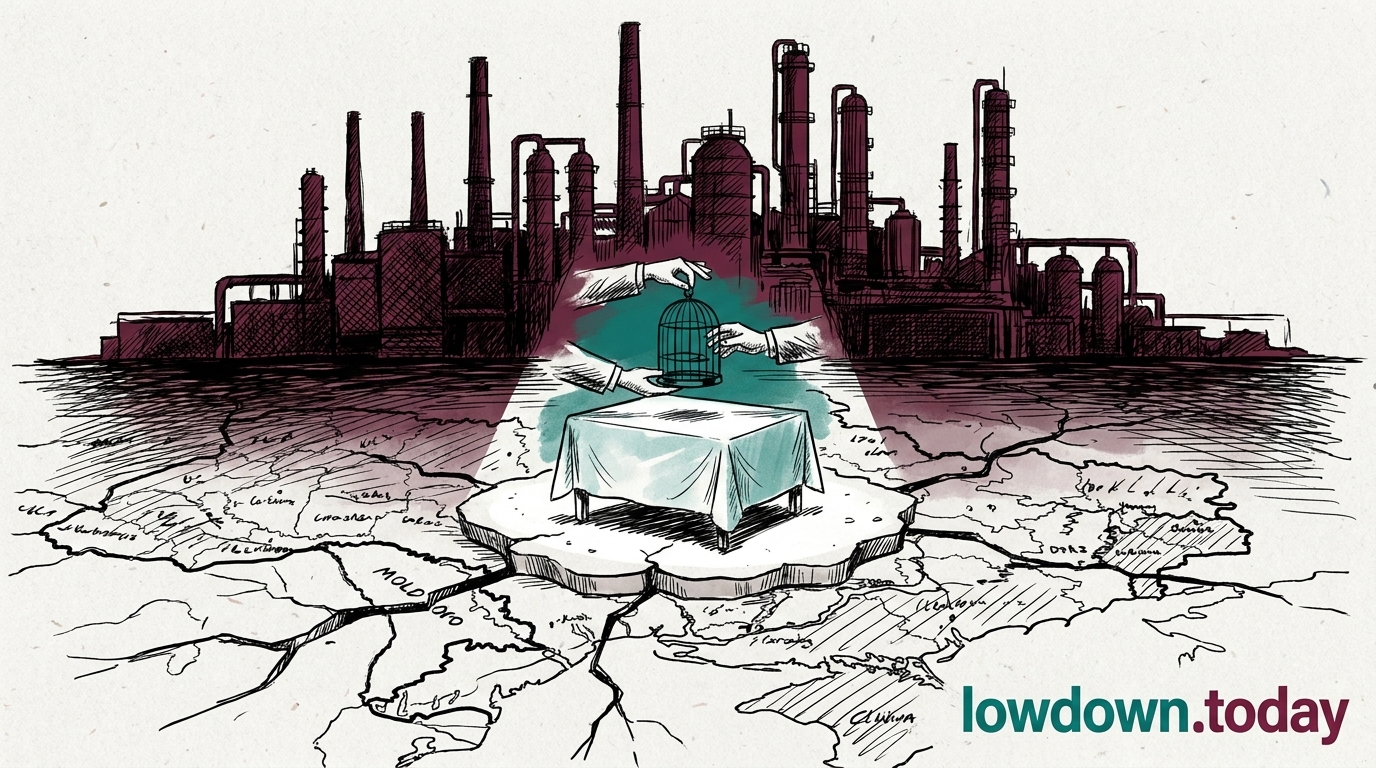
Russia and Ukraine opened direct talks at the Dolmabahce Palace in Istanbul on Saturday 16 May 2026 under Turkish hosting and closed them inside the hour. The delegations signed a 1,000-for-1,000 prisoner exchange, executed a 205-for-205 first tranche on 15-16 May, and parted without movement on Moscow's standing precondition: full Ukrainian withdrawal from Donetsk, Luhansk, Zaporizhzhia and Kherson before any ceasefire1.
Volodymyr Zelenskyy met Recep Tayyip Erdogan in Ankara for nearly three hours on Friday 15 May, declined to attend the Istanbul session personally, and dispatched Defence Minister Rustem Umerov to lead the Ukrainian team. Russia sent Putin aide Vladimir Medinsky, the same official who led Moscow's failed 2022 Istanbul track. The format Erdogan brokered is bilateral, runs without Washington in the room, and produced only the symbolic deliverable Moscow could afford to part with.
Trump's 9-11 May three-day ceasefire templates had collapsed without any signed instrument. Putin called the war 'coming to an end' on 9 May while Peskov re-stated that any summit requires a pre-finalised treaty. The 1,000-prisoner swap itself had been blocked at the announcement stage when Putin denied Ukraine had submitted a list. Eight days later the same deal was signed in person, 205 each side walked free on the 15-16 May tranche, 795 each side remain2.
Moscow accepted Istanbul because the venue costs it nothing on territory and lets Putin perform engagement to domestic and international audiences while the maximalist demand stays public. Medinsky's reappointment matters: in 2022 his draft sought structural disarmament of Ukrainian forces and constitutional change. Returning him to the table without changing the brief signals Moscow has not updated the text. A second meeting has been signalled but no date is set as of Friday 22 May, and each side has agreed to exchange written ceasefire proposals in advance.




