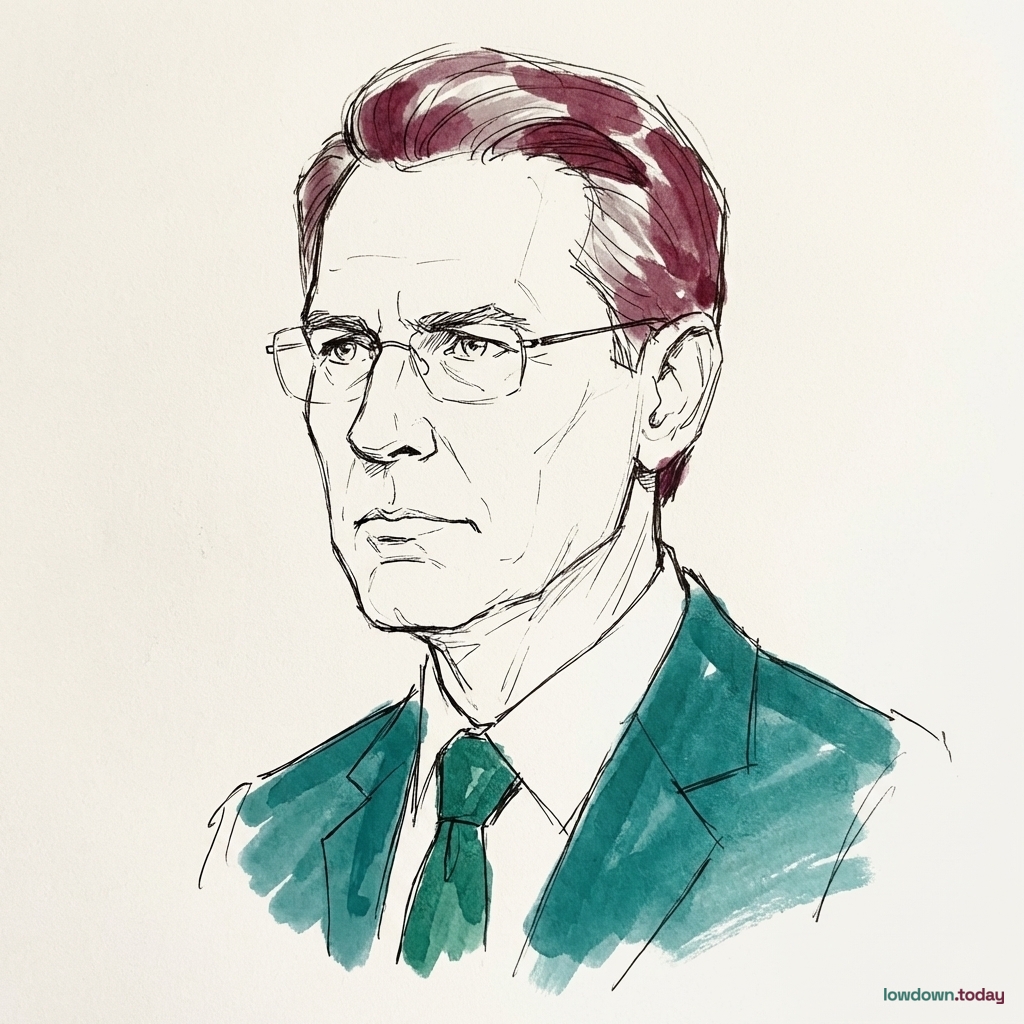
Scott Bessent
US Treasury Secretary under Trump; enforces sanctions across Iran, Russia and Cuba.
On 10 September, Scott Bessent's Treasury began presuming denial for Iran-specific licence applications, immediately refusing most outstanding requests. Formal exemptions now survive only where approval is legally compelled or protects life, limb or the environment.
Last refreshed: 22 September 2026 · Appears in 4 active topics
Is Scott Bessent building a financial siege of Iran, or just escalating pressure to a negotiating table?
Timeline for Scott Bessent
Treasury names 10 Iran missile suppliers
Iran Conflict 2026Qatar refuses to hedge against Hormuz
Iran Conflict 2026Mentioned in: Treasury defaults Iran licences to no
Iran Conflict 2026Mentioned in: OFAC blacklists three Turkish Golden Global institutions
Iran Conflict 2026NIAC asks Treasury to restore licences
Iran Conflict 2026Background
Scott Bessent is the US Treasury Secretary whose evidence bundle centres on sanctions policy and the licences that govern access to US financial channels. His office matters when a transaction must be permitted, wound down or blocked. On 10 September, Treasury adopted a presumption of denial for Iran-specific licence applications.
His role joins public pressure to OFAC administration. On 19 April, Treasury allowed Iran's General Licence U to lapse while extending a Russian oil authorisation, illustrating how licence decisions can distinguish between sanctions targets without new legislation.
Bessent's REMIT also reaches financial stability. On 8 April, he and Federal Reserve Chair Jerome Powell convened major bank chief executives over a frontier model's risk profile, placing Treasury in a discussion beyond its usual sanctions portfolio.
He narrows licence access
On 10 September, Bessent's Treasury began presuming denial for Iran-specific licence applications, while its Licensing Division said it was already refusing most outstanding requests. Only legally compelled approvals and cases involving life, limb or the environment remained eligible.
For Bessent, the September decision made the licence process a narrower compliance test rather than a route for ordinary sanctions exceptions. It shifted the immediate burden to Iran-linked firms and their counterparties, which must now show why a transaction falls within a surviving exception.
His licences shape oil flows
On 19 April, Bessent's Treasury let General Licence U expire without renewal, removing sanctions cover for Iranian crude already loaded on tankers. The same department extended a Russian seaborne-oil authorisation, placing two energy files under visibly different terms on one day.
On 22 June, Treasury issued General Licence X, permitting Iranian crude, petrochemicals and petroleum products to be sold with US dollar payments until 21 August. The reversal showed that Bessent's tools can restrict or reopen trade rapidly when Washington's wider Iran policy changes.
What did OFAC's FAQ 1262 do for Cuba sanctions wind-down?
What is Scott Bessent's role in the Iran conflict?
What did Scott Bessent say about Iran's frozen assets in Qatar?
What is OFAC General Licence X and what does it allow Iran to do?
What did Scott Bessent say about Hezbollah in June 2026?
Why did Scott Bessent warn Oman over the Strait of Hormuz?
Why did the US Treasury sanction Oman's role in the Strait of Hormuz?
Did Bessent change his position on Iranian oil sanctions?
What did Bessent say about Russian sanctions waivers?
Did Trump use Bessent to punish Spain?
Who is Scott Bessent?
Did Scott Bessent announce new Iran sanctions on 13 August 2026?


