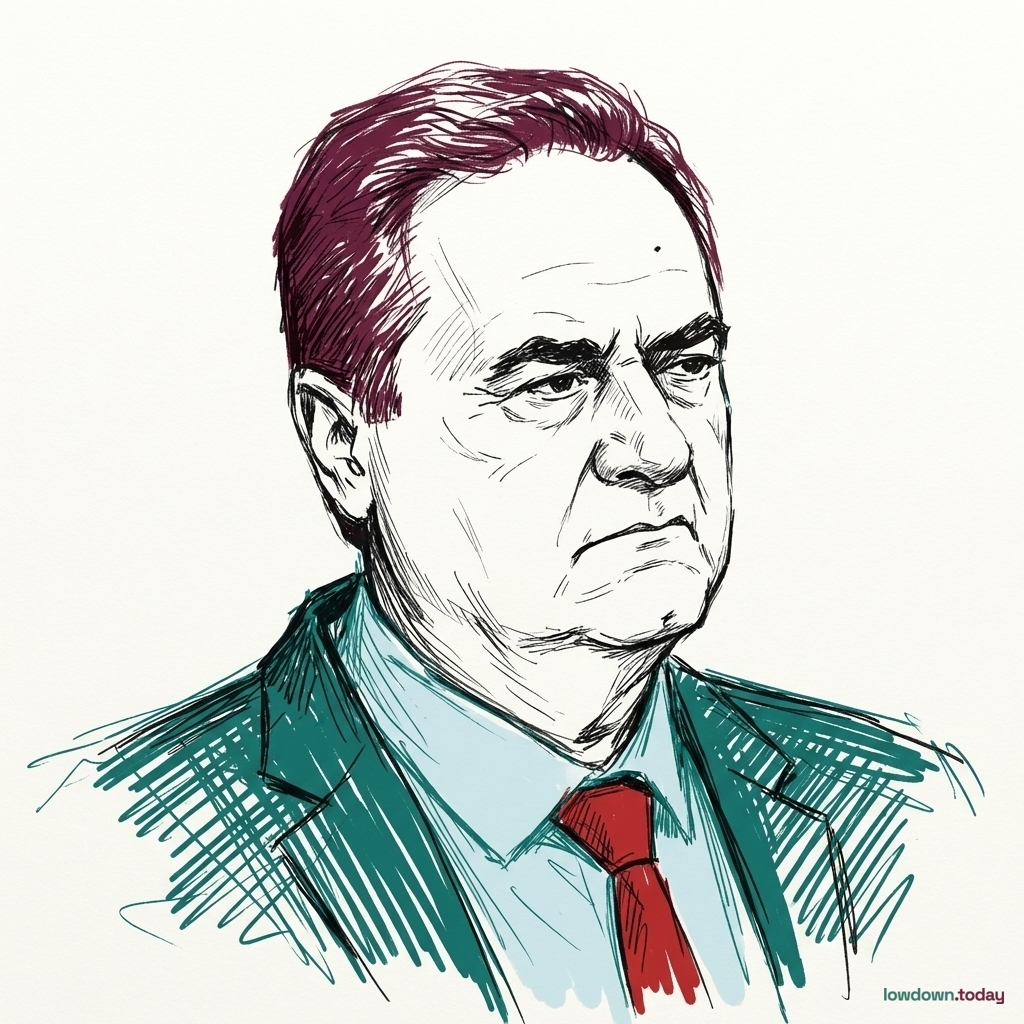
Israel Katz
Israeli Defence Minister directing Lebanon operations and authorising targeted killing orders.
On 1 July, Israel Katz called Iran's Supreme Leader Mojtaba Khamenei "a dead man", repeating a March threat as the new leader avoided public appearances.
Last refreshed: 22 October 2026 · Appears in 1 active topic
Will Katz's unlimited Lebanon occupation survive US and Qatari ceasefire pressure?
Timeline for Israel Katz
Declared a 700 square kilometre zone and threatened Dahiyeh
Iran Conflict 2026: Katz: Israel holds 700 sq km of LebanonThreatened Hezbollah with loss of territory
Iran Conflict 2026: Mentioned in: IDF ties pupil's death to Hezbollah bombMentioned in: Iran's new leader wounded, sources say
Iran Conflict 2026Mentioned in: Iran's heir skips the funeral for him
Iran Conflict 2026Called Mojtaba Khamenei a dead man days earlier
Iran Conflict 2026: Mentioned in: Iran names naval chief with no decreeBackground
Israel Katz is an Israeli Likud politician who serves as defence minister. He has also held senior Cabinet posts covering foreign affairs, finance, intelligence, transport and energy. His career is political rather than military, so his authority over the armed forces comes from Cabinet Office and Israeli law rather than operational command experience.
The defence minister sets policy for the defence establishment, supervises the ministry and works with the prime minister and security Cabinet on major operations. The Israel Defense Forces retain their professional chain of command, while intelligence bodies have separate statutory and reporting arrangements. Katz's public statements matter because they frame government aims and can signal approved policy. They do not by themselves prove what a military unit has done, which requires operational or Independent evidence.
Katz threatens Iran's leader
On 1 July, Katz called Mojtaba Khamenei "a dead man" and said he was marked for death. Iran's foreign minister warned of an immediate and powerful response if Israel acted. The remarks repeated a threat made after Mojtaba became Supreme Leader in March, rather than announcing a confirmed new operation.
For Katz, the public threat placed the Israeli defence minister directly in Iran's succession crisis. Mojtaba then missed his father's state funeral on 4 July, with no explanation from Iranian officials. The absence made Katz's threat part of the political pressure surrounding Iran's new leader, although no public evidence tied Katz to his whereabouts.
Katz rejects Lebanon withdrawal
On 14 June, Katz said Israeli forces would remain in Lebanon, Syria and Gaza for an unlimited period. His statement ruled out withdrawal from southern Lebanon as the Iran-US agreement sought to settle the Lebanon front.
That position framed the next Ceasefire crisis. On 19 June, Israeli forces struck about 80 Hezbollah sites across southern Lebanon and Beirut, while a US- and Qatar-brokered Ceasefire renewed without an Israeli withdrawal agreement. For Katz, the episode showed that his declared military posture remained intact despite diplomatic pressure.
Katz threatens Iran's leader
Did Israel Katz threaten to assassinate Iran's Supreme Leader?
Katz rejects Lebanon withdrawal
How many people were killed in Lebanon on 19 June 2026?
What did Israel Katz say about holding territory south of the Litani River?
Reference
Who is Israel Katz?
Did Israel Katz rule out a ceasefire withdrawal from Lebanon?
Who is Israel Katz and what role does he play in the Lebanon conflict?
Why did Israel break the Lebanon ceasefire in May 2026?
Did Israel Katz order the killing of the Hezbollah Radwan commander?
How much of Iran's petrochemical capacity did Israel destroy?
What is Israel's plan for southern Lebanon?
What is the Gaza demolition model Katz applied to Lebanon?
How did Katz become Defence Minister with no military experience?


Written with AI from Lowdown's published reporting. Not individually reviewed by an editor. Updated 22 October 2026. Editorial standards.