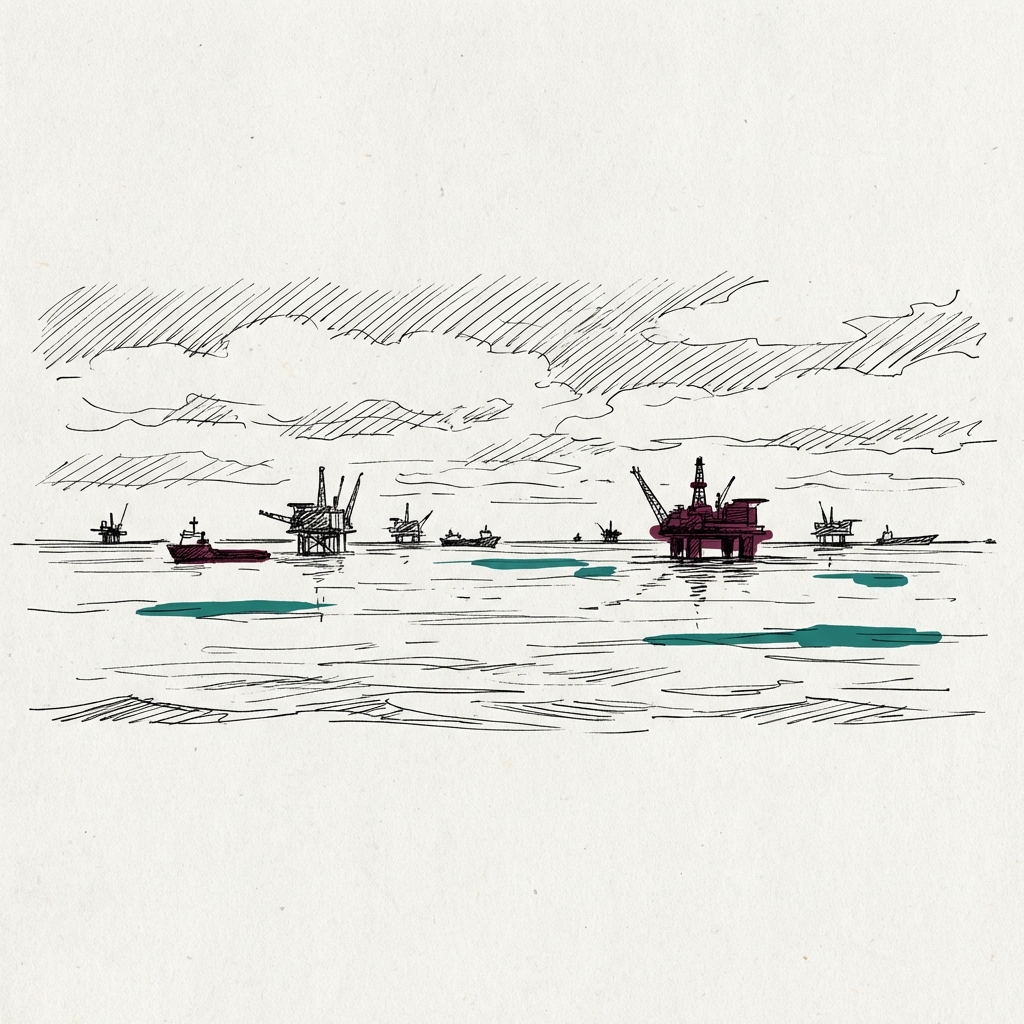
South Pars
Iranian share of the world’s largest gas field, shared with Qatar’s North Dome.
On 16 March, Israeli aircraft struck South Pars, Iran’s main gas field, before Iran fired on Qatar’s Ras Laffan hub hours later. The shared reservoir tied the escalation to Qatar’s LNG system.
Last refreshed: 22 September 2026
Why is South Pars the single most consequential target in the Iran war?
Timeline for South Pars
Mentioned in: Qatar files a UN claim against Iran
Iran Conflict 2026Mentioned in: Qatari envoy reopens the Doha channel
Iran Conflict 2026Mentioned in: Qatar summons Iran yet keeps mediating
Iran Conflict 2026Mentioned in: Qatar caps Iran's $12bn cash demand
Iran Conflict 2026Mentioned in: Khademi killed and the IRGC's gatekeeper falls
Iran Conflict 2026Background
South Pars is Iran’s share of the world’s largest natural-gas field, which it shares with Qatar’s North Dome. It is a central part of Iran’s domestic gas supply. On 16 March, reporting on the Israeli strike described South Pars as supplying roughly 70% of Iran’s domestic gas.
The reservoir runs beneath the maritime boundary between Iran and Qatar. Iran calls its portion South Pars; Qatar calls its portion North Dome. That geology means a threat to South Pars carries consequences beyond Iran’s own energy system, because Qatar’s LNG industry depends on the same underground formation.
South Pars therefore matters as both a national energy asset and a regional strategic constraint. Its shared structure gives Qatar a direct stake in the safety of infrastructure on the Iranian side, even when the two states face opposing pressures in a conflict.
South Pars links rival gas systems
On 16 March, Israel struck South Pars, the Iranian side of the gas formation shared with Qatar’s North Dome. Hours later, Iran fired ballistic missiles at Qatar’s Ras Laffan Industrial City, where QatarEnergy reported extensive damage and fires. For South Pars, the sequence made its value as a domestic energy asset inseparable from the risk to the neighbouring LNG system.
On 18 March, QatarEnergy said two of its 14 LNG trains had been destroyed, removing 12.8 million tonnes a year of capacity for three to five years. Damage across the shared gas province made South Pars a pressure point in a wider contest over Gulf Energy infrastructure, rather than an isolated Iranian target.
What is South Pars and why is Israel bombing it?
Is the South Pars gas field shared with Qatar?
How much of Iran gas comes from South Pars?
Can you destroy South Pars with air strikes?


