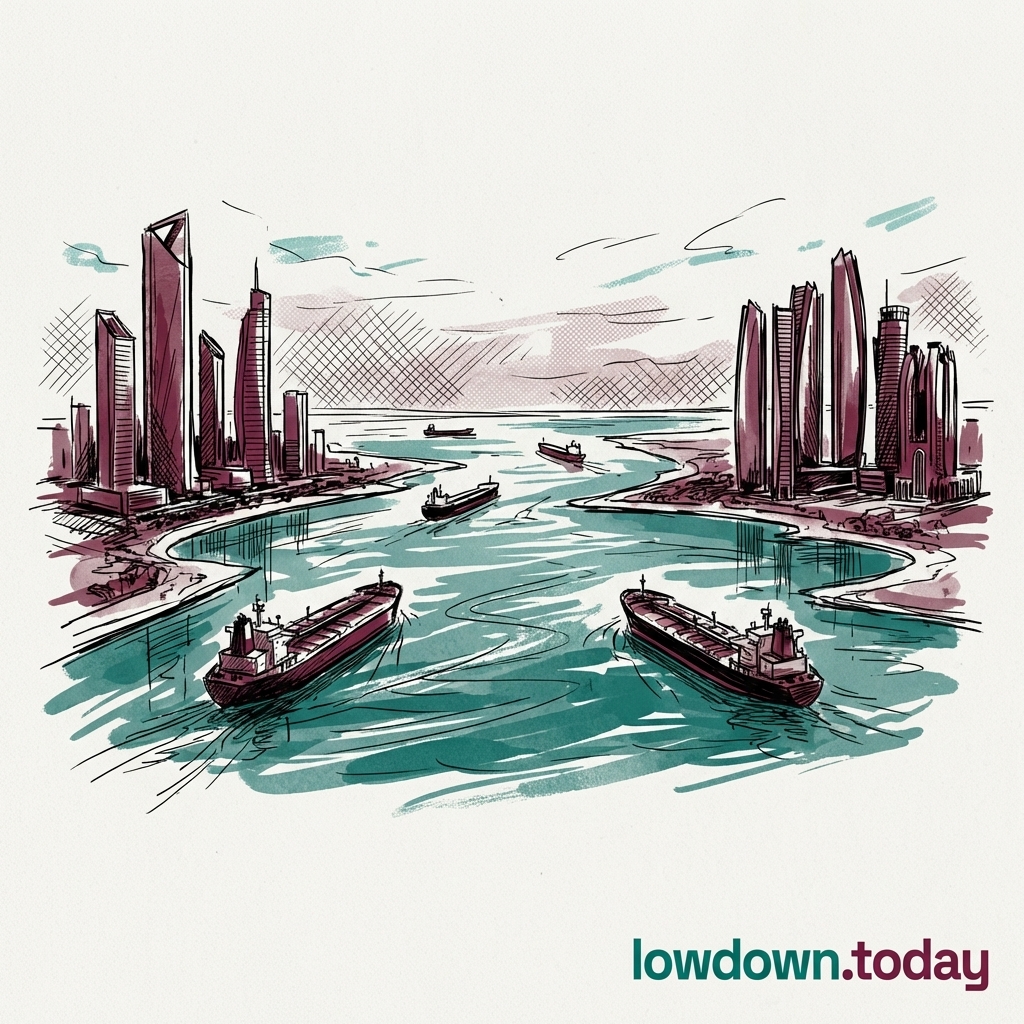
Gulf States (Saudi Arabia, UAE, Qatar, Kuwait, Oman, Bahrain)
Regional nations targeted by Iranian missiles and drones and engaged in diplomatic backchannel negotiations.
On 19 March, Iranian strikes hit Kuwaiti refineries after attacks on Saudi, Qatari and Emirati energy sites, showing that neutrality had not kept the Gulf States outside the war.
Last refreshed: 2 October 2026 · Appears in 1 active topic
Iran attacked states that never joined its war. How do Gulf monarchies stay neutral?
Timeline for Gulf States (Saudi Arabia, UAE, Qatar, Kuwait, Oman, Bahrain)
Mentioned in: Hezbollah demands Iran envoy reversal
Iran Conflict 2026Mentioned in: Brent rebounds to $102 after record drop
Iran Conflict 2026Mentioned in: Iran threatens to destroy Gulf energy
Iran Conflict 2026Mentioned in: HRW finds three war crimes in Lebanon
Iran Conflict 2026Mentioned in: Netanyahu backs Trump's 48hr ultimatum
Iran Conflict 2026Background
The Gulf States are Saudi Arabia, the United Arab Emirates, Qatar, Kuwait, Oman and Bahrain: neighbouring Arab states on the western side of The Gulf. They share exposure to Iran, dependence on maritime trade and Energy infrastructure, but retain separate governments, security arrangements and foreign policies.
Their location gives the group regional weight beyond its size. Saudi Arabia, the UAE, Qatar, Kuwait and Bahrain were all struck or threatened during the March 2026 escalation, while Oman remained a potential diplomatic channel. Iran's 16 March attack on Qatar's Ras Laffan complex showed how a strike on one Gulf state could disrupt infrastructure with global economic importance.
The group matters because it combines energy producers, transport hubs and states hosting major foreign military facilities. Its members can coordinate positions, but their exposure and interests differ. That tension helps explain why regional security crises often produce parallel national decisions rather than a single Gulf policy.
Neutrality fails to shield Gulf states
On 19 March, Iranian drones struck Kuwait's Mina al-Ahmadi and Mina Abdullah refineries, extending a campaign that had already targeted Saudi, Qatari and Emirati Energy infrastructure. For the Gulf States collectively, the strike removed any distinction between hosting Western forces and attempting to remain outside the conflict.
The pattern was already clear by 17 March, when Iran named facilities in Saudi Arabia, the UAE and Qatar as prospective targets. The six states do not share one exposure: each depends on different energy, port and civil-defence systems. Yet attacks across several capitals made their security problem regional even where their diplomatic responses remained national.
Missile defence becomes a shared burden
By 20 March, Saudi forces had downed 47 drones in 24 hours, including 38 within three hours. The pace made air defence a collective Gulf constraint: Iranian salvos could force several states to spend finite interceptors at once, even when only one state was the immediate target.
The burden also changed procurement. On 19 March, Washington used an emergency waiver for $8 billion in radar sales to Kuwait and $8.5 billion in counter-drone systems for the UAE. Those systems could not arrive during the immediate threat window, leaving Gulf states reliant on existing inventories while seeking cheaper tools against mass drone attacks.
What are the Gulf states?
Why are the Gulf states involved in the 2026 Iran conflict?
What is the Strait of Hormuz and why does it matter to Gulf states?
Which US military bases are in the Gulf states?
Why did Qatar file a UN claim against Iran?



Written with AI from Lowdown's published reporting. Not individually reviewed by an editor. Updated 2 October 2026. Editorial standards.