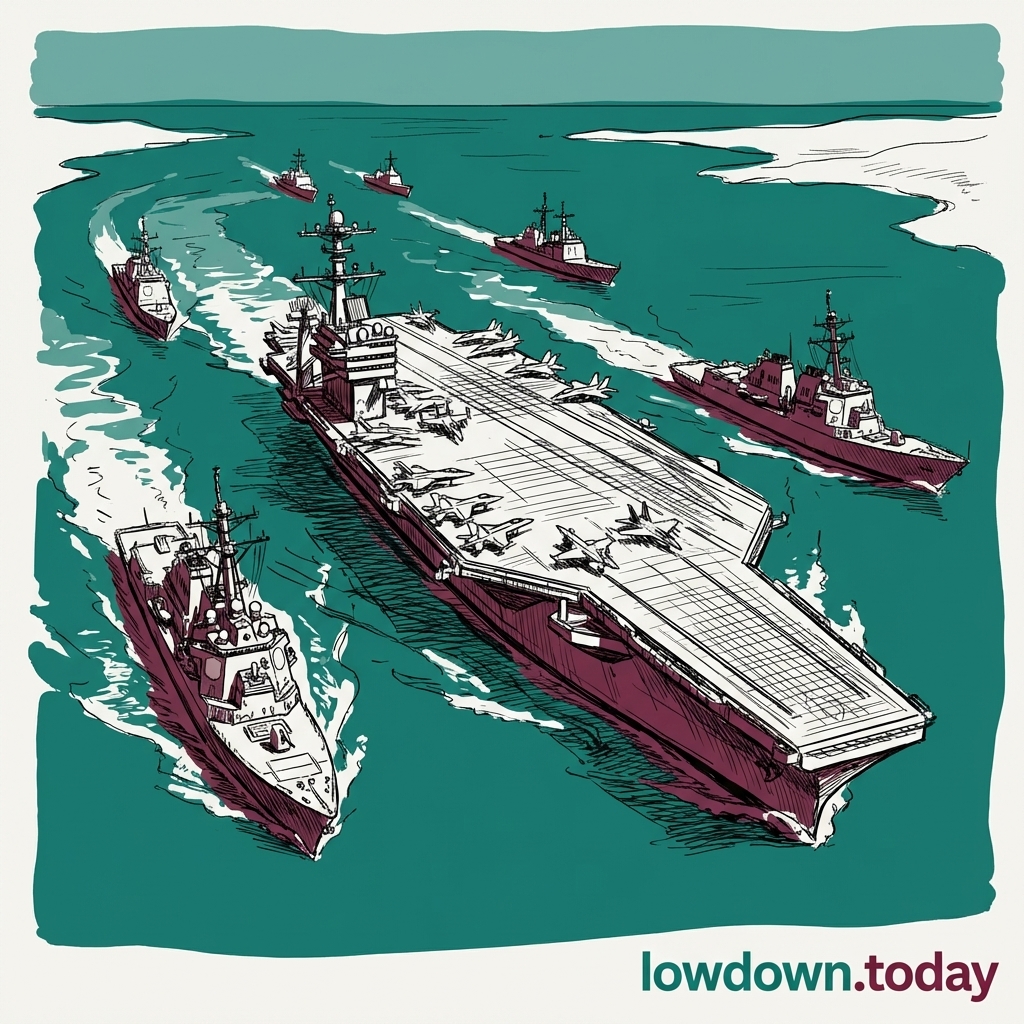
US Fifth Fleet
US Navy's Middle East command in Bahrain; IRGC struck its headquarters three times in 2026.
On 28 June, Iran struck US Fifth Fleet facilities in Bahrain as part of a coordinated attack on US bases in Bahrain and Kuwait.
Last refreshed: 22 September 2026 · Appears in 1 active topic
With Bahrain's Patriot stock 87% depleted, how exposed is the Fifth Fleet's home base?
Timeline for US Fifth Fleet
Mentioned in: Trump calls off the Sunday strike
Iran Conflict 2026Mentioned in: Gulf jets struck Iran, WSJ reports
Iran Conflict 2026Mentioned in: Bahrain says it thwarted a missile wave
Iran Conflict 2026Mentioned in: IRGC strikes GFS Galaxy, shuts Hormuz
Iran Conflict 2026Mentioned in: CENTCOM hits 80 sites; Iran claims Gulf
Iran Conflict 2026Background
US Fifth Fleet is the US Navy command responsible for operations in the Middle East. Based at Naval Support Activity Bahrain, it reports through US Central Command and covers The Persian Gulf, Red Sea, Gulf of Oman and Arabian Sea. Its REMIT makes Bahrain a command centre for US naval activity near the strait of Hormuz.
Reactivated in 1995, the fleet combines SEA control, maritime security and support for allied forces across waterways vital to Gulf trade. Its subordinate Task Force 59 develops and operates autonomous maritime systems, including the vessel used to recover two Apache crew members on 9 June.
The fleet's location gives Washington a permanent naval presence near Iran, but also makes its headquarters a direct target in a regional war. Iran struck the headquarters in Bahrain on 4 March, demonstrating that the command POST is exposed as well as operationally central.
US Fifth Fleet faces repeated strikes
On 3 June, Bahrain's Patriot interceptor stock was estimated to be 87% depleted before an Iranian barrage, exposing the US Fifth Fleet's headquarters to a shrinking defensive magazine. During the night of 5-6 June, the IRGC fired seven ballistic missiles at US bases in Bahrain and Kuwait; CENTCOM said it intercepted six.
For the US Fifth Fleet, the attacks made its home base part of the operational contest rather than a secure rear command. On 28 June, Iran again struck US facilities in Bahrain and Kuwait, while US officials reported no verified damage. The repeated attacks test whether the fleet can sustain regional naval operations while its host base remains within Iranian missile range.
What is the US Fifth Fleet?
Did the US Fifth Fleet seize an Iranian ship in April 2026?
Where is the US Fifth Fleet based?
Was the US Fifth Fleet attacked by Iran?
What is the Northwood coalition?
Has the US Fifth Fleet base been attacked in 2026?
How depleted is Bahrain's Patriot missile stock?
Did Iran attack the US Fifth Fleet in Bahrain?
What is Task Force 59 and what did it do?
How many times has the US Fifth Fleet headquarters been attacked in 2026?
Has Bahrain been attacked again in July 2026?
Why did CENTCOM pause strikes on Iran in July 2026?


