Skip to content
Briefings are running a touch slower this week while we rebuild the foundations.See roadmap
Iran Conflict 2026
6MAY

Sanctioned tankers slip Hormuz on day one

4 min read
10:13UTC

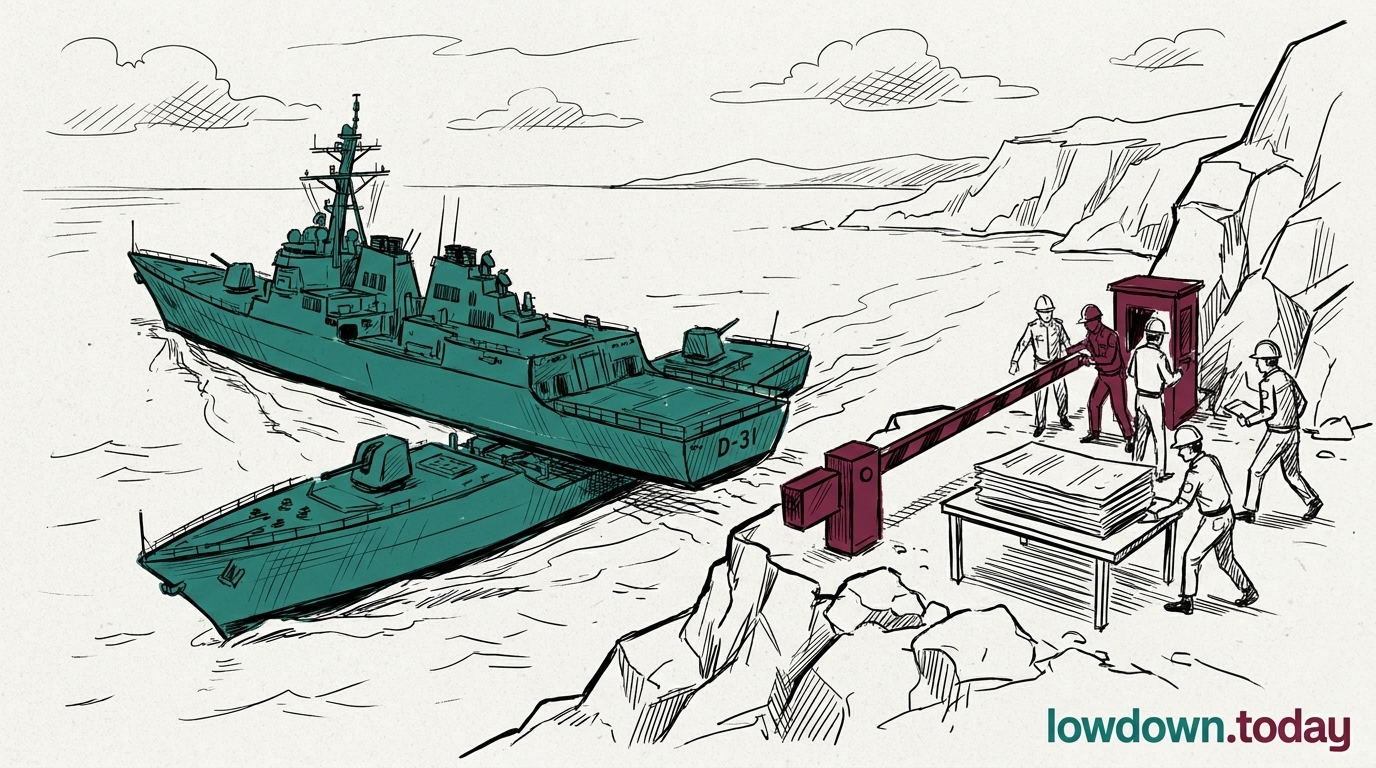
Two US-sanctioned Chinese tankers transited the Strait of Hormuz unchallenged on the first full day of the CENTCOM blockade, while non-sanctioned shipping fell by 86%. The blockade stopped almost everyone except the cargoes it was built to stop.

ConflictDeveloping
Key takeaway

Blockade day one stopped non-sanctioned shipping and let sanctioned tankers through, the inverse of its stated purpose.

The Rich Starry, owned by China's Shanghai Xuanrun Shipping, became the first vessel to exit The Gulf through Hormuz after enforcement began at 14:00 GMT on 13 April, carrying 250,000 barrels of methanol from the UAE port of Hamriyah 1. A second sanctioned tanker from the same owner, the Murlikishan, entered the strait on 14 April bound for an Iraqi fuel-oil terminal 2. Both transits were confirmed by Kpler, LSEG and MarineTraffic. Non-sanctioned transit fell from 14 vessels on 13 April to 2 on 14 April, an 86% single-day drop.

The naval blockade is run by CENTCOM (US Central Command), the combatant command responsible for Middle East operations. Its operational order narrowed Donald Trump's full-strait closure to vessels entering or leaving Iranian ports, with an explicit carve-out for traffic to other Gulf destinations. The two tankers that passed were Chinese-owned, Chinese-crewed and bound for non-Iranian ports. Under the order CENTCOM wrote, its patrols had no operational basis to stop them. The cargoes the United States has under formal sanction kept moving; the cargoes it has no quarrel with went to anchor.

The carve-out is the mechanism, not the framing. A non-sanctioned operator cannot buy war-risk cover for a zone where the enforcing navy decides at sea which class of ship it will actually stop. Standard P&I (Protection and Indemnity) clubs are already suspending cover; sanctioned-tanker operators carry no P&I anyway and absorb no incremental cost. Brent had been trading around $103 on blockade day itself before easing to $101.82 at the 13 April London close; markets read Monday's transit count as partial enforcement rather than closure, and dark-fleet operators gained a structural advantage for every extra day the gap persists.

For drivers at UK and European forecourts, the next pump-price step arrives inside the fortnight; the German fuel relief package is already priced in and exhausted. The paradox on day one is not that the blockade failed; it is that it worked exactly as the operational order instructed, and the operational order is not what Trump posted.

Deep Analysis

In plain English

The US Navy started a blockade of the Strait of Hormuz, the narrow waterway where most of the Middle East's oil is shipped out. On the very first day, the two ships that sailed through were exactly the ones the US had already blacklisted and banned from trading. Ordinary commercial ships stopped; the banned ones kept moving. This happened because the US Navy's actual orders only covered ships going to or from Iranian ports. The two Chinese-owned tankers were headed somewhere else, so the Navy had no authority to stop them. Meanwhile, non-sanctioned shipping companies stopped operating because the zone felt too risky, even though the Navy was not targeting them. The result was the opposite of the blockade's stated goal: banned oil kept flowing, ordinary trade stopped. The US Treasury's blacklist and the US Navy's orders were written by different agencies using different rules, and nobody had joined them up before the operation started.

Deep Analysis
Root Causes

The enforcement gap originates in a legal design flaw: OFAC sanctions designations identify entities and vessels by name or IMO number, but CENTCOM's operational order targets ships by destination port, not by designation status. A sanctioned vessel bound for a non-Iranian port therefore falls into neither enforcement regime simultaneously. The two systems were built for different purposes and have never been synchronised in any prior Iran campaign.

The second structural cause is the absence of a signed presidential instrument. CENTCOM wrote its own operational order rather than implementing a presidential directive; that self-generated order included the carve-out because the command's lawyers determined that boarding Chinese-flagged vessels operating to non-Iranian ports under international maritime law required authority the social-media post does not provide.

The legal exposure the carve-out was designed to avoid sits directly at the intersection of UNCLOS transit-passage rights and the absence of a formal executive instrument.

What could happen next?
  • Consequence

    Dark-fleet operators gain a durable competitive advantage over legitimate shippers for every additional day the enforcement gap persists, accelerating the shift to sanctions-evasion infrastructure.

    Short term · 0.85
  • Risk

    Commercial P&I insurers suspending cover for the blockade zone creates a split market that legitimate operators cannot re-enter until enforcement scope is clarified in a signed instrument.

    Immediate · 0.9
  • Precedent

    The day-one enforcement failure establishes a documented gap in the OFAC-CENTCOM synchronisation that adversaries will exploit in any future sanctions-backed interdiction operation.

    Long term · 0.8
First Reported In

Update #68 · Sanctioned tankers slip the blockade

Reuters / Free Malaysia Today· 14 Apr 2026
Read original
Different Perspectives
International human rights monitors (NetBlocks, IHR, Hengaw)
NetBlocks recorded 1,704 cumulative hours of near-total internet blackout for roughly 90 million Iranians on Day 74, while IHR documented ongoing executions under emergency provisions. These organisations are the only active monitoring windows into a civilian population cut off from the global internet for 71 consecutive days.
UK / France coalition
The Royal Navy confirmed HMS Dragon's Hormuz deployment on its own website on 11 May, converting a press-reported presence into declared force posture; UK and French defence ministers hosted a coalition meeting the same day. Britain and France are now the only named contributors to a Hormuz escort mission all five allies Trump originally asked had declined.
Saudi Aramco / Gulf producers
Saudi Aramco CEO Amin Nasser warned on 11 May that a Hormuz closure could remove 100 million barrels of weekly supply from global markets (roughly 15 million barrels per day for a week), a figure that dwarfs any OPEC+ swing capacity. The warning functions as both a price-floor signal and a public pressure on Washington to protect transit.
Beijing / Chinese Government
China has not publicly acknowledged the four Hong Kong-registered entities designated on 11 May or extended MOFCOM's Blocking Rules cover to HK-domiciled firms. Xi Jinping hosts Trump on 14–15 May having already de-risked state-bank balance sheets via NFRA's quiet loan halt, entering the summit partially compliant before any negotiation.
Tehran / Iranian Government
Foreign Minister Araghchi described Iran's 10-point counter-proposal as 'reasonable and responsible' via spokesman Baqaei on 11 May, and widened the mediator pool by meeting Turkish, Egyptian, and Dutch counterparts in a single day. Tehran is buying procedural runway while Trump's verbal rejection went unmatched by any written US counter.
Trump White House
Trump White House
Trump called the ceasefire 'on massive life support' and dismissed Iran's 10-point counter-proposal as 'a piece of garbage' on 11 May, while departing for Beijing two days later with no signed Iran instrument to show Congress. The verbal maximum and the paper void coexist: the administration is running a legal pressure campaign through Treasury while the president free-lances the rhetoric.