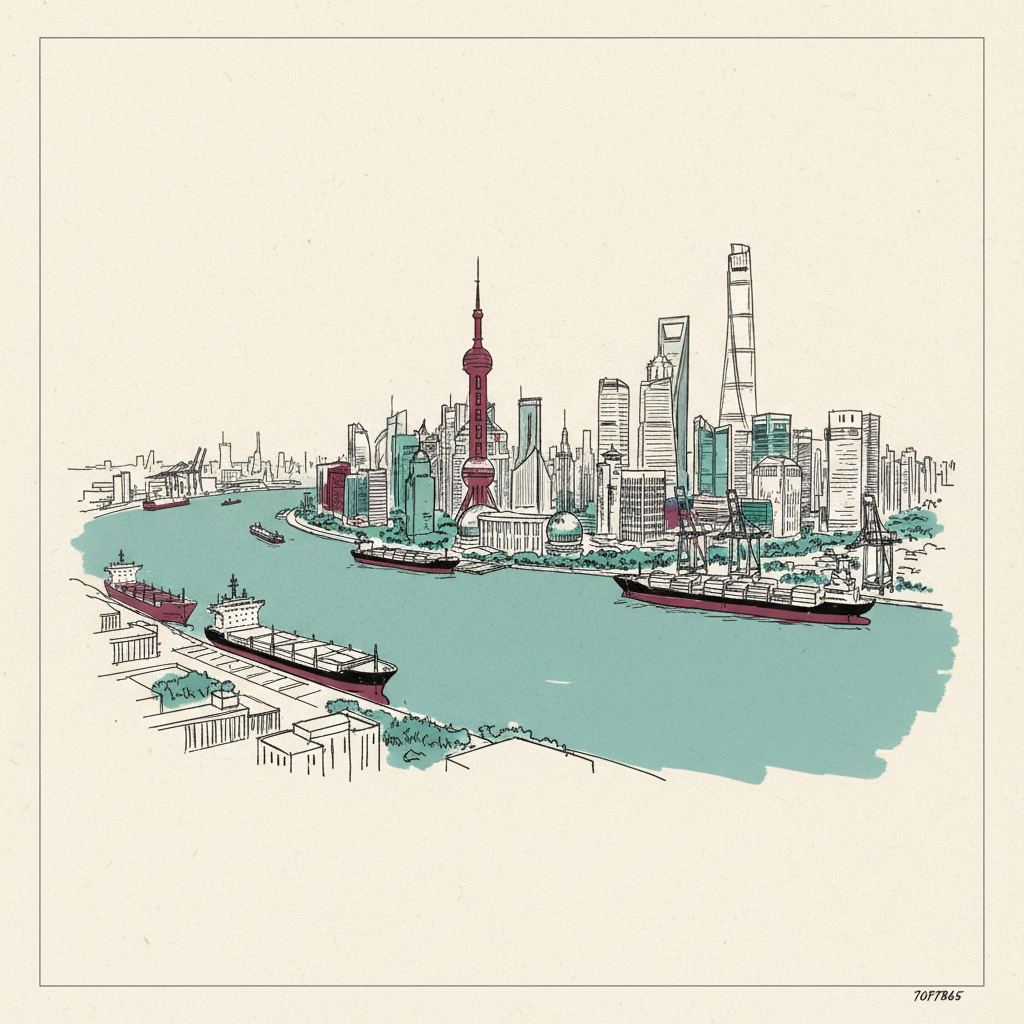
Shanghai
China's largest city; global financial centre and the world's busiest container port.
On 5 June, US Treasury sanctioned Shanghai Qianye Energy, putting a Shanghai-registered firm at the centre of Iran energy enforcement.
Last refreshed: 22 September 2026 · Appears in 1 active topic
How is a Shanghai shipping firm connected to Iran's blockade-busting oil trade?
Timeline for Shanghai
Mentioned in: Ten agencies name Beijing firm in hacks
Cybersecurity: Threats and DefencesMentioned in: China may build a drone-sub mothership
Autonomous Systems: Land & SeaMentioned in: USS George Washington relieves Abraham Lincoln
Iran Conflict 2026Mentioned in: Houthi strike sets Jazan refinery alight
Iran Conflict 2026Mentioned in: Marines start boarding ships off Iran
Iran Conflict 2026Background
Shanghai is China's largest city, a global financial centre and the location of the world's busiest container port. At the mouth of the Yangtze River, it is a durable gateway between China's domestic economy and international trade.
Foreign trade reshaped Shanghai after the Treaty of Nanking opened it in 1842. Industrial growth after 1949 and Pudong's designation as a special economic zone in 1990 made the city a principal destination for foreign capital and a base for commercial activity.
That commercial concentration explains why Shanghai-registered companies can appear in sanctions reporting without making the municipality a party to the underlying Conduct. On 5 June, US Treasury named Shanghai Qianye Energy in an Iranian gas-smuggling network; earlier reporting named Shanghai Xuanrun Shipping in Hormuz crude movements.
Shanghai faces sanctions scrutiny
On 5 June, US Treasury named Shanghai Qianye Energy Co Ltd in an Iranian gas-smuggling network, describing it as the first mainland Chinese company hit under energy sanctions during the 2026 war. For Shanghai, the case places a locally registered commercial actor inside an enforcement action directed at trade routes far beyond the city.
The designation followed reporting that Shanghai Xuanrun Shipping vessels transited the strait of Hormuz with Iranian crude after the CENTCOM blockade began in April. Neither case makes Shanghai itself a participant in sanctions evasion. They show why a city hosting internationally connected shipping and energy firms faces reputational and compliance scrutiny when Washington reaches into Chinese corporate networks.
Is Shanghai the capital of China?
Why is Shanghai connected to Iranian oil sanctions?
What is Shanghai's role in global shipping?
Has a mainland Chinese company been sanctioned over Iran's oil trade?
Why did the US sanction two Shanghai firms on 30 July 2026?


Written with AI from Lowdown's published reporting. Not individually reviewed by an editor. Updated 22 September 2026. Editorial standards.