Skip to content
Briefings are running a touch slower this week while we rebuild the foundations.See roadmap
Iran Conflict 2026
29APR

Day 61: UAE quits OPEC, war signs nothing

4 min read
09:17UTC

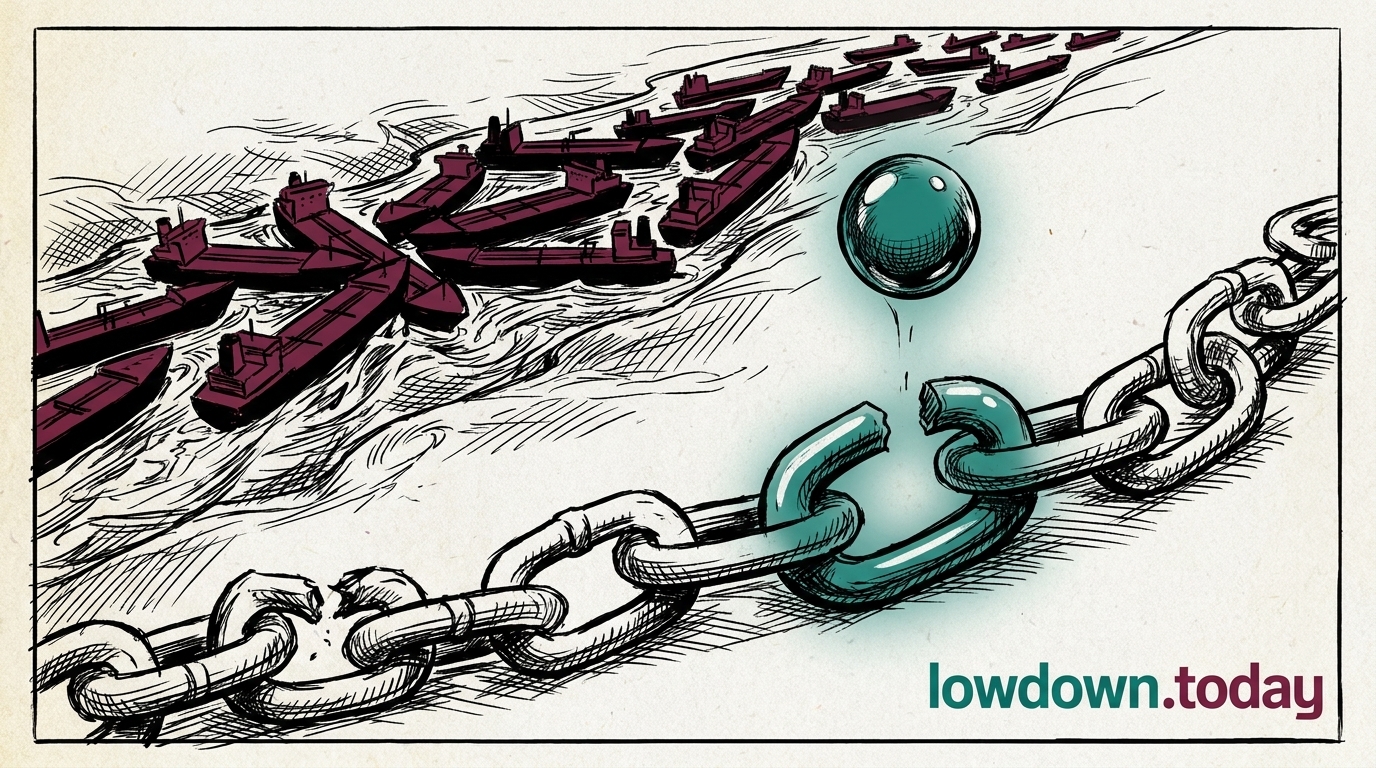
The United Arab Emirates announced exit from OPEC effective 1 May, the same Friday the War Powers Resolution 60-day clock expires. Brent crude closed at $111.16 a barrel, a new post-war high. Trump posted that Iran was in a 'state of collapse'; the White House signing pen has now run 60 consecutive days with no signed Iran executive instrument.

Key takeaway

On Day 60 every actor with paper to sign signed it except Washington.

This briefing mapped
Loading map…
Economic
Diplomatic
Legal
Domestic
Military

Suhail Mohamed al-Mazrouei announced Abu Dhabi's exit on 28 April without consulting Riyadh or any other GCC member, citing Hormuz blockage and Gulf inaction over Iranian attacks.

Sources profile:This story draws on centre-left-leaning sources from Pakistan
Pakistan

The UAE announced it will leave OPEC and OPEC+ from 1 May 2026, citing Iran's blockade of the strait of Hormuz and Gulf allies' inaction. Energy Minister Suhail al-Mazrouei made the announcement without consulting Saudi Arabia.

The exit strips the bloc of its third-largest producer and breaks the Gulf unity that has underpinned OPEC pricing power since 1967. Saudi Arabia must now decide whether to punish defection or absorb the structural loss. 

Sources:Dawn

Brent hits $111.16, a new post-war high

London Brent settled $111.16 a barrel on 28 April, up 2.71% in a session, as the UAE OPEC announcement and the absence of any signed US ceasefire text both fed the same trade.

Sources profile:This story draws on centre-leaning sources from United States
United States
LeftRight

Brent Crude settled at $111.16 per barrel on 28 April, a new post-war high, driven by the UAE OPEC exit announcement and the absence of any signed ceasefire text. US pump prices hit $4.18 per gallon, 75.67% above where they were a year ago.

The dual catalyst, a structural OPEC break and a diplomatic void, produced a compound risk premium that markets have not seen since the 1990 Gulf War. Analysts at Goldman Sachs warn $120 is plausible if Hormuz remains closed through May. 

Sources:Fortune

Pakistan delivered Iran's revised ceasefire proposal to Washington on 28 April; nuclear talks now sit in a post-war Phase 3, and Marco Rubio called the offer 'better than we thought'.

Sources profile:This story draws on centre-left-leaning sources from Qatar
Qatar

Iran sent Washington a revised ceasefire proposal on 28 April via Pakistan, cutting the structure from three phases to two and pushing nuclear talks entirely to the post-war period. Secretary of State Marco Rubio called it 'better than we thought' but flagged verification.

Deferring nuclear talks removes the main US objection to the previous text, but Rubio's verification concern points to the same impasse that collapsed the JCPOA snapback: Tehran and Washington cannot agree on who inspects what, and when. 

Sources:Al Jazeera

The Iran Supreme Court upheld three death sentences over the Seyyed Al Shohada mosque fire on 27 April; cases now sit with the final-rulings unit.

Sources profile:This story draws on centre-right-leaning sources from United Arab Emirates
United Arab Emirates

Iran's Supreme Court upheld death sentences for three teenagers convicted over a mosque fire in Pakdasht in January 2026 and referred their cases to the unit that carries out final rulings, putting executions potentially days away. A fourth defendant, 45-year-old Maryam Hodavand, has an appeal still pending.

All four were denied independent legal counsel. The three teenage defendants' ages mean Iran is in breach of Article 37 of the UN Convention on the Rights of the Child, which it ratified in 1994. 

Sources:The National

Iran's Supreme National Security Council approved limited online access for select businesses and academics on 28 April, the first concession on a 1,416-hour blackout.

Sources profile:This story draws on centre-right-leaning sources from United Arab Emirates
United Arab Emirates

Iran's Supreme National Security Council approved a partial internet restoration scheme called 'Internet Pro' on 28 April, giving select businesses and academics limited access after 1,416 hours of near-total blackout. Government spokesperson Fatemeh Mohajerani said full access depends on the war ending.

The scheme is the first concession on a blackout costing up to $80 million a day in economic losses. The narrow scope, businesses and academics only, is designed to reduce economic damage without restoring the social media channels that organised protests in 2022. 

Sources:The National

The first Tehran-Moscow flight in 60 days lifted off on 28 April, with three-times-weekly service resuming the day after Araghchi met Putin at the Boris Yeltsin Library.

Sources profile:This story draws on neutral-leaning sources

Mahan Air operated the first Tehran-Moscow flight since the war began on 28 April, resuming three-times-weekly service in both directions. The resumption came one day after Iranian Foreign Minister Araghchi's confirmed meeting with Vladimir Putin in St Petersburg.

Mahan Air is subject to longstanding US and EU sanctions for alleged IRGC cargo operations. Its Tehran-Moscow resumption normalises the Iran-Russia logistics corridor in real time, without any signed US instrument covering or restricting it. 

Sources:Mehr News

The White House signed only nominations on 28 April as Trump posted on Truth Social that 'Iran has just informed us they are in a State of Collapse', with no Iranian confirmation.

Sources profile:This story draws on mixed-leaning sources from United States
United States

The White House signed zero Iran-related executive instruments on Day 60 of the war, extending an unbroken streak while Trump posted to Truth Social that Iran had told him it was 'in a state of collapse'. The only paper signed on 28 April was a slate of nominations.

The War Powers Resolution clock runs out at 12:01 EDT on 1 May. Sixty days of war with no signed Iran instrument means every legal authority the US military has used in the strait of Hormuz rests on a Truth Social post and a verbal presidential order. 

Windward logged 13 crossings, up from 9 on 24 April; one outbound vessel ran AIS-dark and CENTCOM revised its blockade tally to 37 vessels.

Sources profile:This story draws on neutral-leaning sources from Israel
Israel

Hormuz transits rose to 13 on 28 April from nine on 24 April, according to Windward. One outbound vessel ran with its AIS tracking transponder switched off. CENTCOM's tally of redirected vessels fell by one to 37, a revision from the previous day's count of 38.

Thirteen transits against a pre-war baseline of 135 per day means traffic is still at roughly 10% of normal volume. The AIS-dark vessel signals ongoing attempts by tanker operators to conceal their movements from both US and Iranian enforcement. 

Sources:Windward

Senator Lisa Murkowski's draft Iran AUMF is still missing from Congress.gov on 29 April, a day past her own target and 24 hours from the War Powers Resolution deadline.

Sources profile:This story draws on neutral-leaning sources

Republican Senator Lisa Murkowski failed to introduce her Iran Authorisation for the Use of Military Force bill by her own 28 April target. The bill remained unfiled on Congress.gov as of 29 April, with the War Powers Resolution 60-day deadline expiring at 12:01 EDT on Friday 1 May. Senators Susan Collins, Thom Tillis and John Curtis had agreed to co-sponsor, but none filed.

A filed bill would have forced the Senate to vote on authorising the war formally. Without it, the 60-day clock expires against an operation that has produced zero signed presidential Iran instruments and no congressional authorisation text. 

Closing comments

Direction: sideways-to-structural. Kinetic indicators (CENTCOM at 37 vessels redirected, Hormuz transits at 13 on 28 April) are broadly flat against last week's readings. Structural indicators are moving: Brent at $111.16 is a new post-war high, the UAE OPEC exit is irreversible on a 30-day horizon, and the internet blackout at 1,416 hours is costing Iran $30-40 million daily in direct losses. The two near-term inflection points are the WPR deadline at 12:01 EDT on 1 May 2026 and the Pakdasht final-rulings unit. If the 1 May clock expires against a 61-day empty signing column, the legal vacuum becomes the defining structural fact of a war entering its third month.

Different Perspectives
Trump administration
Trump posted that Iran told him it was in 'a State of Collapse'; no Iranian official confirmed. Rubio called the revised ceasefire proposal 'better than we thought' but cited verification concerns. The White House signed nominations on Day 60, maintaining its 60-day streak of zero Iran executive instruments.
Iranian government (Pezeshkian / Araghchi)
Foreign Minister Araghchi submitted a revised two-phase ceasefire text through Pakistan that defers nuclear talks to the post-war period, a substantive concession from the three-phase version rejected a day earlier. The proposal represents the civilian government's clearest structural offer of the conflict, arriving on the same day the SNSC approved limited internet access for businesses.
UAE (al-Mazrouei)
UAE (al-Mazrouei)
Energy Minister al-Mazrouei announced OPEC exit effective 1 May without consulting Riyadh, citing inability to export through Hormuz and Gulf allies' failure to respond to Iranian military action. The announcement strips OPEC of its third-largest producer and cites a security failure rather than a quota dispute as the stated rationale.
Russia (Mahan Air / Putin logistics track)
The Tehran-Moscow air corridor reopened via Mahan Air on 28 April, one day after Araghchi met Putin at the Boris Yeltsin Library, on the same week Russian Il-76 military flights to Iran ran at high tempo. Russia is normalising its logistics corridor with Tehran in real time without any US signed instrument covering or constraining it.
China (Hengli / MOFCOM)
Beijing held its response to OFAC's Hengli Petrochemical designation at embassy level, with no MOFCOM countermeasure activated despite Decree No. 835 sitting ready since 13 April. China's posture on Day 60 is deliberate restraint: maximum optionality, minimum commitment.
Saudi Arabia
Saudi Arabia
Riyadh was not consulted on the UAE OPEC exit and faces a Vienna ministerial without Abu Dhabi for the first time since 1967. Saudi Arabia must choose between disciplining the UAE's defection with a production increase, risking a price crash, or absorbing the structural loss and negotiating a bilateral side agreement on market share.