Skip to content
Briefings are running a touch slower this week while we rebuild the foundations.See roadmap
Iran Conflict 2026
29APR

Three Iran teens days from execution

4 min read
09:17UTC

The Iran Supreme Court upheld three death sentences over the Seyyed Al Shohada mosque fire on 27 April; cases now sit with the final-rulings unit.

ConflictDeveloping
Key takeaway

Three teenage Pakdasht defendants face execution within days after the Supreme Court referred their cases for carriage.

Four defendants were sentenced to death over the Seyyed Al Shohada mosque fire in Pakdasht, near Tehran, in January 2026, in which two people died. On Monday 27 April 2026, the Iran Supreme Court upheld the convictions of three teenage men, Ehsan Hosseinipour Hesarloo, Matin Mohammadi and Erfan Amiri, and referred their cases to the unit responsible for carrying out final rulings. The National, citing Hengaw and HRANA, reported that execution could occur within days. The fourth defendant, Maryam Hodavand, 45, is held at Evin Prison in Tehran with her appeal still pending.

Hengaw is a Kurdish human rights organisation that publishes execution names within hours of carriage; HRANA, the Human Rights Activists News Agency, is an Iranian NGO running the same beat. Both organisations confirmed the sentences and the denial of independent legal counsel. The 'final-rulings unit' is the administrative office that sets the carriage date once the Iran Supreme Court has upheld a sentence; once a case sits there, the execution window is typically days. Defendants are usually moved to Ghezel Hesar Prison, near Karaj, for carriage.

This is a parallel protest-era capital case to that of Ali Fahim and his co-defendants tracked in the prior briefing , not the same docket. The teenage co-defendants' ages activate Article 37 of the UN Convention on the Rights of the Child, which prohibits capital punishment for offences committed under the age of 18 and which Iran ratified in 1994 with reservations. Hengaw's wartime political-execution tally now runs alongside this docket; Erfan Kiani's execution on 25 April was the eighth political prisoner put to death since the war began per Hengaw's 24 April count. The denial of independent counsel adds a procedural front to ongoing UN Special Rapporteur engagement on Iranian capital cases. Hodavand's pending appeal opens a narrow window for international representations; the men's cases sit with the carriage office.

The Pakdasht fire occurred during the January 2026 protests Iranian authorities have framed as an internal security crisis. The case docket has moved through the courts at wartime tempo: a January incident yielded death sentences inside three months and a Supreme Court confirmation by Day 59 of a 60-day shutdown that has limited family access to legal records.

Deep Analysis

In plain English

Three teenagers in Iran have been sentenced to death for their role in a mosque fire that killed two people during protests in January 2026. The country's highest court has confirmed the sentences and sent the cases to the unit responsible for carrying out executions, which means they could be put to death within days. A fourth person, a 45-year-old woman called Maryam Hodavand, is in Evin Prison with an appeal still in progress. None of the four were allowed to choose their own lawyers. Under international law, executing someone for a crime they committed as a teenager is banned. Iran signed that international agreement in 1994 but still carries out these executions.

Deep Analysis
Root Causes

Iran's judiciary operates under a constitutional structure that places it formally under the Supreme Leader rather than the executive branch. Pezeshkian's civilian government cannot instruct the Supreme Court to delay referral or compel the judiciary to grant new hearings in protest-era cases. The Pakdasht sentences therefore proceed on a judicial track entirely separate from the diplomatic track Araghchi is running through Pakistan.

The denial of independent legal counsel to all four defendants reflects a documented pattern in protest-era capital cases where court-appointed defence counsel either fails to mount substantive appeals or actively cooperates with prosecution narratives.

Human Rights Watch documented this pattern in 18 protest-era capital cases between 2022 and 2025, finding that defendants represented by court-appointed counsel received convictions at a rate of 94% versus 61% for those with independent representation in comparable non-capital cases.

What could happen next?
  • Risk

    Executing three teenagers within the same diplomatic window that produced Rubio's positive public signal on the ceasefire proposal would create a reputational contradiction that Iran's Foreign Ministry would need to manage, potentially complicating the next round of Pakistan-mediated talks.

  • Consequence

    Hengaw's wartime political-execution count running alongside the Pakdasht case will add to the UN OHCHR dossier being compiled under Special Rapporteur Deif's mandate, which feeds into potential ICC referral discussions among EU member states.

First Reported In

Update #83 · UAE quits OPEC, war signs nothing

The National· 29 Apr 2026
Read original
Causes and effects
This Event
Three Iran teens days from execution
Once the Iran Supreme Court refers a capital case to the final-rulings unit, the carriage window is typically days, not weeks. Three teenage co-defendants and a 45-year-old woman face execution over a January 2026 fire that killed two; all four were denied independent legal counsel, and the case runs parallel to the Ali Fahim docket {{EVREF:/t/iran-conflict-2026/78/three-ali-fahim-co-defendants-face-execution/}} that Hengaw has been tracking since the protests began.
Different Perspectives
Gulf shipping and insurance markets
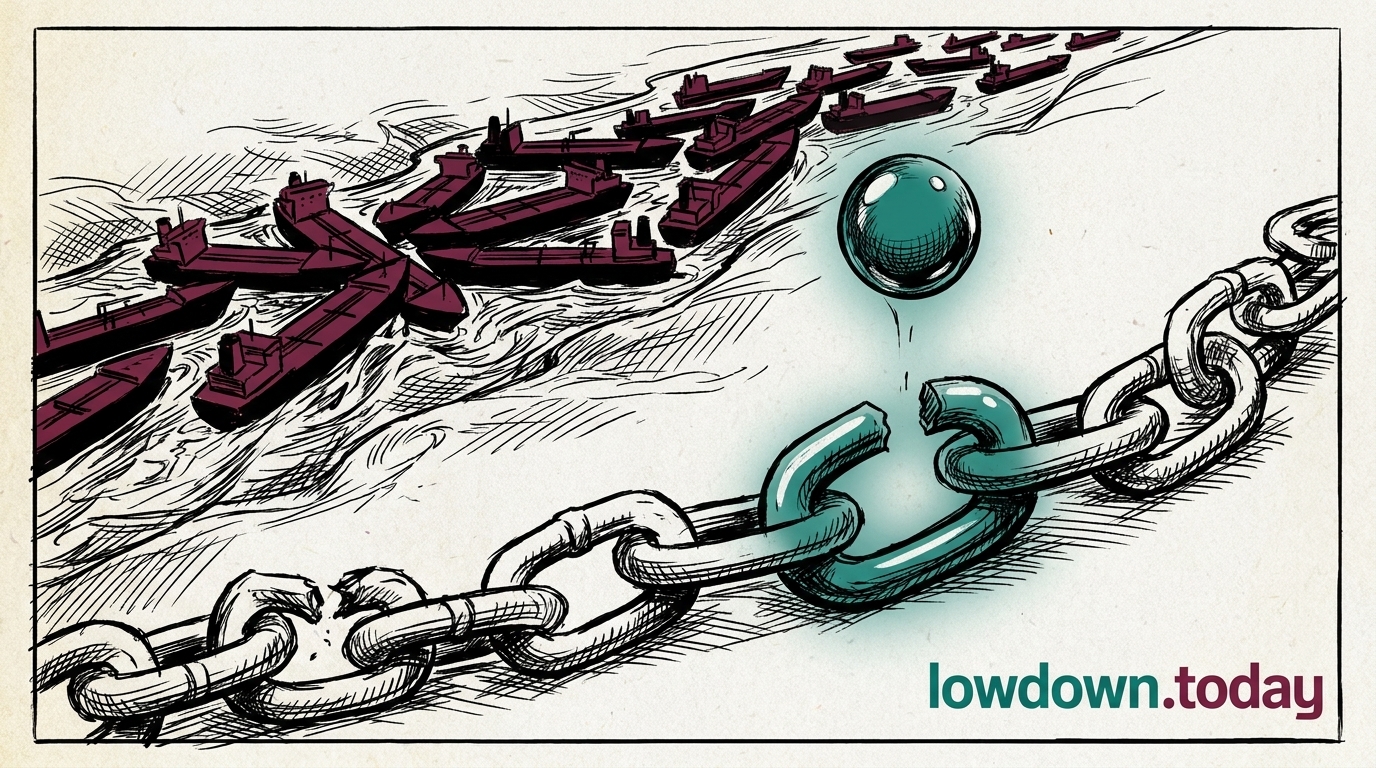
With Hormuz and Bab el-Mandeb both hostile at once, war-risk underwriters face their first dual-chokepoint pricing problem; the rerouting hedge that absorbed one closure is gone for Israeli-linked hulls. Any deal that reopens Hormuz without a Houthi stand-down clause delivers only partial shipping relief.
Russia and China
Russia and China
Russia and China met IAEA chief Grossi jointly in Geneva on 5 June to coordinate an advance blocking position against Washington's censure resolution, the first documented instance of proactive pre-session obstruction rather than reactive post-vote dissent. Beijing's move came four days after OFAC designated Shanghai Qianye Energy under Iran energy sanctions.
Saudi Arabia
Saudi Arabia
Saudi Arabia was left out of the emergency $4.01 billion Patriot waiver Qatar received on 2 May as its own PAC-3 stocks ran near-empty from intercepting Iranian salvoes over Aramco facilities. Riyadh is on a standard 18-month FMS queue behind a production line booked through 2030, with no equivalent priority to Qatar's Al Udeid basing role.
Houthis (Ansar Allah)
The Houthis declared a complete ban on Israeli Red Sea navigation on 8 June and struck Jaffa, their first attack on Israeli territory since April, seven days after the Tasnim authorisation to activate other fronts including Bab el-Mandeb. The declaration put both chokepoints under hostile authority simultaneously.
Iran
Iran
Iran agreed the 9 June mutual halt after the Mahshahr exchange and coordinated with Russia and China to block Washington's IAEA censure resolution, using the Board as a second front while the bilateral pause held on the military one. Tehran's acceptance of the Lebanon carve-out contradicts the linkage position it stated on 1 June.
Benjamin Netanyahu and the IDF
Israel struck the Karun Petrochemical plant at Mahshahr on 8 June over Trump's explicit objection, then agreed a halt with Iran the following day scoped on Israeli terms with Lebanon carved out. Netanyahu's posture is that the IDF will not accept Iranian missile factories as off-limits regardless of US diplomatic timelines.