Skip to content
You can now search across every topic, entity and event.What's new
Iran Conflict 2026
21APR

IRGC boards three ships inside Hormuz

3 min read
10:51UTC

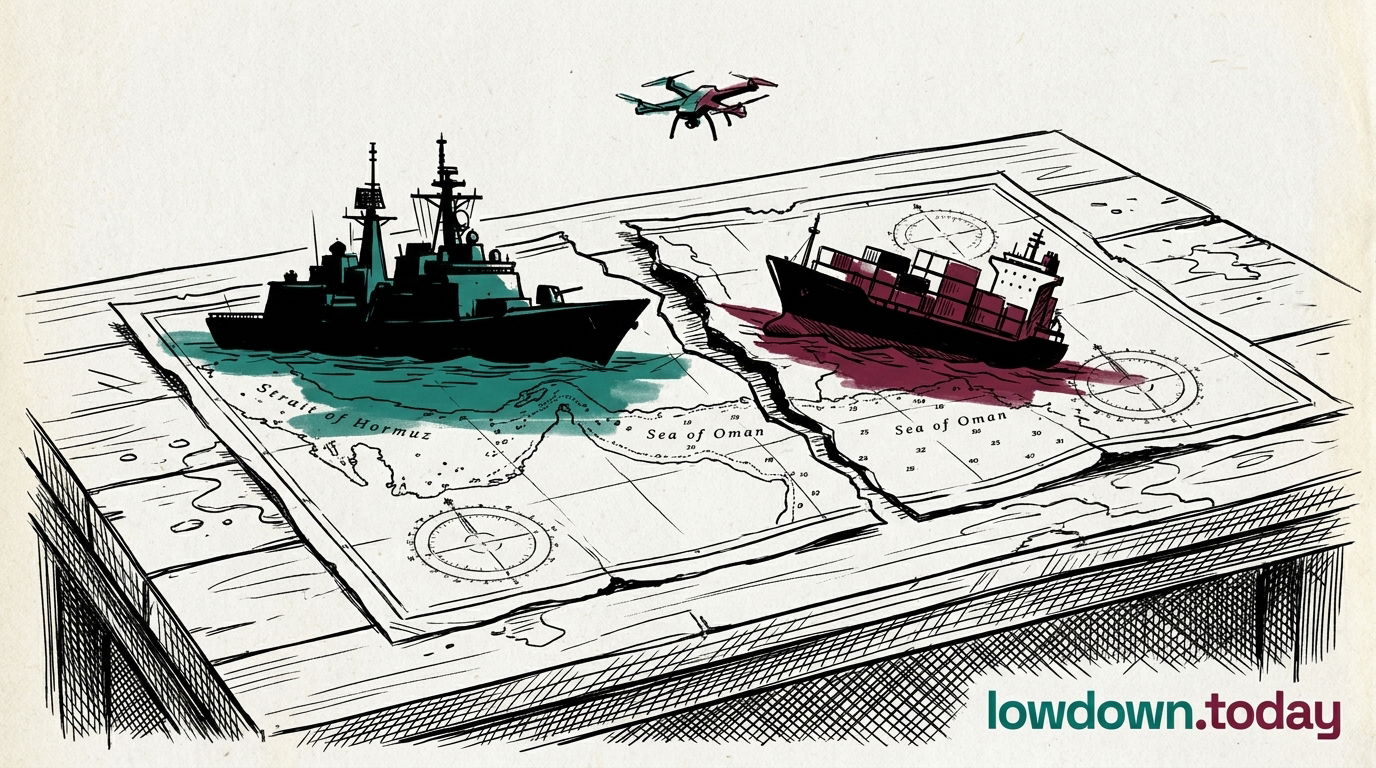
The IRGC Navy boarded and seized the MSC Francesca and the Epaminondas in the Strait of Hormuz on 22 April and fired on a third vessel, the Euphoria, according to Lloyd's List. The seizures are the first since the war with the US and Israel began on 28 February.

ConflictDeveloping
Key takeaway

Three boardings answered Trump's ceasefire extension within a day and authored the kinetic version of Iran's position on the water.

The IRGC Navy boarded and seized the MSC Francesca (Panama-flagged) and the Epaminondas (Liberia-flagged, bound for Mundra in Gujarat) in the Strait of Hormuz on 22 April, and fired on a third vessel, the Euphoria, the same day 1. Lloyd's List confirmed these as the first ship seizures since the start of the war 2. Iranian state media said MSC Francesca 'belongs to Israel' and accused Epaminondas of 'tampering with navigation systems'.

The boardings arrived within 24 hours of Trump's indefinite ceasefire extension posted on Truth Social . They extend the pattern the USS Spruance interdiction of the Touska established on 19 April , and they execute the four-condition framework the IRGC Tabnak order published on 17 April against non-Iranian flagged hulls for the first time.

Donald Trump posted. The IRGC boarded. Both are live policy instruments for separate audiences, and charterers can now plan to a 24-hour rhythm of Washington statement followed by Iranian boarding party. The Epaminondas's Gujarat destination pulled India into the kinetic track for the third time in eight days, following the IRGC firings on the Sanmar Herald and Jag Arnav .

Deep Analysis

In plain English

The IRGC is the ideological military wing of Iran's government, separate from the regular Iranian army. On 22 April its naval force boarded two cargo ships in the Strait of Hormuz and fired on a third. This is the stretch of water about as wide as a city between Iran and Oman that almost all Gulf oil passes through. Iran claimed one ship 'belongs to Israel' and the other was 'tampering with navigation systems'. These claims have not been independently verified. The practical effect is that any ship trying to pass through the strait now risks being stopped and searched by Iranian forces, regardless of whose flag it flies. For global trade, this matters because about a fifth of the world's oil normally passes through this waterway. With Iran searching or firing on ships, major shipping companies are redirecting their vessels the long way around Africa, adding roughly two weeks and significant cost to every delivery.

Deep Analysis
Root Causes

Iran never ratified the 1982 UN Convention on the Law of the Sea, which grants transit passage rights through international straits. Tehran's 2024-updated domestic maritime law claims jurisdiction over 'hostile-linked vessels', a category broad enough to cover any flag state that has sanctioned Iran. The MSC Francesca's Panama flag offers no legal protection under Iranian domestic law as currently written.

The IRGC Navy operates under Khatam al-Anbiya's written authorisation that treats all US-sanctioned entities as legitimate interception targets, regardless of flag state. This institutional mandate pre-dates the current conflict and was not suspended by the 8 April ceasefire pause, because the IRGC never accepted that the ceasefire bound its naval operations.

What could happen next?
  • Risk

    Flag states whose vessels are seized face pressure to formally prohibit their fleets from Hormuz transits, which would shift commercial pressure from Iran to insurers and further depress transit volume.

    Short term · 0.72
  • Consequence

    Lloyd's Joint War Committee will formally review the Hormuz risk classification following seizures of named vessels; an upgrade to 'war zone' status would require explicit underwriter approval for every transit.

    Immediate · 0.78
  • Precedent

    First wartime IRGC commercial vessel seizures establish a de facto licensing regime for Hormuz passage that will require formal legal dismantling in any ceasefire agreement.

    Medium term · 0.8
First Reported In

Update #77 · Pentagon: six months to clear Hormuz mines

NPR· 23 Apr 2026
Read original
Different Perspectives
China's foreign ministry
Spokesman Lin Jian rejected Treasury Secretary Scott Bessent's 25 August warning that Iranian oil buyers face an "economic D-Day", saying sanctions do not help and that Beijing would safeguard its own rights and interests. China's Iranian crude imports had already halved for unrelated reasons.
Iraq's government and Erbil authorities
Erbil authorities said 10 explosive-laden drones were shot down over the city on 1-2 September with no casualties. Iraq's government condemned the attacks without naming Iran as their source, and neither Washington nor Baghdad confirmed the IRGC's claim to have hit US bases there.
Bahrain Defence Force
The General Command said air defences intercepted several Iranian missiles and drones on 1-2 September and called the use of such weapons against civilians and private property a flagrant violation of international humanitarian law.
Kuwait's Fire Force and foreign ministry
KUNA reported a hostile Iranian drone struck a residential complex in Kuwait City on 2 September; Fire Force spokesman Brigadier General Mohammad Al-Gharib said losses were confined to property. Kuwait's foreign ministry called the attack a clear breach of its sovereignty.
Jordan's Armed Forces
Petra carried a statement that air defences intercepted eight missiles violating Jordanian airspace early on 31 August and 10 of 13 fired on 1 September. The statement named no target and did not address the IRGC's claim to have struck Camp Titin and killed US personnel.
CENTCOM
CENTCOM
CENTCOM's 1 September target list named IRGC air defence, radar, maritime and mine-laying sites in Iran but no tanker, after Axios reported anonymous officials describing a Trump-approved "tanker for tanker" drone policy. A CENTCOM spokesman declined to confirm the policy and referred questions to policymakers.
