Skip to content
Briefings are running a touch slower this week while we rebuild the foundations.See roadmap
Iran Conflict 2026
18APR

Seven VLCCs at Chabahar, three at Hormuz

3 min read
14:57UTC

Lowdown Wire

ConflictDeveloping
Key takeaway

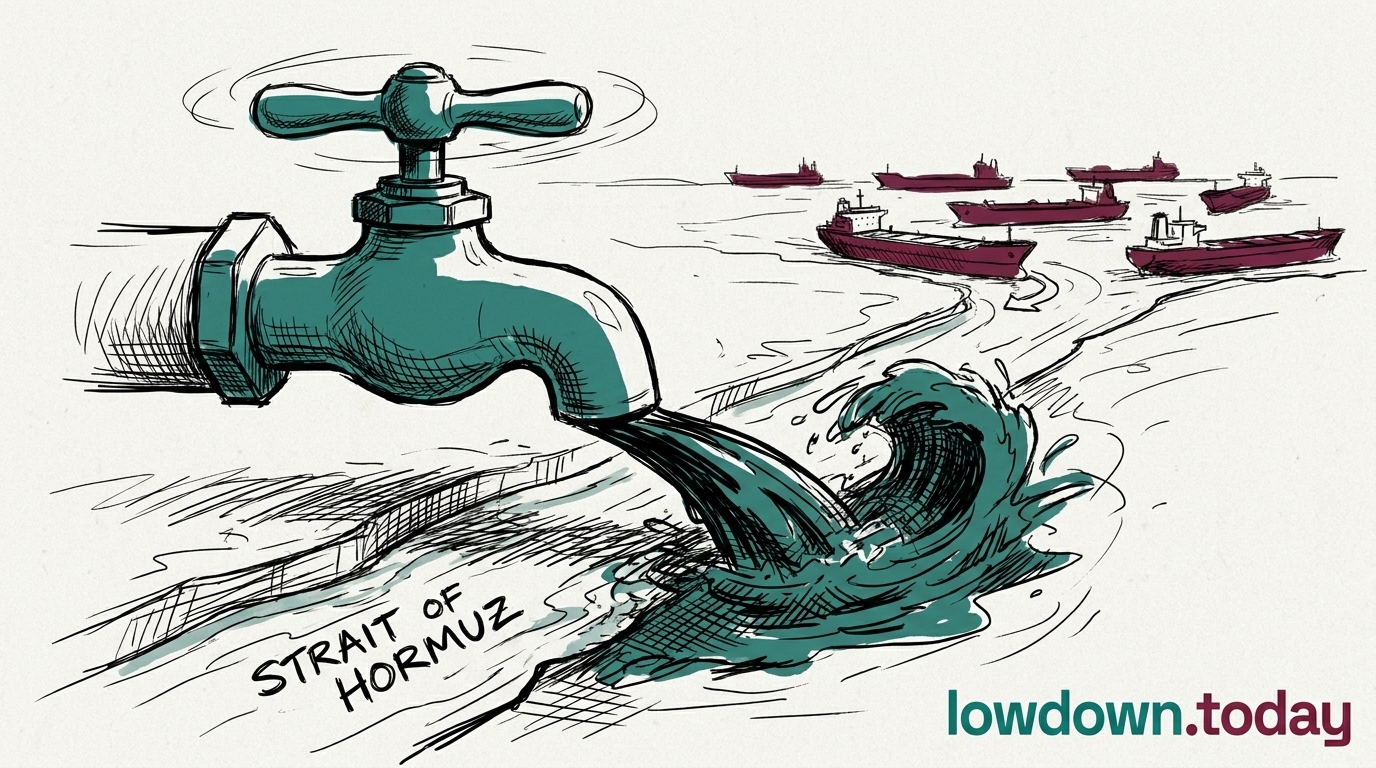
Seven VLCCs gathered at Chabahar on 20 April while only three vessels transited the strait the same week.

Windward detected seven Very Large Crude Carriers (VLCCs, the standard two-million-barrel oil tankers that carry Gulf crude) near Chabahar on Iran's Makran coast on 20 April 1. Chabahar is Iran's only deep-water port on the Arabian Sea and sits east of the geometry Admiral Brad Cooper's narrower port-interdiction order covers. The same Windward log counted three strait transits the day before, a fraction of the 135-per-day pre-war baseline and the lowest count since the blockade began.

Earlier mid-transit reroutings from India to Chinese ports ahead of the OFAC General License U lapse established the Chabahar-routing adaptation; seven VLCCs at anchor there indicate the same workaround now running at capacity. The USS Spruance's firing into the Touska's engine room earlier in the same window hardened the Hormuz risk premium on the kinetic side, but the structural story is sideways: vessels avoiding the strait do not need the strait reopened to clear cargo.

Deep Analysis

In plain English

The US Navy has been blocking oil tankers from using the Strait of Hormuz, the narrow sea passage through which most Gulf oil normally flows. Iran has responded by loading oil onto tankers at a different port, Chabahar, which sits on Iran's other coastline , the Arabian Sea side , and has no connection to the strait at all. Windward, a maritime tracking company, spotted seven large tankers near Chabahar on 20 April. Only three vessels transited the strait in the same period. This matters because it shows the blockade has not stopped Iran from shipping oil , it has just changed which port the oil leaves from. Chabahar is operated under a 2016 agreement with India, which adds a political complication: any US attempt to block Chabahar would directly affect India's interests.

Deep Analysis
Root Causes

CENTCOM's written blockade order was drafted around the Strait of Hormuz and Iranian Gulf ports, reflecting the operational assumption that Iranian crude exports require the strait. Chabahar sits on the Makran coast, outside the Gulf, accessible from the Arabian Sea without any Hormuz transit.

The legal gap was present from the order's inception: Iran never ratified UNCLOS, leaving its domestic maritime law , updated in 2024 to claim jurisdiction over 'hostile-linked vessels' , as the operative legal text on the Iranian side, while the US order covers only Iranian-port traffic rather than the full territorial sea.

India's 2016 Chabahar agreement, originally designed to give Delhi access to Afghan and Central Asian markets bypassing Pakistan, created an operational control structure that places Chabahar partially inside Indian sovereign jurisdiction, complicating any US enforcement action.

What could happen next?
  • Consequence

    Chabahar routing at capacity would reduce the blockade's supply-disruption component while leaving the kinetic risk premium intact, potentially splitting the oil price signal into two separable factors.

    Short term · 0.72
  • Risk

    Any CENTCOM attempt to extend interdiction to Chabahar creates a direct India-US collision over India's 2016 operational rights agreement with Tehran.

    Medium term · 0.78
  • Precedent

    The Chabahar bypass establishes a template for sanctions evasion at ports outside written enforcement geometry, applicable to any future blockade scenario.

    Long term · 0.8
First Reported In

Update #76 · Trump posts an exit Iran can't reach

Windward· 22 Apr 2026
Read original
Different Perspectives
Lloyd's of London war-risk underwriters
Lloyd's kept its Hormuz war-risk designation unchanged at $10-14 million per voyage even as Brent spiked 7%, holding the split from futures that has run since late May. Underwriters require a Security Council resolution or government certification, not a presidential phone call.
Gulf Cooperation Council states
Gulf states, having written to the IMO rejecting Iran's Hormuz transit authority, watched a fresh missile exchange land on Kuwaiti soil. Riyadh and Abu Dhabi remain caught between US security guarantees and Iranian fire, with no Gulf state co-belligerent except Kuwait.
China
China
Beijing stayed out of the diplomatic rupture, sending no envoy and offering no public position on the suspended talks. China keeps its bilateral energy corridor with Tehran while declining the exposure of a mediating role Trump barred it from anyway.
Kuwait
Kuwait
Kuwait's air defences engaged two Iranian ballistic missiles aimed at US forces late on 31 May, the second interception in days after invoking Article 51. Repeated strikes test whether Kuwait's politics can sustain hosting US forces as a de facto co-belligerent.
Lebanon and Hezbollah
Lebanon announced a partial ceasefire under which Hezbollah pledged to stop attacking Israel, the concrete output of Trump's call. Beirut heads to Washington on 3 June with Israeli forces still inside the south, testing whether the truce survives contact.
Israel under Netanyahu
Netanyahu stood down the planned Beirut operation under Trump's pressure but kept his ground advance running toward the Zaharani river, the deepest incursion in 25 years, and disputed Trump's claim that troops had turned around. Israel signalled the halt is tactical, not a wind-down.