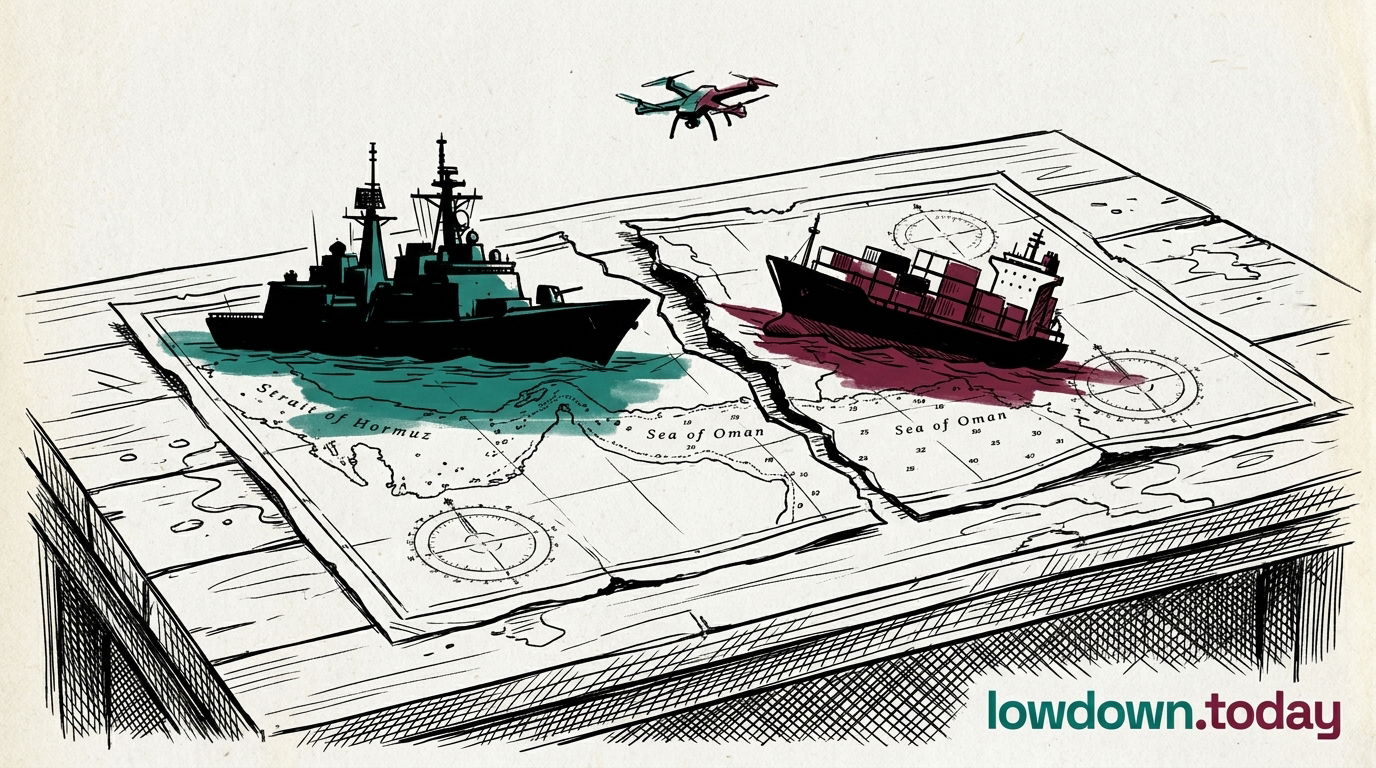
NetBlocks, the UK-based internet observatory, recorded Iran's nationwide internet blackout at one thousand two hundred and twenty-four hours on Day 52, the longest national shutdown on file. Al Jazeera reported partial restoration to 'favoured groups' on Monday, while most Iranians remained disconnected. Kpler data relayed by CNN showed sixteen vessel transits of the Strait of Hormuz the same day, against a pre-war baseline of one hundred and thirty-five per day, an eighty-eight per cent shortfall. Brent sat at roughly 94-96 dollars through the week, up from 73 before the strikes.
The Hormuz figure carries a carve-out worth naming. Two US-sanctioned Chinese tankers continued transiting unchallenged under what CNN described as CENTCOM's standing carve-out. A blockade that lets sanctioned Chinese crude through while denying clearance to Indian-flagged tankers is a blockade whose selection rules are not written down and whose enforcement pattern favours the counterparty Washington has most friction with. Saturday briefly touched twenty-plus transits before the Touska seizure reversed the recovery.
Iran's internet shutdown is running as a protest-era governance tool, not a wartime communications restriction. Al Jazeera's readout names 'favoured groups' as the recipients of partial restoration, pointing at state-linked institutions, financial clearing infrastructure, and security apparatus users rather than the general public. The Aban protest shutdown in Esfand 1398 ran for roughly one week at its peak; the current shutdown has now run more than seven times that length. The infrastructure to maintain a selective internet, with whitelisted IP ranges, domestic-only mesh, and state-controlled filtering, is mature in Iran in a way it was not then, and the war has given Tehran both the justification to deploy it and the excuse to let it harden past the ceasefire.



