Anatoly Kolodkin
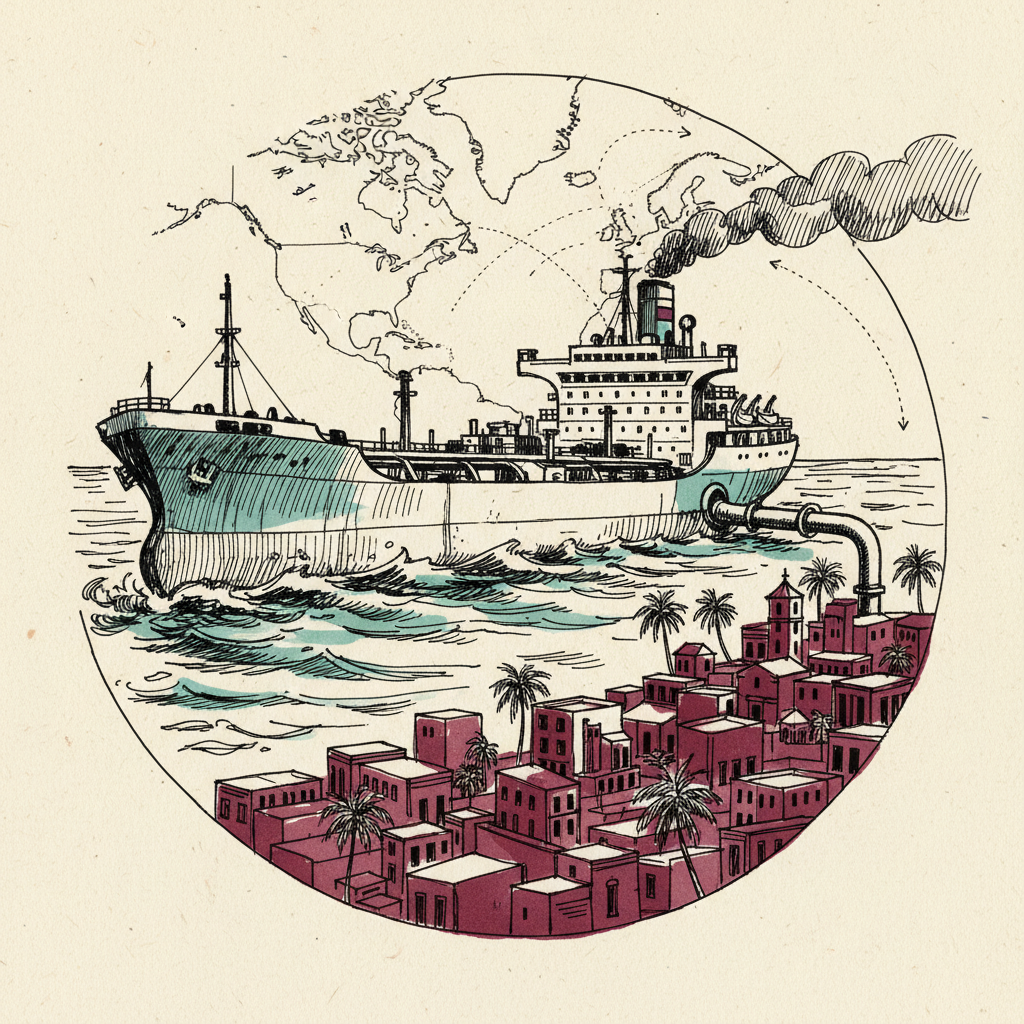
Russian crude tanker; its delivered cargo powered four blackout-free days in Havana via the Camilo Cienfuegos refinery.
Last refreshed: 27 April 2026 · Appears in 1 active topic
How did one Russian tanker deliver four consecutive blackout-free days to Havana?
Timeline for Anatoly Kolodkin
Delivered 730,000 barrels to Havana on 31 March; fuel now depleted
Cuba Dispatch: Diaz-Canel admits Russian oil running outBackground
Anatoly Kolodkin is a Russian crude oil tanker operated by Sovcomflot, approximately 50,923 DWT, named after Anatoly Kolodkin (1928-2012), a prominent Soviet and Russian international law scholar. The vessel is part of Russia's state-controlled tanker fleet and has been engaged in the Cuba resupply programme during 2026 under the framework of US OFAC wind-down licences.
The Anatoly Kolodkin docked at Havana on 31 March 2026, delivering approximately 730,000 barrels of crude oil — nine to ten days of Cuban national demand — as Russian Energy Minister Sergei Tsivilyov publicly confirmed a second vessel was being loaded. The Camilo Cienfuegos refinery in Cienfuegos province restarted on 17 April 2026 after roughly four months offline, routing this crude into Cuba's National Grid. The result was four consecutive blackout-free days in Havana from 19 to 23 April, with peak availability reaching 1,973 MW on 23 April. Cuba's Energy Minister Vicente de la O Levy stated publicly that with this single ship's fuel, supply would last only until end of April. Cuba requires roughly eight fuel shipments monthly; between December 2025 and April 2026 it received one, meeting roughly 13 per cent of its stated need. The successor tanker Universal is expected at Matanzas around 29 April 2026 under OFAC General Licence 134B cover.
Did Russia send oil to Cuba in 2026?
How much oil does Cuba need each day?
Is Russia defying US Cuba oil sanctions?
What crude oil did the Anatoly Kolodkin deliver to Cuba?
How did the Anatoly Kolodkin crude affect Cuba's power supply?
Who operates the Anatoly Kolodkin tanker?

Written with AI from Lowdown's published reporting. Not individually reviewed by an editor. Updated 27 April 2026. Editorial standards.