Skip to content
You can now search across every topic, entity and event.What's new
Cuba Dispatch
27APR

Trump signs EO 14380 declaring Cuba emergency

2 min read
10:55UTC

A 29 January executive order declared a national emergency over Cuba and authorised tariffs against any country supplying its oil.

PoliticsDeveloping
Key takeaway

EO 14380 is the instrument; every downstream event on this dispatch is its implementation.

President Donald Trump signed Executive Order 14380 on 29 January 2026, declaring a national emergency over Cuba and authorising secondary tariffs on any country supplying oil to the island. The order routes its statutory authority through the Cuban Assets Control Regulations (the long-standing sanctions framework) and the 1996 LIBERTAD Act (Cuban Liberty and Democratic Solidarity Act).

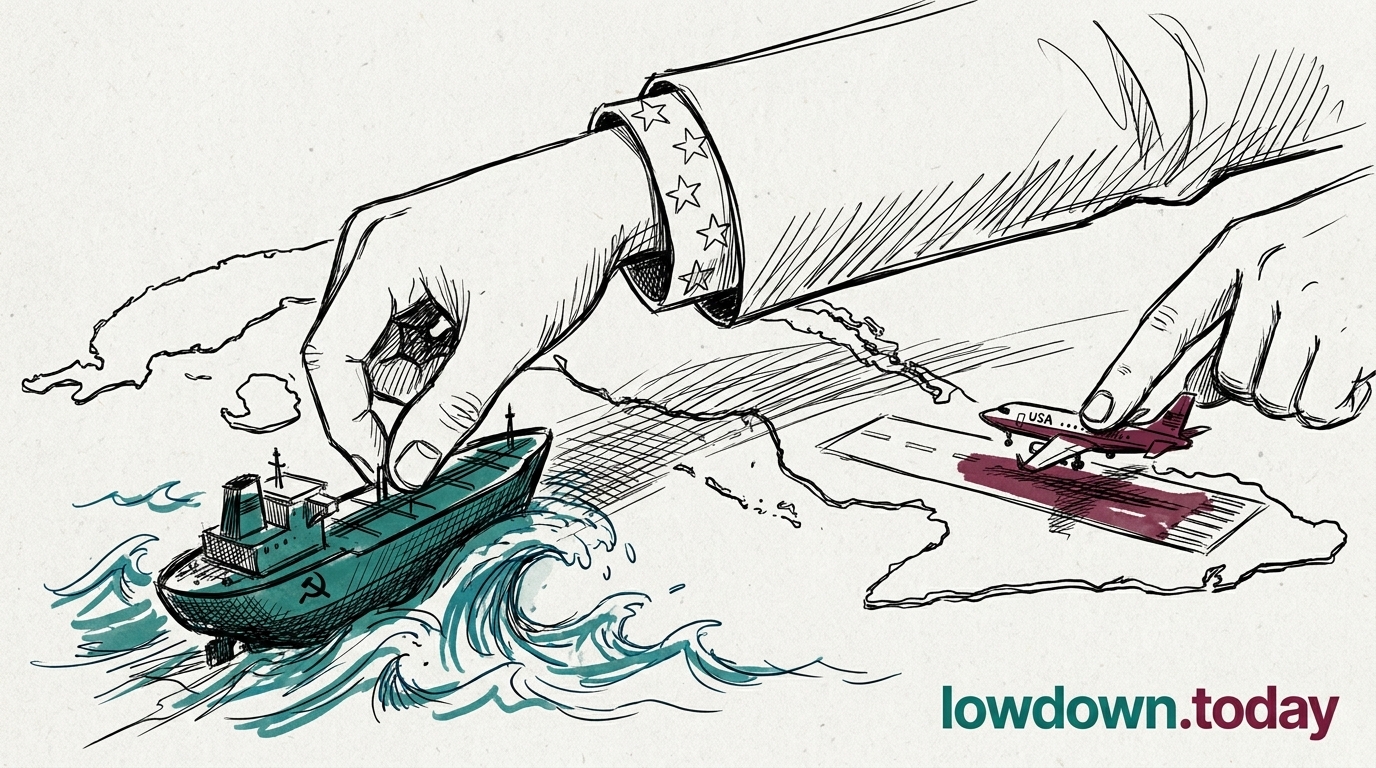
Two mechanisms sit inside the order. Primary sanctions prohibit US persons from transacting with Cuba. Secondary tariffs reach further: they apply to third countries that do so. A Russian tanker owner unloading crude at Havana becomes liable to US tariffs on any unrelated trade with the United States, and so do the shipping insurers and payment intermediaries in the transaction chain. That is the "extraterritorial" scope Havana and UN human rights experts have both named in their subsequent statements.

The practical consequence showed up in weeks. Mexican oil shipments that had backstopped the Cuban thermal fleet were withdrawn by end January once tariff exposure was flagged; PDVSA's 18 March global authorisation arrived carrying the explicit Cuba carve-out that kept state-level Venezuelan crude off-limits. The 29 January signature is upstream of the entire supply-chain collapse the UNE grid bulletin now prices in kilowatt-hours. The order is a domestic US instrument with international reach by design, and the reach is what makes the Cuban case structurally different from a conventional embargo.

Deep Analysis

In plain English

On 29 January 2026, President Trump signed an order declaring a national emergency over Cuba; the same legal mechanism the US uses for genuine crises like pandemics and foreign invasions. The order did two things: it strengthened existing bans on the US trading with Cuba, and it added a new threat; any country that sells oil to Cuba could face US tariffs on its other exports to America. That threat is what caused Mexico to stop selling Cuba oil almost immediately. Every other event in this briefing is downstream of that signature.

Deep Analysis
Root Causes

EO 14380's secondary tariff mechanism is designed to solve the enforcement gap in conventional secondary sanctions: companies that have no US nexus (no US shareholders, no USD transactions, no US market exposure) were previously difficult to reach through OFAC. The tariff mechanism reaches them through export trade; any country that wants to export to the US faces tariff exposure if its nationals supply Cuba oil.

The January 11 Trump warning ('make a deal before it is too late') signals that the EO was not a reactive measure to a Cuban provocation but a pre-planned escalation, likely developed in coordination with the Florida congressional delegation that filed the February 11 licence-revocation letter within two weeks of the signing.

What could happen next?
  • Precedent

    EO 14380 is the first use of IEEPA secondary tariff authority specifically to enforce a bilateral embargo against a third-country energy supplier; a precedent for applying tariff coercion to any designated country's energy supply chain.

    Long term · 0.78
  • Consequence

    Mexico's immediate withdrawal from Cuba oil supply under tariff threat demonstrates that the secondary mechanism is operationally effective without being tested in litigation.

    Immediate · 0.88
  • Risk

    A successor US administration wishing to reverse the Cuba policy faces a procedural burden; terminating a declared national emergency; that is higher than simply reversing an OFAC administrative rule.

    Long term · 0.82
First Reported In

Update #1 · Cuba carve-out survives Venezuela oil easing

Military.com· 15 Apr 2026
Read original
Different Perspectives
Russia
Russia
Moscow has sent Havana solidarity gestures, including birthday messages to Raúl Castro, but no tanker has reached Cuba since the Sovcomflot Universal diverted away in May, and none arrived this week either. Russia's backing remains rhetorical while the fuel gap CUPET's designation created stays unfilled from any state-to-state source.
Observatorio Cubano de Derechos Humanos (OCDH)
The Madrid-based monitor published its half-year count of 1,949 repressive actions on 7 July, 299 in June, the highest monthly total it has logged in 2026, with independent journalists the most-targeted group. OCDH's figures moved the debate from sanctions cadence to security-state conduct in the same week Havana wanted the argument to stay on sanctions.
European Union (Stavros Lambrinidis)
Lambrinidis told the UNGA the embargo harms ordinary Cubans, then criticised Havana's Ukraine-ceasefire vote and Russian military participation, announcing no new measures. The EU is managing two separate Cuba files, human rights and Cuba's Russia alignment, that have not yet merged into one policy with teeth.
United States (Mike Waltz / OFAC)
Ambassador Mike Waltz held up photographs of named Cuban political prisoners, including Otero Alcántara, telling the delegation "this is not Havana", while OFAC issued no new Cuba designation between 1 and 9 July. Washington is running the prisoner-naming track and the sanctions track separately, and a re-charged Otero Alcántara would give the naming track a fresh case to press.
Cuban Ministry of Foreign Affairs (MINREX)
MINREX rebutted Mike Waltz's prisoner photographs at the UNGA debate, saying Cuba has nothing resembling the repression imagery Washington displayed, while giving no public account of Otero Alcántara's whereabouts. Havana's embargo case depends on external sanctions as the sole cause of harm, which a domestically caused grid failure and an unexplained disappearance both complicate.
Russia and China
Russia and China
Moscow and Beijing offered rhetorical solidarity but no relief. No Russian tanker has reached Cuba since the Sovcomflot Universal diverted on 26 May, and China has moved no substitute cargo, leaving Havana's fuel siege unbroken by its strategic partners.

