Skip to content
Briefings are running a touch slower this week while we rebuild the foundations.See roadmap
Cuba Dispatch
27APR

Two Cuba policies, one fortnight

4 min read
10:55UTC

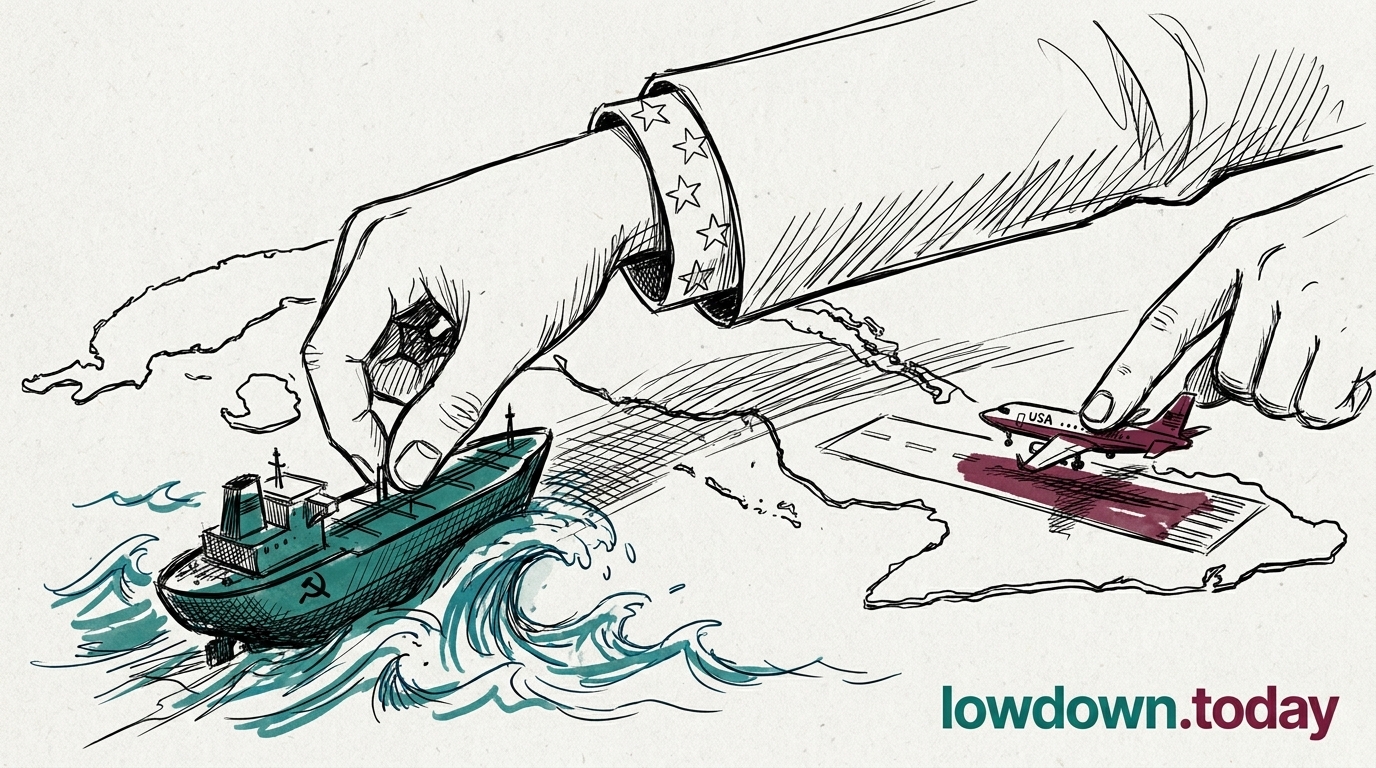
Treasury extended the licence covering the next Russian tanker bound for Havana on Saturday 18 April, eight days after a US government aircraft landed in Cuba for the first time since 2016. A two-week ultimatum for two named dissidents lapsed without releases. The grid eased in Havana while the eastern provinces held at 24-hour blackouts.

Key takeaway

Washington is running a sanctions architecture that exempts the one supply route keeping Cuba's grid on.

This briefing mapped
Loading map…
Regulatory
Diplomatic
Infrastructure
Humanitarian
Economic

Treasury issued OFAC General Licence 134B on Saturday 18 April, authorising the next Sovcomflot tanker's cargo through 16 May and contradicting the Florida delegation's 75-day-old revocation demand.

Sources profile:This story draws on neutral-leaning sources

On 18 April the US Treasury issued its second 30-day permission covering Russian crude already loaded for Cuba, protecting the Sovcomflot tanker Universal and every company involved in its voyage from US financial penalties through 16 May.

Two consecutive extensions covering the same supplier follow the exact pattern Treasury used in its 2018-19 Iran waivers before enforcement finally bit. Shipping and insurance markets are now pricing the GL 134 sequence as a renewable carve-out, not a one-off exception. 

Briefing analysis

Primary parallel: The Obama-era opening in December 2014 followed an 18-month back-channel mediated by the Holy See and Canada that produced a verifiable prisoner exchange (Alan Gross for the remaining members of the Cuban Five) before any public US action. Pope Francis announced the deal; the embassies reopened in July 2015. Both sides delivered named individuals as the price of admission to the channel.

Counter-parallel: The 10 April 2026 visit reverses that sequencing. Washington landed the aircraft, named the dissidents, and set the deadline before Cuba had produced any deliverable. The Holy See channel that opened with the 13 March prisoner releases (ID:2443) appears to have been overtaken by the direct State Department track without producing the political-prisoner names Washington requested. The 2014-15 model required reciprocity before recognition; the 2026 model offered recognition first and the reciprocity has not arrived.

Assistant-secretary State Department officials flew into Havana on Friday 10 April for direct talks; Cuba's foreign ministry confirmed the visit publicly eleven days later.

Sources profile:This story draws on mixed-leaning sources from Qatar and Hong Kong SAR China
QatarHong Kong SAR China
LeftRight

A US government plane landed in Havana on 10 April for the first time since 2016, carrying State Department officials who presented Cuba with a list of demands including prisoner releases, Starlink access, and compensation for assets seized in 1959.

Cuba confirmed the talks but called the US tariff threats blackmail and said its first condition was lifting the energy blockade. The visit opens a direct channel after a nine-year gap, but both sides' opening positions are publicly incompatible. 

A senior US official took a separate Havana meeting with 41-year-old Raúl Guillermo Rodríguez Castro on 10 April, addressing the family that runs Cuba's army outside the elected government track.

Sources profile:This story draws on mixed-leaning sources from Qatar
Qatar

On the same day US diplomats met Cuban foreign ministry officials, a separate meeting brought a senior State Department official together with Raúl Guillermo Rodríguez Castro, age 41, the grandson of former President Raúl Castro who holds no government post.

The choice signals Washington is probing Cuba's second power structure: the Castro family network that runs the military and controls 60 per cent of the hard-currency economy, separately from the elected government that the US was officially there to meet. 

The two-week ultimatum for Otero Alcántara and Maykel Osorbo expired on Friday 24 April with neither released; three days past the deadline Washington had issued no public response.

Sources profile:This story draws on neutral-leaning sources

The US gave Cuba until 24 April to free two named dissidents: artist Luis Manuel Otero Alcántara and rapper Maykel Osorbo. The deadline passed with neither man released, and the US had said nothing publicly three days later.

Cuba's penal code makes releasing political prisoners a complicated legal process even with political will. The 14-day window was too short for that procedure. Washington's silence past the deadline follows a pattern documented over 25 years of US-Cuba ultimatums: conditions are set and then absorbed without announced cost. 

Camilo Cienfuegos came back online on Friday 17 April after roughly four months down, processing the Anatoly Kolodkin crude into 337-367 MW of restored evening capacity by 26 April.

Sources profile:This story draws on neutral-leaning sources

Cuba's Camilo Cienfuegos refinery, offline for four months, restarted on 17 April using crude delivered by the Russian tanker Anatoly Kolodkin. The restart cut the island's power deficit by about 20 per cent, producing four blackout-free days in Havana.

Cuba's Energy Minister said that fuel supply runs out at the end of April. The next Russian tanker, the Universal, was expected around 29 April. If it is delayed, the refinery shuts down and the blackouts return within roughly 12 days. 

Havana ran four consecutive days from 19 to 23 April without deficit-driven blackouts while Holguín, Granma province and Santiago de Cuba endured up to 24-hour daily outages.

Sources profile:This story draws on neutral-leaning sources

Havana went four days without blackouts between 19 and 23 April because Russian crude had finally been refined into fuel for the power stations. Over the same four days, Holguín, Granma province and Santiago de Cuba all continued losing power for up to 24 hours a day.

Cuba's electricity grid has a single control centre in Havana that decides who gets power when supplies are short. The east absorbs the deficit first. This has been the operating rule for over 30 years, and the April figures show it running exactly as designed. 

Sources:CiberCuba

Kaine, Schiff and Gallego introduced a joint resolution requiring congressional authorisation before any US military operation against Cuba; the Senate vote is expected before Friday 1 May.

Sources profile:This story draws on mixed-leaning sources from United Kingdom
United Kingdom
LeftRight

Democratic senators Tim Kaine, Adam Schiff and Ruben Gallego introduced a resolution on 25 April requiring Congress to authorise any US military operation against Cuba, triggered by Trump's repeated public claim that Cuba is next. A Senate vote was due before 1 May.

Republicans held a 53-47 majority in the Senate and were expected to defeat the measure. The sponsors' aim was a permanent named roll-call: every senator on record about presidential military authority over Cuba, one week after Treasury issued a licence legalising the next Russian oil delivery to the island. 

Amnesty International confirmed on Thursday 16 April that none of the individuals it recognises as prisoners of conscience were freed in either of Cuba's 2026 pardon waves.

Sources profile:This story draws on mixed-leaning sources from Argentina
Argentina

On 16 April Amnesty International confirmed that none of the 2,061 people Cuba freed in its two 2026 pardon waves was on its list of political prisoners. Two other organisations, OCDH and Prisoners Defenders, checked separately and found the same result.

Cuba's pardons excluded people charged under the specific criminal articles used to prosecute activists, which is why the large headline number produced zero overlap with the political-prisoner rosters. The two people the US specifically asked Cuba to free remain detained. 

Eighteen days after CADECA opened state-bank dollar acceptance, the informal USD/CUP rate had moved from 510 to 530 and the euro had broken 600 CUP.

Sources profile:This story draws on neutral-leaning sources

The informal Cuban exchange rate hit 530 pesos per dollar by 22 April, up from 510 when the state opened its currency offices to dollar cash on 7 April. The euro crossed 600 pesos, a record. The official state rate stayed at 492.

After 18 days the state currency reform produced no measurable improvement. Street money-changers offer no paperwork, instant payment and trusted networks; the state charges for all three. The 38-peso gap between the official and street rates is the market price for avoiding state-channel friction, and it widened, not narrowed, in the three weeks since the reform launched. 

Closing comments

Direction: sideways. The rhetorical track has not eased; Trump's 'Cuba is next' claim remains unretracted, and the Kaine-Schiff-Gallego war-powers vote before 1 May is the Senate's formal acknowledgement that it is being taken seriously. The operational track moved in the opposite direction: GL 134B issued on 18 April, a diplomatic channel opened on 10 April, and the 24 April prisoner deadline absorbed without announced consequence. The specific decision point is Treasury's GL 134C call, expected before 16 May 2026: no extension pushes the UNE grid deficit back toward the 1,732 MW baseline of 15 April and forces the humanitarian-carve-out question into the open. That decision sits with Secretary Bessent, not with the senators drafting resolutions.

Different Perspectives
White House and US Treasury
Treasury issued GL 134B on 18 April, authorising the next Sovcomflot tanker's cargo through 16 May while holding the EO 14380 sanctions architecture in place. The bifurcated posture, diplomatic engagement plus oil-route exemptions plus military rhetoric, is the administration's operational Cuba policy for April 2026.
Cuban government — Díaz-Canel and MINREX
Under-director Garcia del Toro confirmed the 10 April talks as respectful and professional with no threats or deadlines, framing the secondary-tariff threat as blackmail and naming the lifting of the energy blockade as Cuba's first condition. The government has not acknowledged the Rodríguez Castro back-channel.
Cuban opposition — OCDH, Amnesty International, San Isidro Movement
Three independent monitors confirmed zero prisoners of conscience were freed in Cuba's 2026 pardon waves; OCDH logged 53 new detentions in March alone. Luis Manuel Otero Alcántara and Maykel Osorbo remain held despite the US deadline, and the pardon decree's Articles 142-149 carve-out ensures no dissident can be reached without a structural legal change.
Russia — Sovcomflot and Kremlin
Sovcomflot dispatched the Universal toward Cuba while GL 134B cleared the legal exposure for every intermediary in the voyage. Moscow's willingness to absorb OFAC-licensed payment terms for sanctioned crude is consistent with treating Cuba as a strategic energy client, maintaining a Caribbean position in exchange for fuel below the secondary-sanctions market premium.
Florida Cuban-American congressional delegation
The delegation's 11 February revocation demand produced no Treasury response in 75 days; GL 134B issued alongside the lapsed dissident deadline leaves the delegation's stated position, comprehensive licence purge plus prisoner releases, operationally unanswered. No public statement on either GL 134B or the Havana visit was located at reporting cut-off.
Holy See
Holy See
The Vatican channel that produced Cuba's 13 March prisoner announcement was bypassed by the direct State Department track on 10 April, which did not coordinate through Rome. Whether the Holy See mediation remains active after the direct approach superseded it is unconfirmed; the 13 March releases were later verified as containing zero political prisoners.


